


Listen to the article
Russian War Documentary Sparks Debate on Journalism Ethics and Propaganda
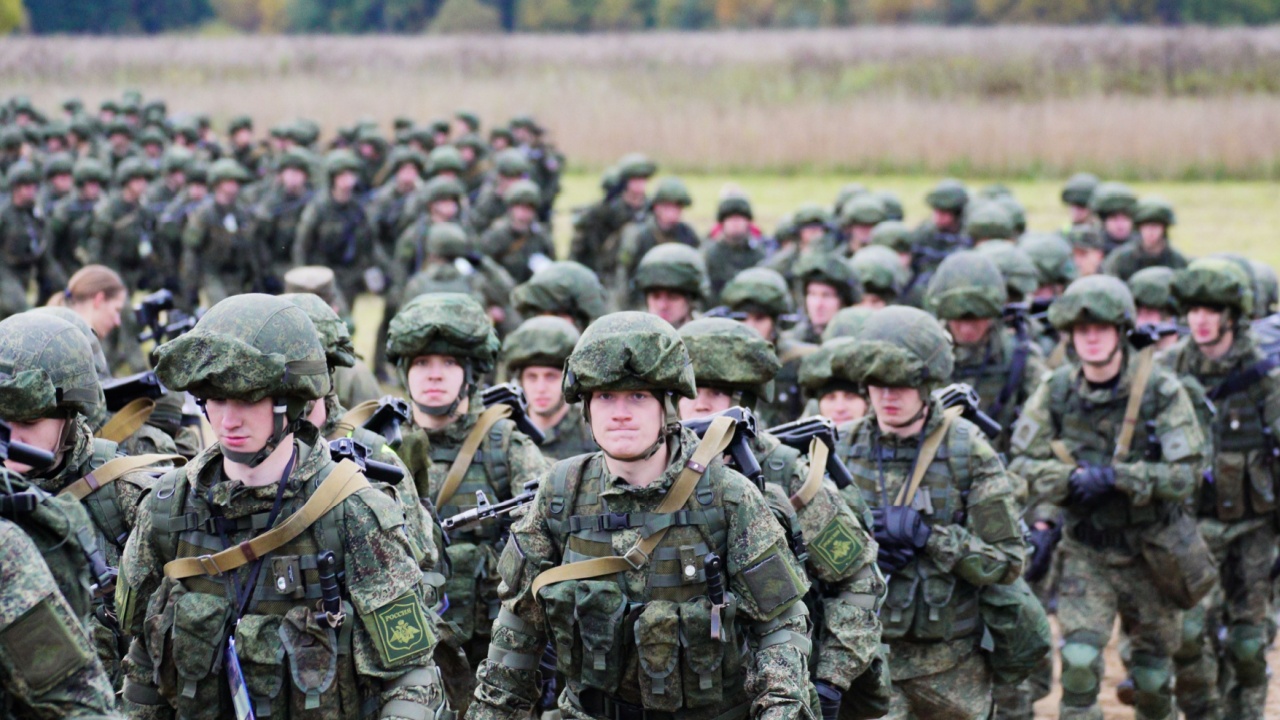
A controversial documentary providing rare insight into Russian military operations in Ukraine has ignited heated debate about the boundaries between journalism and propaganda. “Russians at War,” a film by Russian-Canadian filmmaker Anastasia Trofimova, offers unprecedented access to the daily routines of Russian soldiers stationed in occupied Luhansk in 2024.
Trofimova spent seven months embedded with a Russian army unit without official state accreditation, documenting their experiences near the front lines. Her access came through a 49-year-old soldier named Ilia, whom she met by chance in the Moscow subway. The battalion commander allowed her presence on condition she remain away from active combat zones.
The documentary stands in stark contrast to Russia’s tightly controlled media landscape, where independent journalists are barred from frontline reporting and at least 25 journalists have been imprisoned in occupied Ukraine, including Ukrainian reporter Viktoriia Roshchyna, who died in Russian custody.
The film provides valuable intelligence on the state of Russian forces, which have suffered catastrophic casualties – an estimated 275,000 to 325,000 dead and approximately one million injured. Western observers have struggled to gather reliable information on Russian troop morale amid continuing frontal assaults across Donetsk province.
After premiering at international film festivals in September 2024, the documentary faced immediate backlash. Canadian-Ukrainian activists successfully blocked its screening at the Toronto International Film Festival, despite its French-Canadian production credentials and $340,000 in Canadian public funding. Television Ontario subsequently declined to broadcast the film, and North American distributors have kept their distance. The documentary has since been released on YouTube.
Critics initially objected to Trofimova’s professional background, noting her work as a documentary filmmaker for Russia Today (RT) from 2014 to 2020 – an outlet widely recognized as a Russian state propaganda vehicle. Those who viewed the film criticized its portrayal of Russian soldiers in sympathetic terms, seemingly as victims rather than participants in an unprovoked invasion characterized by documented war crimes.
Paradoxically, the documentary presents a damning portrait of Russia’s military. It depicts soldiers as disorganized, disillusioned, and frequently intoxicated. The unit suffered devastating losses before filming began, losing two-thirds of their personnel in assaults on Ukrainian positions. Many soldiers openly admit they fight primarily for money, referring to dollars as “backs,” with monthly payments of $2,000-$3,000 and signing bonuses exceeding $20,000.
The film underscores that these are volunteer fighters, not conscripts, undermining claims that they are innocent victims of circumstance. This element evokes Hannah Arendt’s controversial concept of the “banality of evil,” where atrocities are committed by ordinary people following orders rather than ideological extremists.
Trofimova maintains that her film is “anti-war” rather than anti-Russian. In interviews, she identifies strongly with her Russian heritage, referring to Russians as “my compatriots” and speaking of her “duty as a Russian” to document the conflict truthfully. While insisting the documentary is merely “observational,” her public comments advance a perspective where leadership on both sides bears responsibility while soldiers and civilians are mutual victims.
Some of her statements echo official Russian narratives, including claims that “Russia has not been using all its arsenal against Ukraine” and criticizing Western media’s “dominant narrative” that portrays Russia as the enemy. She has suggested Ukrainian opposition to the film stems from a need to “demonize the enemy,” implying that accounts of Russian aggression and atrocities are exaggerated.
Trofimova defends her previous work at RT by distinguishing between its documentary division and news operations, though critics note this distinction is artificial. RT’s sophisticated propaganda strategy often combines straightforward misinformation with more subtle content designed to build credibility while undermining trust in mainstream Western media – a tactic some see reflected in “Russians at War.”
Despite these concerns, the documentary provides valuable insights for Western analysts. However, viewers should exercise caution in generalizing about the entire Russian military from this limited sample. Despite their apparent dysfunction, these soldiers continue performing their duties, albeit in limited capacities. Military historians note that even successful armies throughout history have contained similar units.
While Ukrainian objections to the film are understandable, it remains a significant journalistic achievement. Few viewers are likely to develop more favorable opinions of Russia’s invasion after watching. Perhaps most telling is that the documentary is unlikely to be shown in Russia itself – the one place where it might genuinely influence public opinion about the war.
Fact Checker
Verify the accuracy of this article using The Disinformation Commission analysis and real-time sources.

10 Comments
This documentary provides a rare and valuable window into the Russian military’s operations in Ukraine. While the ethics of embedded journalism remain debated, the insights it offers are critical for understanding the realities on the ground.
The film’s access to Russian soldiers seems unprecedented given the tight media controls in Russia. It will be interesting to see how this portrayal compares to the Kremlin’s official narratives.
The film’s depiction of the daily lives of Russian soldiers offers a valuable counterpoint to the propaganda we often see. Providing this kind of on-the-ground perspective is crucial for a more complete understanding of the war’s impacts.
I’m curious to see how the filmmaker navigated the challenges of embedded reporting and maintained independence. The ethics of this approach will likely be heavily debated.
While the ethics of this documentary may be disputed, the insights it provides into the state of Russia’s military forces are undoubtedly important. It will be telling to see how the Kremlin responds to this rare unfiltered portrayal.
The lack of independent journalism in occupied Ukraine is a major concern. This film could help shed light on the realities faced by both soldiers and civilians in these regions.
This documentary seems to offer a unique perspective on the Russian military’s operations in Ukraine, which is essential given the tight control of information by the Kremlin. The ethical questions around embedded journalism will certainly be a point of discussion.
The imprisonment of Ukrainian reporters in occupied territories is deeply troubling. Accessing the frontlines and conveying the full scope of the conflict remains a major challenge for journalists.
It’s concerning to hear about the imprisonment of Ukrainian journalists in occupied territories. The lack of independent reporting from the frontlines is a major impediment to understanding the full scope of the conflict.
This documentary could help fill that void, though its objectivity will certainly be scrutinized. Balanced journalism is essential for shedding light on the complex realities of this war.