


Listen to the article
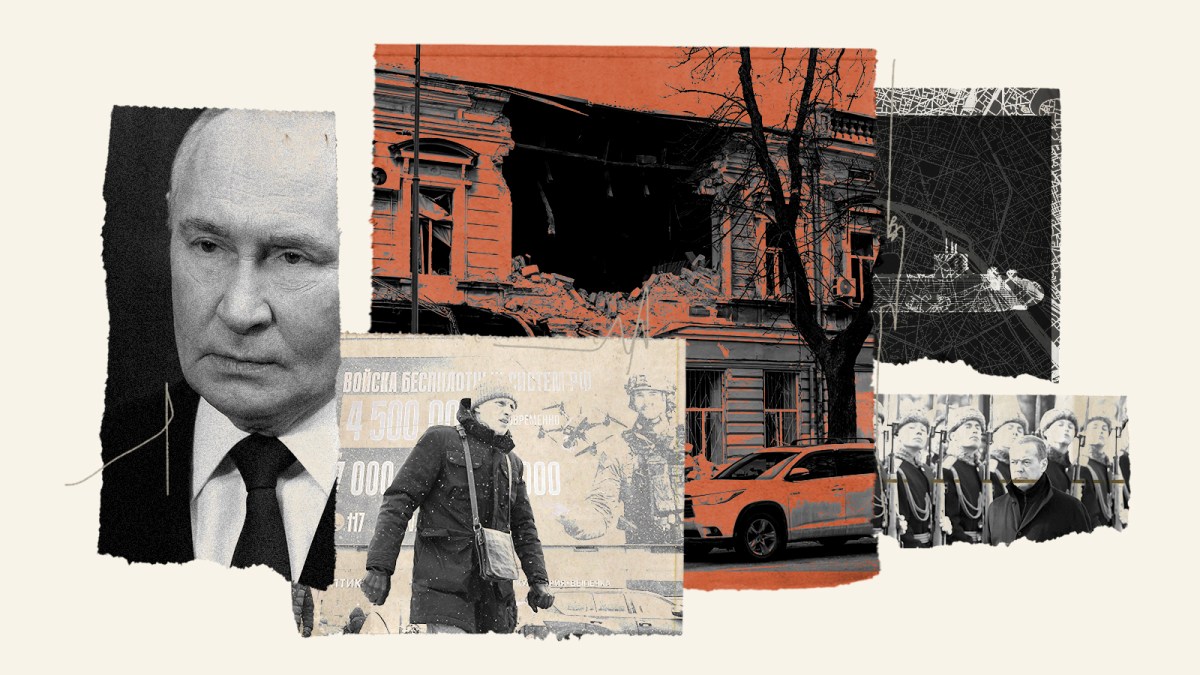
Russian President Vladimir Putin is intensifying propaganda efforts as public support for the Ukraine war begins to waver, according to recent reports and analysis from multiple experts.
While the Kremlin maintains tight control over the narrative surrounding what it still refers to as a “special military operation,” signs of war fatigue are becoming increasingly visible among ordinary Russians. This shift in public sentiment comes more than two years into a conflict that has resulted in significant Russian casualties and economic challenges.
The Russian government has responded by ramping up state media coverage glorifying the military campaign and vilifying Ukraine and its Western allies. Television channels broadcast near-constant footage of Russian advances and alleged Ukrainian atrocities, while downplaying or entirely omitting Russian losses and setbacks.
“Putin’s regime relies heavily on controlling information to maintain public support,” explains Sergei Radchenko, a Russia expert at Johns Hopkins University. “As the reality of a prolonged conflict sets in, the propaganda machine must work overtime to counter growing disillusionment.”
Recent polling from the Levada Center, one of the few remaining independent polling organizations in Russia, suggests that while a majority still express support for military operations when asked directly, the percentage of Russians who report actively following news about Ukraine has declined significantly since early 2022.
The intensified propaganda push coincides with economic pressures facing ordinary Russians. Western sanctions, though cushioned by Russia’s energy revenues and trade with China and other partners, have nonetheless contributed to inflation, supply chain disruptions, and reduced access to imported goods and technology.
“There’s a disconnect between the triumphant tone in state media and the everyday experiences of Russians, who are seeing prices rise and opportunities diminish,” notes Maria Lipman, a political analyst and editor of the “Point & Counterpoint” journal. “The longer the conflict continues, the harder it becomes to maintain the initial surge of patriotic sentiment.”
The Kremlin’s information strategy has evolved since the war began. Initially framing the invasion as a limited operation to “denazify” Ukraine, state messaging has increasingly portrayed the conflict as an existential struggle against NATO and Western imperialism. This shift aims to justify the prolonged nature of the war and its costs to Russian society.
In major cities like Moscow and St. Petersburg, where access to alternative information sources is greater despite internet restrictions, authorities have increased security presence and cracked down on even subtle forms of dissent. Thousands have been arrested for anti-war protests since 2022, with new laws criminalizing “discrediting” the armed forces carrying penalties of up to 15 years imprisonment.
The propaganda campaign has particularly targeted Russia’s youth. Schools have introduced “patriotic education” programs, while universities have removed courses and materials deemed critical of Russian foreign policy. Military recruitment efforts have intensified in more economically disadvantaged regions, where financial incentives for military service can be particularly appealing.
“The government is playing a long game,” says Alexander Baunov, a Russian political analyst. “They recognize that sustaining support requires not just controlling information but reshaping fundamental worldviews, especially among younger generations.”
Despite the propaganda blitz, cracks in the narrative are appearing. Social media platforms like Telegram host channels where Russians discuss casualty figures and military setbacks that go unreported in official media. Family members of dead or wounded soldiers occasionally speak out, though most are quickly silenced or marginalized.
The Russian Orthodox Church has played a significant role in sanctifying the war effort, with Patriarch Kirill repeatedly blessing Russian troops and framing the conflict in spiritual terms. This religious dimension adds another layer to the propaganda ecosystem, particularly resonating with older and more traditional segments of Russian society.
As the conflict continues with no clear end in sight, the Kremlin faces a difficult balancing act: maintaining enough public support to continue the war while managing growing economic pressures and social discontent. For now, the intensified propaganda campaign suggests Putin recognizes the challenge of sustaining domestic support for a protracted conflict that has not delivered the swift victory initially promised.
Fact Checker
Verify the accuracy of this article using The Disinformation Commission analysis and real-time sources.

13 Comments
It’s disheartening to see Putin resort to such heavy-handed propaganda tactics. The Russian people deserve access to truthful, unbiased information about the war, not a constant stream of government spin.
You’re absolutely right. Suppressing independent media and bombarding the public with state-controlled narratives is a sign of a government that is losing touch with reality. I hope the Russian people see through the propaganda.
The Kremlin’s reliance on propaganda to sustain public support for the war is deeply concerning. As the human and economic costs mount, I hope Russians will increasingly question the official narrative.
This is a classic authoritarian playbook – ramp up propaganda and censorship to maintain control as public support wavers. I hope the Russian people can see through the Kremlin’s deception.
Agreed. Cracking down on independent media and flooding the airwaves with state propaganda is a desperate move. It will be interesting to see how effective it is in the long run.
This is concerning to hear. Putin seems desperate to keep a tight grip on the narrative and control the information his people receive. I wonder how long the Russian public will buy into the propaganda before public sentiment truly shifts against the war.
You’re right, maintaining that level of propaganda control must be extremely challenging as the realities of the conflict become harder to ignore. I’m curious to see how this plays out.
The Kremlin’s efforts to downplay Russian losses and exaggerate successes are unsurprising, but it’s worrying to see them ramp up their propaganda campaign. I hope the Russian people can see through the disinformation.
I agree, it’s a concerning trend. Hopefully the Russian public becomes increasingly skeptical of the government’s messaging as the costs of the war become more clear.
It’s troubling to see Putin doubling down on propaganda as the realities of this conflict become harder to ignore. The Russian people deserve access to truthful information, not state-sponsored misinformation.
The Kremlin’s intensified propaganda campaign is a clear sign that Putin is worried about growing public discontent. It’s a desperate attempt to control the narrative and maintain support for the war. I hope the Russian people can see through the government’s spin.
Agreed. The Kremlin’s reliance on heavy-handed propaganda tactics is a worrying development. It suggests they are increasingly worried about their ability to sustain public support for the war.
This is a concerning trend. As the realities of the conflict become harder to ignore, the Kremlin is clearly doubling down on propaganda and censorship. I hope the Russian public can see through the government’s deception.