


Listen to the article
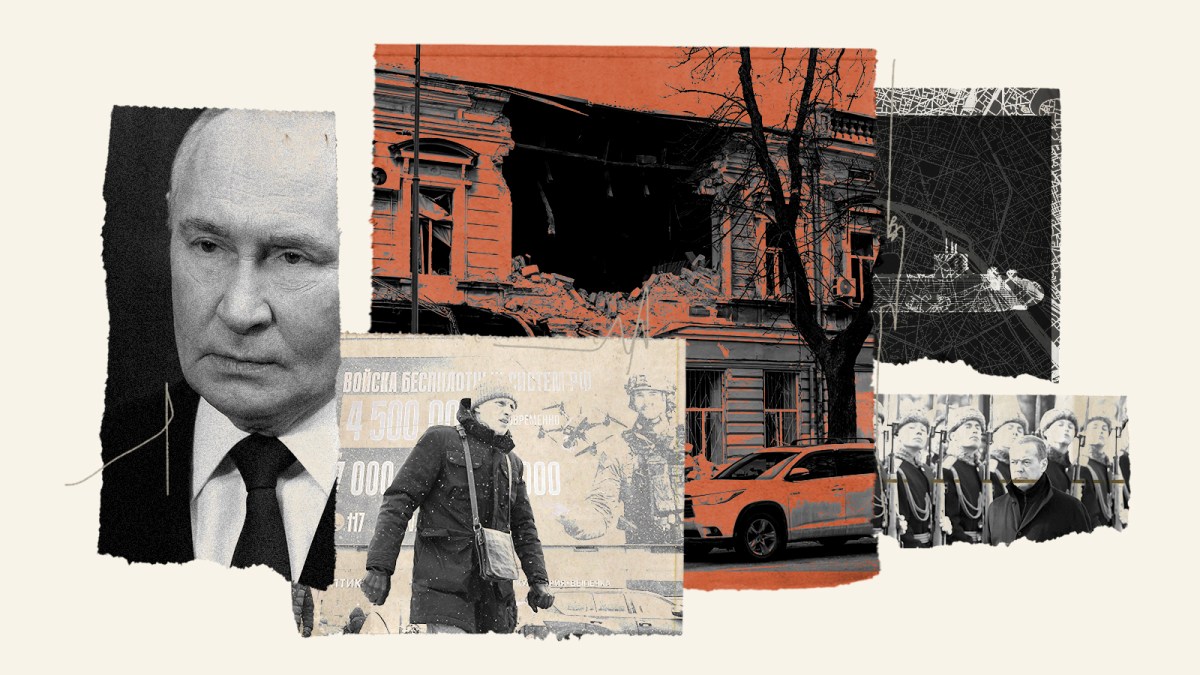
Russian President Vladimir Putin has intensified propaganda efforts as public weariness over the Ukraine conflict grows, according to analysts and recent polling data.
Nearly 30 months into what the Kremlin still insists on calling a “special military operation,” signs of war fatigue are emerging among ordinary Russians. The conflict, which began with the February 2022 invasion, has evolved from what many citizens initially expected to be a swift campaign into a protracted and costly war of attrition.
Recent surveys conducted by independent pollsters suggest support for the conflict is waning, particularly among younger Russians and urban professionals. While official state polls continue to show strong backing for military operations, independent researchers have detected increasing anxiety about the war’s duration and its economic impact on daily life.
“The Kremlin is acutely aware of this shift in public sentiment,” says Maria Petrovskaya, a political analyst formerly with the Moscow School of Political Studies. “That’s why we’re seeing an unprecedented propaganda campaign across all state media platforms.”
This propaganda offensive includes round-the-clock coverage on state television highlighting military successes while downplaying Russian casualties. News programs regularly feature segments portraying Ukrainian forces as Western puppets and depicting Russia as defending its sovereignty against NATO expansion.
The messaging has taken on new dimensions in recent months. State media now emphasizes the conflict as an existential struggle for Russia’s future rather than merely a regional security operation. Putin’s speeches increasingly frame the war as a civilizational battle against Western liberalism and a defense of traditional Russian values.
Schools across Russia have introduced new patriotic education programs that present the Ukraine conflict as a continuation of Russia’s historical struggle against foreign aggression. Children as young as seven participate in military-style exercises and lessons glorifying Russian soldiers.
Meanwhile, the Kremlin has strengthened its grip on information flows within the country. Independent media outlets have been shuttered or labeled as “foreign agents,” while access to Western news sources remains heavily restricted. New legislation criminalizing “discreditation” of the armed forces has silenced many potential critics, with thousands facing prosecution for expressing anti-war sentiments.
Economic realities are complicating the propaganda narrative, however. Western sanctions have created significant economic challenges despite the Kremlin’s claims of resilience. Inflation, particularly on everyday goods, continues to affect ordinary Russians, while military spending has diverted resources from infrastructure and social programs.
“There’s a growing disconnect between the triumphant tone of state media and the lived experience of many Russians,” explains Dmitri Kuznetsov, an economist at a Moscow-based think tank who requested his organization remain unnamed. “People see prices rising, quality of imports declining, and friends or relatives returning from the front with injuries. This creates cognitive dissonance that’s difficult for propaganda to overcome.”
The human cost of the conflict has become increasingly difficult to conceal. While official casualty figures remain classified, the steady stream of funerals in provincial towns and cities tells its own story. The Kremlin has responded by offering substantial financial compensation to families of fallen soldiers and by elevating military service as the highest form of patriotism.
Urban centers like Moscow and St. Petersburg, initially somewhat insulated from the war’s direct impact, have seen increased recruitment efforts targeting economically vulnerable populations. Monthly salaries for contract soldiers now exceed what many Russians could earn in civilian jobs, especially in economically depressed regions.
Dissent, while heavily suppressed, hasn’t been eliminated entirely. Underground anti-war networks continue to operate, and some Russians have chosen exile rather than participation in what they view as an unjust conflict.
“The question isn’t whether Russians support the war—it’s whether they feel they have any choice in the matter,” notes Pavel Baranovsky, a sociologist now based in Berlin after leaving Russia in 2022. “For many, quiet resignation has replaced enthusiastic support.”
As the conflict approaches its third year with no clear resolution in sight, the Kremlin’s propaganda apparatus faces its greatest challenge: maintaining public acquiescence in a war that has proven far costlier and longer than initially promised. For now, Putin’s information machine continues its relentless output, but beneath the surface of apparent consensus, cracks in Russian society’s support for the war are slowly widening.
Fact Checker
Verify the accuracy of this article using The Disinformation Commission analysis and real-time sources.

12 Comments
This report on the Kremlin’s intensified propaganda campaign in the face of Russian war weariness is an interesting development to watch. The state’s ability to control the narrative through its media dominance will be a key factor in determining whether this shift in public sentiment has any real impact.
Absolutely. The Kremlin’s stranglehold on information sources in Russia gives them significant power to shape public opinion, even as underlying support for the war appears to be eroding. It remains to be seen whether this war fatigue will translate into any meaningful political pressure on Putin.
The growing war weariness among Russians, especially the younger generation and urban professionals, is an interesting development. It will be worth watching how this plays out and whether it has any impact on the Kremlin’s calculus regarding the conflict.
You raise a good question. The Kremlin’s ability to control the narrative through state media makes me doubtful that this shift in public sentiment will translate into meaningful political pressure or policy changes in the short term.
This report on Russian war fatigue highlights the challenges the Kremlin faces in maintaining domestic support for the Ukraine invasion. The intensified propaganda campaign suggests Putin is worried about the erosion of his base, even if state polling continues to show strong backing.
That’s an insightful observation. The Kremlin’s efforts to counter this war weariness through ramped-up propaganda efforts underscore how seriously they are taking this shift in public opinion, even if the state media dominance gives them tools to manage it.
It’s concerning to see the Kremlin resorting to intensified propaganda tactics as public opinion shifts. However, the deeply entrenched state control over information sources in Russia makes me skeptical that this shift will lead to any real change.
That’s a fair point. The Kremlin has proven adept at quashing dissent and maintaining a favorable narrative through its media dominance. Overcoming that will be an uphill battle for anti-war Russians.
The growing signs of war fatigue among ordinary Russians are noteworthy, though the Kremlin’s firm grip on information sources in the country makes me skeptical that this will translate into meaningful political change anytime soon. Putin seems intent on doubling down on his propaganda offensive to shore up domestic support.
The growing signs of war fatigue among Russians, particularly the younger generation and urban professionals, is an intriguing development. However, the Kremlin’s firm grip on media outlets and its ability to control the narrative make me skeptical that this shift in public sentiment will lead to any substantial changes in the near term.
The erosion of public support for the Ukraine conflict in Russia is an interesting development. It will be important to see how the Kremlin’s propaganda efforts evolve to try and maintain domestic backing for the war effort.
You’re right, the war fatigue among ordinary Russians could pose a challenge for Putin. But the state’s firm control over media outlets gives them significant power to shape the narrative.