


Listen to the article
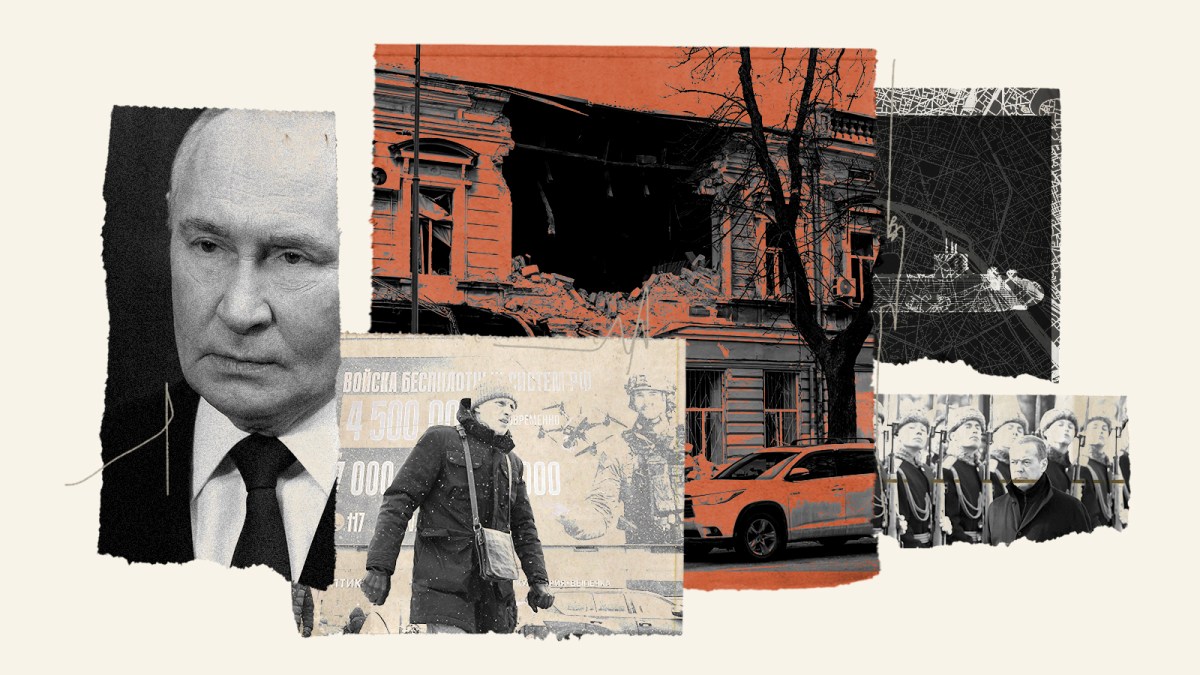
Russian propaganda has intensified as public war weariness grows, with President Vladimir Putin’s regime doubling down on messaging to sustain domestic support for the conflict in Ukraine.
Recent polling suggests that Russian citizens are increasingly feeling the strain of a prolonged military campaign that was initially promised as a quick “special military operation.” According to independent surveys conducted by the Levada Center, which operates as a non-governmental research organization despite Russia’s restrictive political environment, support for what the Kremlin calls its “special military operation” has begun to show signs of erosion.
The Russian government has responded by ramping up state media coverage that portrays the conflict as an existential struggle against Western aggression. Television programs, particularly on Channel One and Russia-1, have extended their war-focused programming blocks, with political talk shows now dominating prime-time slots seven days a week.
“The Kremlin is fighting a two-front war – one in Ukraine and one for the hearts and minds of ordinary Russians,” explains Dr. Maria Lipman, a Russian political analyst currently based in Berlin. “As economic sanctions bite deeper and casualty figures rise, maintaining domestic support has become increasingly challenging.”
This propaganda push coincides with tightened censorship laws that effectively criminalize anti-war sentiment. Since the invasion began in February 2022, the Russian parliament has passed legislation imposing prison sentences of up to 15 years for spreading what authorities deem “false information” about the military.
The economic impact of the war has begun to permeate everyday Russian life. While official statistics show modest growth, independent economists point to rising inflation, particularly in food prices. Sanctions have limited access to certain imported goods, creating periodic shortages that contribute to public frustration.
“People in Moscow and St. Petersburg might still have access to most consumer goods, but in regional cities and rural areas, the economic pressures are more acute,” notes Pavel Baev, a research professor at the Peace Research Institute Oslo. “This creates a disconnect between the triumphant narrative on state television and the lived reality of many Russians.”
Military recruitment has also intensified, with billboards promising substantial financial incentives for contract soldiers appearing across Russian cities. Monthly salaries for those willing to fight can reach up to 200,000 rubles (approximately $2,200) – several times the average Russian wage – reflecting the growing difficulty of attracting volunteers.
The propaganda narrative has evolved significantly since the war began. Initial messaging focused on “denazification” and protecting Russian speakers in eastern Ukraine. Now, state media increasingly frames the conflict as a direct confrontation with NATO and the collective West, attempting to tap into deeper historical anxieties about foreign encirclement.
“The shift to portraying this as a defensive war against Western aggression rather than a limited operation in Ukraine reflects the need to justify the growing sacrifices being asked of the population,” says Sarah Oates, a professor of political communication at the University of Maryland.
Social media platforms have become key battlegrounds in this information war. Despite bans on platforms like Facebook and Instagram, many Russians access these sites through VPNs, exposing them to alternative viewpoints. The government has responded by creating armies of paid commenters and bots to flood Russian-language social media with pro-war messaging.
Young Russians appear particularly skeptical of official narratives. Underground anti-war sentiment exists primarily among urban, educated youth, though public expressions of dissent remain rare due to the severe penalties for protest.
Despite growing war fatigue, most analysts believe the Russian government still maintains sufficient control over information flows to prevent widespread opposition. The fragmentation of Russian society – with different demographic groups experiencing the war in vastly different ways – has so far prevented the emergence of a unified anti-war movement.
“Putin’s regime has survived numerous crises by controlling the narrative and eliminating organized opposition,” explains Mark Galeotti, a Russia specialist at University College London. “The question is whether economic realities will eventually overwhelm propaganda efforts, especially if the conflict drags on without clear victories to celebrate.”
As the war approaches its third year with no resolution in sight, the battle for Russian public opinion appears set to intensify further, with the Kremlin betting that its propaganda apparatus can continue to maintain sufficient domestic support despite growing signs of war weariness among the population.
Fact Checker
Verify the accuracy of this article using The Disinformation Commission analysis and real-time sources.

11 Comments
Interesting update on Russians Grow Weary of War as Putin Intensifies Propaganda Campaign. Curious how the grades will trend next quarter.
Good point. Watching costs and grades closely.
Good point. Watching costs and grades closely.
I like the balance sheet here—less leverage than peers.
Good point. Watching costs and grades closely.
I like the balance sheet here—less leverage than peers.
Good point. Watching costs and grades closely.
Good point. Watching costs and grades closely.
Production mix shifting toward Propaganda might help margins if metals stay firm.
Good point. Watching costs and grades closely.
Silver leverage is strong here; beta cuts both ways though.