


Listen to the article
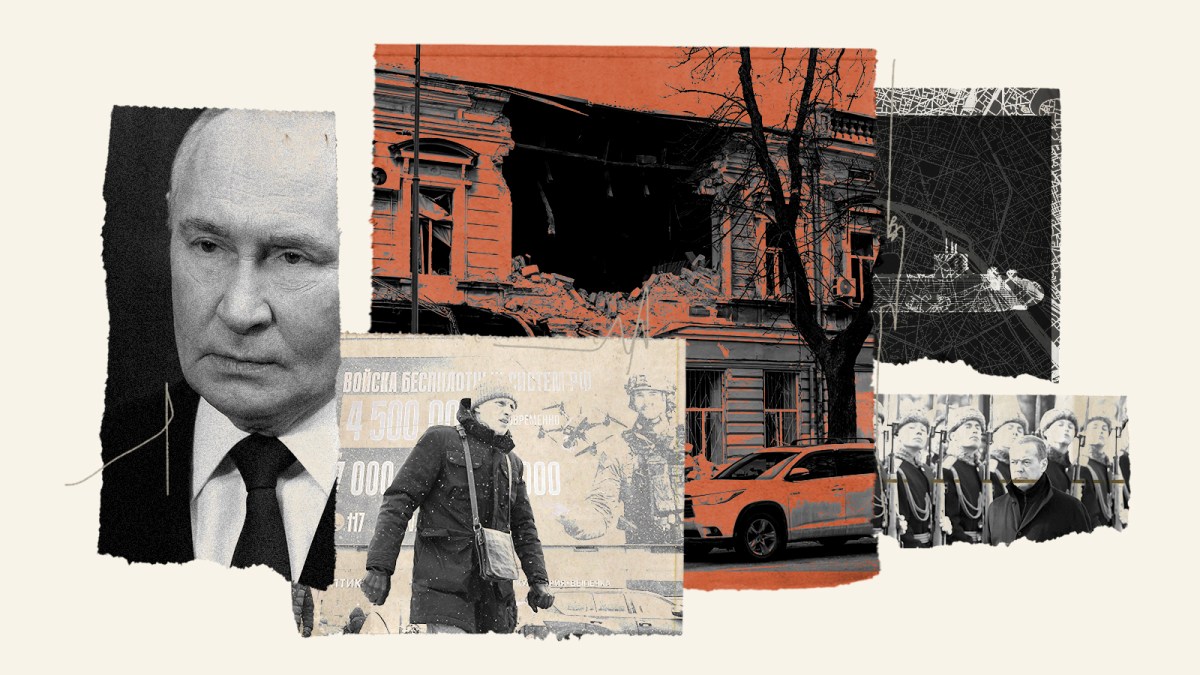
Russian state media has intensified its propaganda efforts in recent weeks as President Vladimir Putin faces growing public fatigue over the prolonged conflict in Ukraine, according to analysts and media monitoring groups.
The Kremlin has launched what observers describe as a coordinated campaign across television, newspapers, and social media platforms to reinvigorate support for what it still refers to only as a “special military operation” – now in its third year with no end in sight.
“We’re seeing a significant escalation in both the volume and emotional intensity of war-related content,” says Maria Petrovskaya, a media analyst who tracks Russian state broadcasting patterns. “The messaging has shifted from the initially promised quick victory to preparing the population for a long-term struggle.”
Recent broadcasts on Channel One and Russia-1, the country’s most watched state-controlled networks, have featured extended segments portraying Russian soldiers as heroes defending the motherland against NATO aggression. These programs increasingly frame the conflict as an existential battle for Russia’s survival rather than a limited operation in neighboring Ukraine.
The propaganda push comes amid signs that ordinary Russians are growing weary of the war’s economic and social costs. Independent polling, though increasingly difficult to conduct in Russia’s restrictive environment, suggests support for the conflict has softened, particularly among younger Russians and urban professionals hit hardest by international sanctions.
“The initial rallying effect has naturally diminished,” explains Pavel Luzin, a Russian military analyst now based outside the country. “People who were once enthusiastic about the war are now more concerned about inflation, reduced access to imported goods, and the ongoing mobilization of young men.”
In response, state media has adopted a multi-pronged approach. Television programs now feature more human interest stories about Russian families supporting troops, while downplaying casualty figures and battlefield setbacks. Meanwhile, economic difficulties are attributed solely to Western sanctions described as “economic warfare” against ordinary Russians.
The propaganda machine has also intensified its portrayal of Ukraine and its Western allies as morally corrupt and existentially threatening to Russian values. Recent broadcasts have increasingly leaned on historical narratives, drawing parallels between the current conflict and World War II, when the Soviet Union fought Nazi Germany.
“By connecting today’s war to the Great Patriotic War, the regime tries to tap into deeply rooted patriotic sentiments,” notes Maxim Trudolyubov, an editor at the independent Russian-language outlet Meduza. “This historical framing makes it harder for ordinary Russians to question the conflict without feeling they’re betraying their ancestors.”
Digital platforms have become another key battleground. After restricting access to independent media and Western social networks, Russian authorities have flooded remaining platforms with pro-war content. State-affiliated Telegram channels and VKontakte groups produce a steady stream of patriotic memes, videos, and commentary targeting younger audiences who are less likely to watch traditional television.
The Kremlin has also tightened legal restrictions on war criticism. Since March 2022, laws against “discrediting the armed forces” have been used to prosecute hundreds of Russians who publicly questioned the official narrative. Penalties range from hefty fines to prison sentences of up to 15 years.
Despite these efforts, cracks in public consensus are becoming visible. In major cities, symbols of war support – including “Z” logos and orange-black St. George ribbons – have noticeably decreased compared to the conflict’s early months. Economic concerns now consistently rank higher than the war in public opinion surveys about national priorities.
“Putin faces a challenging balancing act,” says Alexander Baunov, a Russian political analyst. “He needs to maintain support for a costly, prolonged conflict while addressing growing economic and social pressures. The propaganda machine is working overtime to bridge that gap.”
For ordinary Russians, navigating daily life increasingly means compartmentalizing – supporting the abstract idea of defending Russian interests while hoping for an eventual return to normalcy. The question remains whether intensified propaganda can sustain public patience as the conflict’s costs continue to mount.
“The Kremlin is betting that Russians’ historical resilience and the lack of alternatives to state media will maintain sufficient passive support,” Trudolyubov concludes. “But war fatigue is a powerful force, and one that propaganda alone may struggle to overcome in the long run.”
Fact Checker
Verify the accuracy of this article using The Disinformation Commission analysis and real-time sources.

7 Comments
The Kremlin’s propaganda efforts seem to be an attempt to rally public support as the war drags on. It will be interesting to see if the Russian people start to push back against the increasingly intense messaging.
While the Kremlin’s propaganda machine is formidable, I wonder how effective it will be in the long run as the realities of the war become harder to ignore. The Russian public may become increasingly skeptical of the official narrative.
This situation highlights how governments can use media to shape public opinion, even in the face of growing fatigue. It’s concerning to see the narrative shift towards portraying this as an existential struggle for Russia.
You’re right, the framing of this conflict as vital to Russia’s survival is troubling. It suggests the Kremlin may be willing to escalate things further, which could have serious consequences.
The intensification of pro-war messaging is a clear sign that the Kremlin is worried about losing public support. However, relying on emotional appeals and nationalist rhetoric is a risky strategy that could backfire.
I agree. Doubling down on propaganda often indicates a position of weakness rather than strength. The Russian public may start to see through the Kremlin’s attempts to manipulate them.
It’s concerning to see the Kremlin resort to such blatant propaganda tactics. The transition from the initial ‘quick victory’ narrative to one of an existential struggle suggests they are struggling to maintain public morale.