


Listen to the article
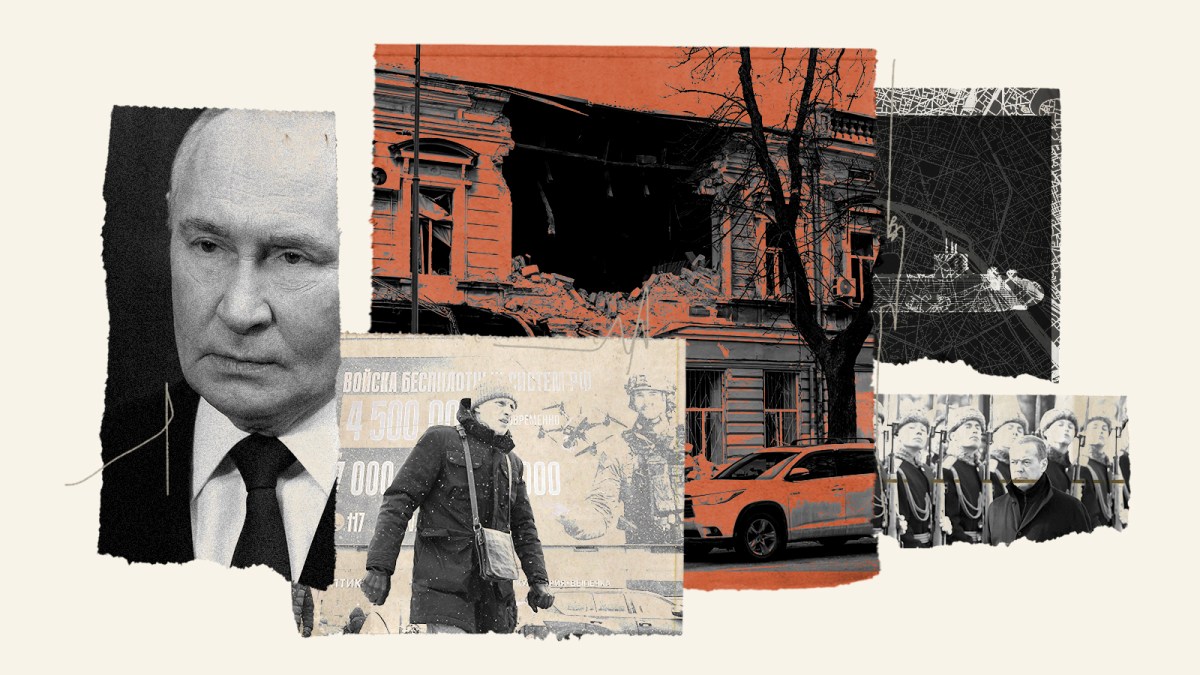
Russia has intensified its propaganda efforts in recent months as public enthusiasm for the conflict in Ukraine continues to wane among ordinary citizens, according to political analysts and independent media reports.
President Vladimir Putin’s administration is deploying increasingly sophisticated messaging across state-controlled television networks and social media platforms to maintain support for what the Kremlin still refers to as its “special military operation.” This propaganda push comes as the war approaches its third year with no clear end in sight.
“The initial patriotic fervor has definitely subsided,” explains Maria Petrovskaya, a media analyst formerly with the independent monitoring organization Medialogiya. “The regime recognizes that maintaining public support requires more aggressive information control as economic pressures and casualty rates impact Russian households.”
Recent polling from the Moscow-based Levada Center, Russia’s last remaining independent polling organization, suggests that while a majority of Russians still express support for the military operation when asked directly, the number who actively follow news about the conflict has decreased by nearly 30 percent since early 2022.
State television has responded by increasing its focus on alleged Ukrainian atrocities and NATO provocations while minimizing coverage of Russian military setbacks. Programs routinely feature carefully selected military analysts who present an optimistic view of Russia’s progress, often contradicting independent assessments from Western military experts.
The information campaign extends beyond traditional media. In major cities like Moscow and St. Petersburg, patriotic billboards and posters featuring the “Z” symbol have become more prevalent. Schools have intensified “patriotic education” programs, with children participating in activities supporting the troops.
“The propaganda machine has shifted from merely justifying the invasion to creating an alternate reality where Russia is winning not just militarily but morally,” notes Dmitry Oreshkin, an independent political scientist now based in Lithuania. “This reflects the Kremlin’s understanding that factual reporting on the war’s progress would undermine public support.”
Meanwhile, those expressing anti-war sentiments face increasingly severe consequences. Since March 2022, authorities have arrested more than 19,000 people for anti-war protests, according to OVD-Info, a Russian human rights monitoring group. New legislation has criminalized “discrediting the armed forces” with penalties of up to 15 years imprisonment.
Economic factors also play a significant role in the Kremlin’s calculus. Western sanctions have caused disruptions across various sectors, though Russia’s economy has proven more resilient than initially expected. The government has increased social spending and military wages to maintain support among key demographics.
“For many families with men serving in the military, the increased pay has become a crucial income source amid broader economic uncertainty,” explains economist Sergei Guriev, former chief economist at the European Bank for Reconstruction and Development. “The Kremlin understands that economic incentives are essential for maintaining compliance, if not enthusiasm.”
Putin’s administration has also adapted its messaging for different audience segments. Urban professionals receive more sophisticated propaganda emphasizing Russia’s sovereignty and historical grievances, while rural and working-class audiences are targeted with simpler nationalist messages and economic promises.
Social media platforms have become key battlegrounds despite the government’s attempts to block services like Facebook and Instagram. On platforms still accessible in Russia, networks of pro-Kremlin influencers and bloggers amplify official narratives while appearing to provide independent analysis.
“The sophistication of Russia’s disinformation ecosystem shouldn’t be underestimated,” warns Thomas Kent, former president of Radio Free Europe/Radio Liberty. “It’s no longer just about crude propaganda but creating an immersive information environment where alternative viewpoints seem not just wrong but unpatriotic and dangerous.”
Despite these extensive efforts, cracks in public consensus are appearing. Urban professionals and younger Russians increasingly use VPNs to access blocked independent media, while the ongoing mobilization of troops has brought the war’s reality to previously insulated communities.
As the conflict stretches on with mounting casualties, the Kremlin faces the challenge of maintaining public support without resorting to measures that might trigger broader discontent. For now, the propaganda machine continues to adapt, evolving its tactics to address changing public sentiment while maintaining the fundamental narrative that Russia’s cause is just and victory inevitable.
Fact Checker
Verify the accuracy of this article using The Disinformation Commission analysis and real-time sources.

11 Comments
This shift in public sentiment is an important development. While the Kremlin may be able to temporarily bolster support through propaganda, the underlying economic and human costs of the war could ultimately undermine their efforts.
The article highlights a concerning trend – the initial patriotic fervor appears to be subsiding as the harsh realities of this conflict become more apparent. The Kremlin’s propaganda push is a clear attempt to regain control of the narrative.
Agreed. Maintaining public support will be increasingly difficult if the war drags on with no clear endgame. The Kremlin’s tactics may backfire if they further alienate a weary population.
This is an interesting development in the ongoing conflict. The Kremlin’s propaganda efforts suggest they are growing concerned about waning public support, which could have significant implications for the course of the war.
Absolutely. If the Kremlin is forced to rely more heavily on coercion and control of information to maintain public backing, it could further undermine their position both domestically and internationally.
Interesting to see how the Kremlin is doubling down on propaganda efforts as public sentiment shifts. Maintaining domestic support for a prolonged conflict will be challenging, even with a heavy-handed information campaign.
You’re right, the waning enthusiasm among ordinary Russians suggests the Kremlin is facing an uphill battle. Aggressive messaging can only go so far when economic pressures and casualties are mounting.
It’s not surprising that Russian enthusiasm for the war is waning as the conflict grinds on. The Kremlin’s propaganda push is a desperate attempt to control the narrative, but it may not be enough to overcome the real-world impacts on Russian households.
Exactly. Maintaining public support through propaganda alone will be an uphill battle for the Kremlin as the economic and human toll of the war becomes increasingly apparent to ordinary Russians.
The article highlights the challenge the Kremlin faces in sustaining public support for the war in Ukraine. Aggressive propaganda may temporarily shore up enthusiasm, but the longer-term impacts on Russian households could ultimately erode that support.
The Kremlin’s intensified propaganda campaign is a clear sign that they are worried about declining public enthusiasm for the war. Maintaining domestic support will be crucial, but may be increasingly difficult as the economic and human costs mount.