


Listen to the article
Russia’s State-Funded War Comedy Sparks Controversy Amid Ukraine Conflict
Russian propaganda has taken an unprecedented turn with the release of “The Other Side of the Coin,” a comedy series about Russian soldiers fighting in Ukraine. The show, backed by an organization receiving billions of rubles from the Kremlin, represents a strategic shift in how authorities are attempting to shape public perception of the ongoing conflict.
Since the invasion began, President Vladimir Putin and his supporters have tried to portray the Ukraine war as a people’s struggle, but this narrative has failed to resonate widely. As war fatigue grows among Russians, the Kremlin appears to be experimenting with new approaches to maintain public support.
“The logic behind making a comedy is simple: laughter helps manage fear,” explains an observer familiar with the production. “Removing the war from public consciousness is impossible, so propaganda’s task is to turn it from a tragedy into a comedy.”
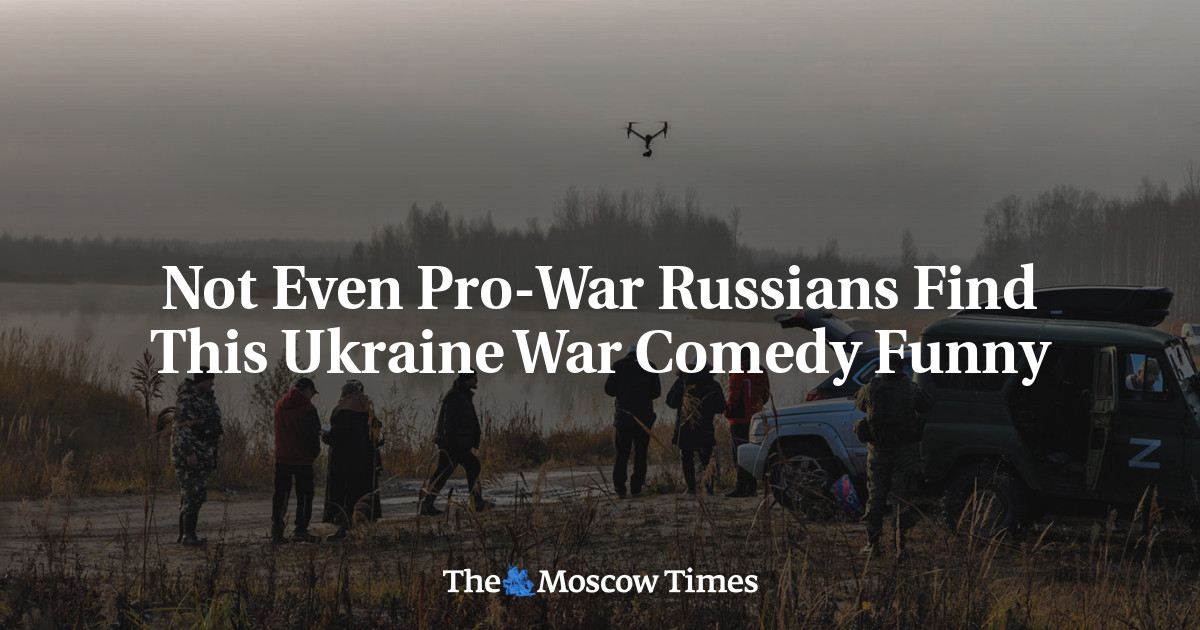
The series follows a group of volunteers arriving in a combat zone under the supervision of an experienced fighter with the call sign “Cuba.” The plot centers around their day-to-day lives establishing a base in a ruined house—a sanitized portrayal that contrasts sharply with documented realities of the conflict.
The casting has raised eyebrows, particularly the involvement of respected actor Alexander Mikhailov, who some critics say is tarnishing his legacy. Another cast member, Vladimir Epifantsev, was previously reported to police for allegedly anti-Russian statements, including claiming that “we live in a fascist military state.”
The show has provoked backlash even among pro-war figures. Mikhail Ivanov, a United Russia deputy in the Bryansk Regional Duma and deputy chair of the World Russian People’s Council, called the concept “deeply flawed and immoral,” arguing that it mocks the grief of those who have lost loved ones in the conflict.
Social media users have voiced similar objections. One particularly pointed VKontakte post asked: “Has the director ever been to the front? Does he understand what it’s like to see your comrades torn to pieces? Or to hold a mortally wounded friend as he dies? Funny, is it?”
This approach to war propaganda marks a significant departure from past conflicts. During the Chechen wars of the 1990s, which saw similar devastation of civilian areas, no state-funded comedies were produced. A key difference is scale—the Ukraine conflict has permeated Russian society far more deeply, with higher casualty rates and broader economic impacts from international sanctions.
Unlike the Chechen wars, where atrocities could be reported with relative freedom for a time, information about the Ukraine conflict is tightly controlled. Yet the reality of the war has become impossible to fully conceal, with casualties estimated between 150,000 and 250,000 Russian soldiers.
Media analysts predict the series will follow formulaic propaganda patterns, portraying Russian soldiers as heroic and kind while depicting Ukrainians as villains. The show appears targeted at viewers of entertainment channel TNT—Russians less directly affected by the war who consume mainstream television.
Critics doubt the show can effectively balance its seemingly contradictory goals. “You can’t make people watching the war from couches laugh without provoking the fury of those who buried a husband or son,” notes one commentator. The title itself—”The Other Side of the Coin”—ironically acknowledges there’s a hidden downside to everything.
The series conspicuously omits the brutal realities of the conflict—the casualties, corruption, and war crimes that have been documented by international observers. Instead, it presents a sanitized version of military life that many veterans and families of fallen soldiers find deeply offensive.
As this unusual propaganda experiment unfolds, it highlights the Kremlin’s growing challenge in maintaining support for a prolonged conflict that continues to exact a heavy toll on Russian society.
Fact Checker
Verify the accuracy of this article using The Disinformation Commission analysis and real-time sources.

11 Comments
Turning the Ukraine war into a comedy? That’s a bold and potentially risky move by the Kremlin. I wonder if it will backfire and further erode public support rather than shore it up. Minimizing the horrors of war through humor is a delicate balancing act.
A Russian war comedy about the Ukraine invasion? That’s an interesting, if misguided, propaganda tactic. Trying to turn a deadly conflict into entertainment feels like a desperate attempt to downplay the realities of the situation. I doubt this will resonate well, even with pro-war audiences.
Making light of the Ukraine conflict through a comedy series? That seems like a tone-deaf and counterproductive move by the Russian authorities. Humor can be a powerful tool, but it requires a deft touch, especially when dealing with such a sensitive and tragic situation.
A war comedy about the Ukraine invasion? That seems like a very misguided approach. Audiences are likely to find it distasteful and disrespectful, especially given the ongoing suffering and loss of life. The Kremlin may be grasping at straws to maintain public support.
A Russian war comedy about the Ukraine invasion? That’s an interesting, if misguided, propaganda tactic. Trying to turn a deadly conflict into entertainment feels like a desperate attempt to downplay the realities of the situation. I doubt this will resonate well, even with pro-war audiences.
Interesting, a Russian war comedy about the Ukraine conflict. Seems like a tone-deaf attempt to downplay the tragedy and make light of the situation. I doubt this will sit well even with pro-war audiences – humor is a tricky way to address such a sensitive, ongoing conflict.
Turning the Ukraine war into a comedy? That’s a bold and potentially risky move by the Kremlin. I wonder if it will backfire and further erode public support rather than shore it up. Minimizing the horrors of war through humor is a delicate balancing act.
Interesting, a Russian war comedy about the Ukraine conflict. Seems like a tone-deaf attempt to downplay the tragedy and make light of the situation. I doubt this will sit well even with pro-war audiences – humor is a tricky way to address such a sensitive, ongoing conflict.
A war comedy about the Ukraine invasion? That seems like a very misguided approach. Audiences are likely to find it distasteful and disrespectful, especially given the ongoing suffering and loss of life. The Kremlin may be grasping at straws to maintain public support.
Making light of the Ukraine conflict through a comedy series? That seems like a tone-deaf and counterproductive move by the Russian authorities. Humor can be a powerful tool, but it requires a deft touch, especially when dealing with such a sensitive and tragic situation.
It’s fascinating to see the Kremlin experiment with new approaches to shape public perception of the Ukraine conflict. A war comedy seems like a risky and potentially backfiring strategy – humor is a tricky way to address such a sensitive, ongoing crisis. I wonder how this will be received.