


Listen to the article
Russian Disinformation Campaign Targets Hungarian Opposition Leader with False Military Claims
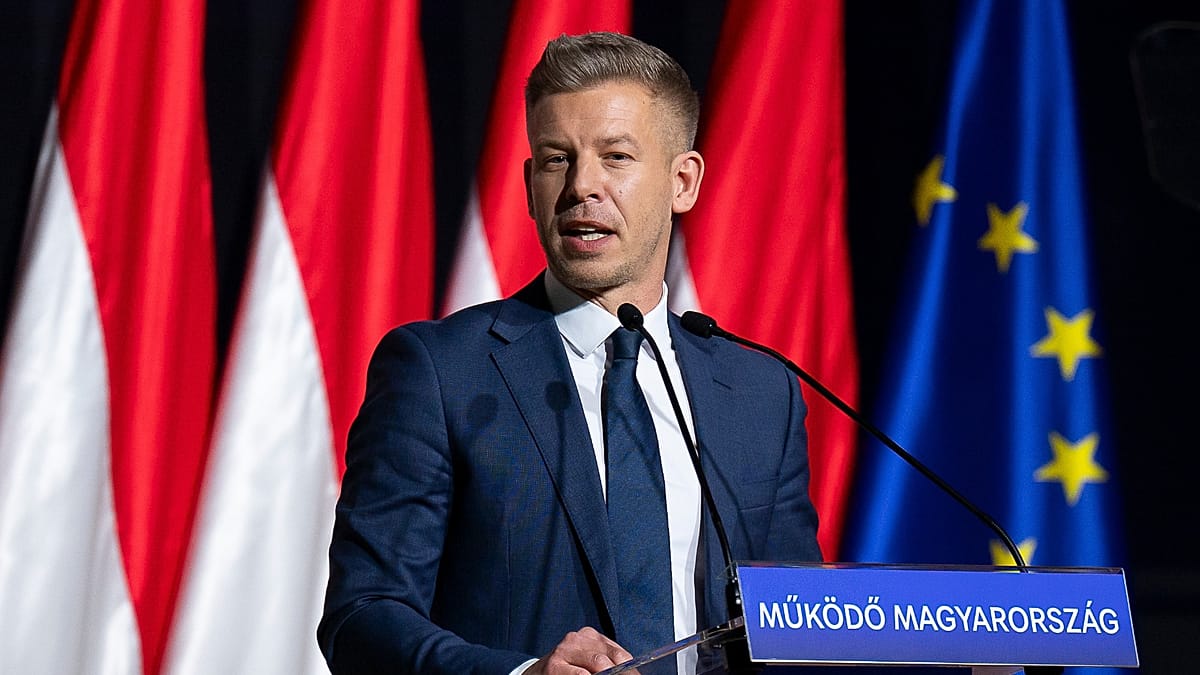
A sophisticated Russian disinformation operation has been spreading false claims that Hungarian opposition leader Péter Magyar plans to reintroduce mandatory military conscription in Hungary, according to researchers tracking online propaganda.
The allegations, which have appeared on social media platforms including X and Facebook, falsely assert that Magyar told voters at a campaign rally that “Hungary needs conscription to get ready for war.” Some posts even claimed that “Magyar thinks forcing 90,000 young men into army boots will solve Hungary’s problems.”
These claims directly contradict Magyar’s official platform. His pro-European Tisza party’s manifesto explicitly states that if elected, a Tisza government “will not reintroduce conscription” either after the election or at any point in the future. The party platform also rules out sending Hungarian troops to Ukraine or other conflicts, while advocating for increased military spending and strengthened national defense.
Researchers at the Gnida Project, an open-source investigative unit specializing in Russian disinformation, have traced these fabricated claims to a known Russian propaganda network called Storm-1516. This group, first identified by researchers at Clemson University in 2023, specializes in spreading false information online to advance Moscow’s interests.
Storm-1516 has been active in multiple election campaigns worldwide. Microsoft’s Threat Analysis Centre has identified the group as part of a network of “Russian influence actors” that use coordinated techniques to discredit candidates in various national elections. In December 2025, the German government summoned the Russian ambassador over allegations that the group had interfered in the country’s federal elections.
The disinformation campaign has employed sophisticated tactics to appear legitimate, including creating fake news websites and impersonating established media outlets. In one instance, Storm-1516 created a fraudulent Euronews report and accompanying website falsely claiming that Magyar had insulted Donald Trump at a campaign rally.
According to the Institute of Strategic Dialogue, a London-based independent think tank, pro-Kremlin information operations have significantly increased their activity in Hungary in recent weeks, focusing efforts on discrediting Magyar and his party. The research found that the fake Euronews website was one of six newly created sites linked to Storm-1516, all registered within a two-week period and dedicated to spreading false claims about the Hungarian opposition.
The campaign has evolved to include paid Facebook advertisements, allowing the false conscription claim to reach more than 20,000 people in Hungary, primarily those over the age of 50. These ads were posted by a page claiming to be a beauty salon—which has since been removed—with no evidence of such a business actually operating in Hungary.
“We are seeing that they are using different fake websites to target the Hungarian audience and the international audience to proliferate the same narrative,” the Gnida Project explained, noting this represents a “tactical shift” in Storm-1516’s approach.
Meanwhile, Prime Minister Viktor Orbán’s Fidesz party has echoed similar claims, with candidates campaigning on the premise that Tisza will involve Hungary in the Ukraine war, redirect pension funds to support Kyiv, and impose conscription. However, there is no evidence linking Fidesz directly to the online disinformation campaign.
The false narratives have expanded beyond conscription to include elaborate conspiracy theories. One fabricated “investigation” claimed Magyar was involved in a scheme to funnel €14.3 million in EU aid funds to Ukraine during a hospital visit. Another attempted to connect Tisza’s vice president, Ágnes Forsthoffer, to Jeffrey Epstein’s sex trafficking ring.
This coordinated effort represents just the latest example of foreign interference in democratic elections, highlighting the evolving sophistication of disinformation campaigns designed to manipulate voters and undermine political opposition.
Fact Checker
Verify the accuracy of this article using The Disinformation Commission analysis and real-time sources.

11 Comments
Sophisticated Russian propaganda targeting Hungary’s elections is very concerning. Spreading misinformation to influence voters is a disturbing tactic. Fact-based reporting and critical thinking are key defenses.
Interesting to see Russia’s propaganda machine targeting elections in Hungary. It’s concerning how misinformation can sway voters if left unchecked. Fact-checking and media literacy are so important these days.
Russia’s interference in Hungary’s elections through online propaganda is very troubling. Maintaining the integrity of the democratic process should be a top priority. Fact-checking is crucial for citizens.
I agree. Disinformation from foreign actors poses a real threat to free and fair elections. Robust media literacy campaigns are needed to empower voters.
This is a concerning development. The spread of false claims about military conscription is a classic tactic of Russian propaganda. Voters must be discerning and rely on authoritative sources during elections.
The report highlights how Russian disinformation can undermine confidence in elections. Verifying claims and consulting official party platforms is essential for Hungarian voters to make informed choices.
This is a worrying development. Voters must be vigilant against foreign interference and rely on authoritative, fact-based sources when forming their political views. Protecting the integrity of elections is paramount.
The report on Russia’s targeting of Hungary’s elections is a reminder of the complex geopolitical landscape. Scrutinizing claims and cross-referencing information is key to making informed decisions at the ballot box.
This highlights the ongoing threat of Russian disinformation campaigns. Spreading false claims about military conscription is a concerning tactic to undermine opposition candidates. Voters should be vigilant and refer to official sources.
Absolutely. Staying informed from reliable news sources is crucial to cut through the noise of online propaganda.
Disinformation campaigns erode trust in democratic processes. I hope Hungary can withstand these efforts and voters can make their choices freely and based on facts. Rigorous fact-checking is vital.