


Listen to the article
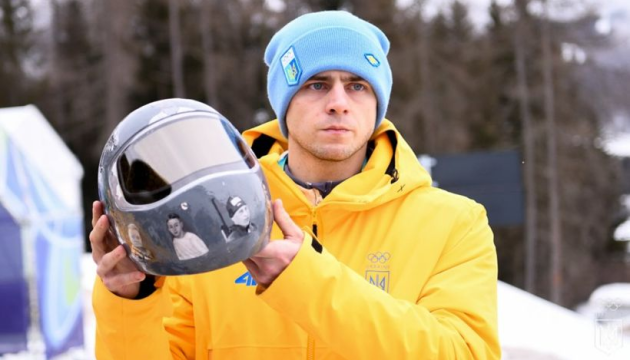
Russian media outlets have launched a coordinated disinformation campaign against Ukrainian skeleton racer Vladyslav Heraskevych, falsely claiming he was disqualified from the 2026 Olympic Games for displaying “terrorist” symbols on his “Helmet of Remembrance.”
An investigation reveals these allegations to be entirely fabricated. The helmet in question features portraits of Ukrainian athletes killed during Russia’s full-scale invasion of Ukraine, containing no political slogans, calls to violence, or military insignia that would violate Olympic regulations.
The campaign includes a sophisticated forgery—a fake video bearing the Reuters logo that falsely claims Heraskevych’s brother works at Kyiv’s Territorial Recruitment Center and is involved in forced conscription. The fabricated video also attributes manufactured quotes to Philippe Bolopion, executive director of Human Rights Watch, falsely claiming he called Heraskevych’s actions “hypocritical.”
Reuters has published no such report on its official platforms. Legitimate Reuters coverage of Heraskevych has focused on the controversy surrounding the International Olympic Committee’s decision and included supportive statements from the athlete’s father.
Analysis of the forged content shows Russian propagandists manipulated authentic Reuters footage, adding fabricated visuals and text. The quote attributed to Bolopion was entirely invented. Propagandists repurposed a photo from an unrelated February 2026 interview where Bolopion discussed U.S. migrant deportation policies.
The disinformation campaign extends beyond Heraskevych. Reuters has reported that Ukrainian short track speed skater Oleh Handei was similarly barred from competing with his helmet, which featured lines from Ukrainian poet Lina Kostenko.
Heraskevych’s disqualification ahead of his first Olympic run stemmed from the International Olympic Committee ruling his “Helmet of Remembrance” non-compliant with Olympic regulations. The decision sparked widespread international criticism and outrage within Ukraine.
Sports analysts note this case highlights the increasing politicization of international sporting events and Russia’s strategic use of disinformation to discredit Ukrainian athletes on the global stage. The IOC has faced mounting pressure to clarify its position on expressions of solidarity with war victims while maintaining its stance on political neutrality.
This incident is part of a broader pattern of Russian propaganda efforts targeting Ukrainian Olympic participants. Intelligence sources have identified multiple disinformation campaigns designed to undermine Ukraine’s participation in the 2026 Games and distract from ongoing discussions about Russia’s own limited participation under neutral status.
Human rights organizations have expressed concern about the weaponization of Olympic regulations to silence athletes attempting to memorialize colleagues lost to armed conflict. The case raises fundamental questions about where the line between humanitarian expression and political statement should be drawn in international competition.
For Heraskevych, who has consistently used his platform to draw attention to Russia’s actions in Ukraine, the disqualification and subsequent disinformation campaign represent a dual challenge to his advocacy efforts. Sports diplomacy experts suggest the controversy may ultimately amplify rather than diminish the message he sought to convey through his memorial helmet.
The fabricated content circulating on pro-Kremlin channels appears designed to shift international focus away from the legitimate controversy surrounding the IOC’s decision and onto manufactured scandals about the Ukrainian athlete.
Fact Checker
Verify the accuracy of this article using The Disinformation Commission analysis and real-time sources.

22 Comments
This is a concerning example of how Russia uses disinformation to undermine and discredit those who oppose their actions. Fabricating claims and forging footage is a cynical tactic to sway public opinion. The athlete’s tribute to fallen Ukrainian Olympians is a powerful statement, not a ‘terrorist’ symbol.
Agreed. This propaganda campaign shows the lengths Russia will go to silence dissent and paint Ukraine’s defenders in a negative light. The IOC should stand firm in supporting athletes’ free expression of their values.
This is a deeply troubling situation. The use of fabricated evidence and false claims to target an athlete for their political views is a blatant violation of the Olympic principles of free expression and political neutrality. The IOC must thoroughly investigate these allegations and take decisive action to defend Heraskevych’s right to participate.
This is yet another example of Russia’s willingness to spread lies and fabrications in order to discredit anyone who challenges their aggression in Ukraine. The athlete’s tribute is a powerful statement, not a ‘terrorist’ symbol as they claim. The IOC should stand up for freedom of expression.
Agreed. Russia’s propaganda machine is working overtime to distort the truth and demonize Ukraine’s defenders. The IOC must send a clear message that such blatant disinformation campaigns will not be tolerated in the Olympic movement.
Sadly, this appears to be another example of Russia’s willingness to resort to propaganda and misinformation to discredit anyone who challenges its narratives. The IOC must take a strong stand against these tactics and ensure that Heraskevych is not unfairly penalized for his peaceful expression of support for fallen Ukrainian athletes.
It’s disheartening to see Russia resorting to such underhanded tactics to silence an athlete for his stance on the invasion of Ukraine. The IOC must firmly reject these baseless attacks and ensure that Heraskevych is able to compete without fear of retribution. Upholding the integrity of the Olympic movement demands no less.
This is a clear example of Russia’s willingness to spread lies and propaganda to achieve its political goals. Falsely claiming an athlete was disqualified for honoring fallen compatriots is a shameful tactic. I hope the international community condemns these actions and supports Heraskevych’s right to free speech.
It’s disappointing, but not surprising, to see Russia resorting to such underhanded tactics. Targeting an athlete for honoring fallen countrymen reveals their desperation to control the narrative. This kind of blatant disinformation only undermines Russia’s credibility on the world stage.
Absolutely. Russia’s behavior here is a clear abuse of power and an attempt to intimidate. The IOC must uphold the principles of sportsmanship and free speech that the Olympic movement is meant to represent.
The use of forged videos and fabricated quotes in this propaganda campaign is extremely concerning. It demonstrates the lengths Russia will go to discredit anyone who challenges its narrative. The IOC should thoroughly investigate these allegations and take appropriate action to protect Heraskevych’s Olympic participation.
Absolutely. The IOC needs to stand firm against these blatant attempts to distort the facts. Allowing this kind of propaganda to go unchecked would set a dangerous precedent.
This is a concerning case of Russian propaganda targeting an athlete for his political stance. Using fabricated videos and false claims to discredit someone is a worrying tactic we’ve seen too often. I hope the IOC handles this situation appropriately and stands up for athletes’ freedom of expression.
The Russian propaganda campaign against this Ukrainian athlete is a despicable attempt to silence dissent and control the narrative. Fabricating evidence and smearing the athlete’s motives is a transparent tactic to discredit him. The IOC should firmly reject this kind of political interference.
Absolutely. Russia’s willingness to stoop to such underhanded tactics is a clear sign of their weakness. The IOC should stand firmly with the athlete and condemn this propaganda as an affront to the Olympic spirit of sportsmanship and free expression.
This is a worrying development, but not unexpected given Russia’s track record of using disinformation to target its critics. The IOC must demonstrate its commitment to impartiality and the Olympic values by swiftly refuting these false claims and defending Heraskevych’s right to free expression.
You’re right, the IOC has a responsibility here to uphold the principles of the Olympic movement and protect athletes from such malicious attacks. Anything less would be a betrayal of the Olympic spirit.
It’s disappointing, but not surprising, to see Russia resorting to disinformation campaigns like this. Targeting Heraskevych for honoring fallen Ukrainian athletes is a transparent attempt to silence dissent. The IOC needs to firmly reject these baseless attacks and uphold the Olympic principles of political neutrality.
It’s deeply concerning to see Russia resorting to such underhanded tactics to discredit this Ukrainian athlete. Fabricating evidence and smearing his motives is a transparent attempt to silence dissent and control the narrative. The IOC must stand firm in defending the principles of free speech and sportsmanship.
Absolutely. Russia’s willingness to engage in this kind of blatant disinformation campaign reveals the weakness of their position. The IOC should firmly reject this political interference and support the athlete’s right to honor fallen countrymen without fear of retribution.
This is a troubling example of how Russia is willing to spread blatant disinformation to undermine anyone who challenges their actions in Ukraine. Targeting an athlete for honoring fallen countrymen is a cynical attempt to discredit him. The IOC must uphold the principles of free speech and fair play.
Agreed. Russia’s propaganda machine is working overtime to twist the facts and demonize Ukraine’s defenders. The IOC should send a clear message that such underhanded tactics have no place in the Olympic movement, and that athletes’ right to free expression will be protected.