


Listen to the article
Ukrainian Security Services Target Key Russian Propagandist Behind Occupation Media
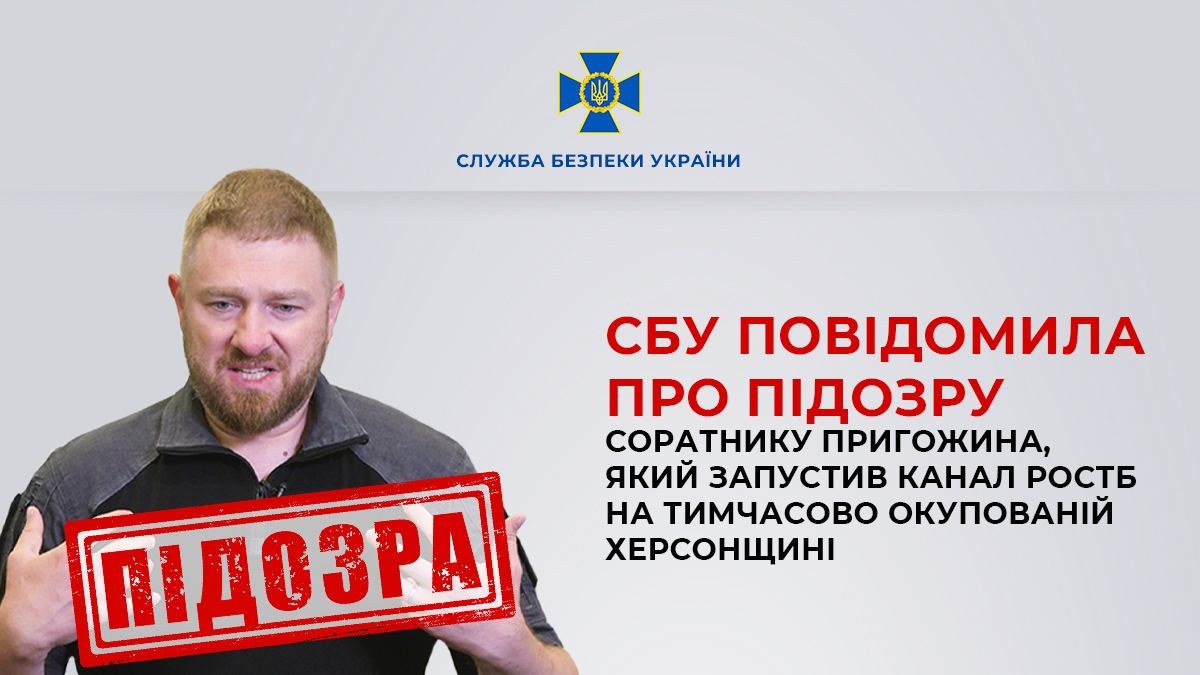
The Security Service of Ukraine (SBU) has issued a notice of suspicion to Oleksandr Malkevich, a Russian journalist identified as the primary architect of occupation media operations in Ukraine’s Kherson region. Malkevich faces serious charges under Article 110(2) of Ukraine’s Criminal Code for disseminating materials calling for territorial changes to Ukraine’s borders.
Ukrainian authorities allege that Malkevich, who arrived in Kherson in September 2022, systematically promoted Kremlin narratives while recruiting personnel for Russian-controlled media outlets in occupied territories. His efforts represent a significant component of Russia’s information warfare strategy in Ukraine.
“Malkevich has been instrumental in creating a pro-Russian information ecosystem designed to normalize the occupation,” said a security analyst familiar with the investigation who requested anonymity. “His work directly supports Russia’s territorial ambitions in Ukraine.”
The suspect holds significant positions within Russia’s political establishment, serving as both a deputy in St. Petersburg’s Legislative Assembly representing the ruling United Russia party and as a member of the Public Chamber of the Russian Federation. These official roles place him firmly within the inner circles of Russian political power, allowing him to leverage governmental resources for propaganda purposes.
Following Russia’s full-scale invasion in February 2022, Malkevich emerged as a central figure in establishing pro-Russian media networks throughout occupied Ukrainian territories. The SBU investigation revealed that he coordinated the launch and operation of propaganda television channels broadcasting to districts across Kherson, Zaporizhzhia, and Donetsk regions.
On his personal social media accounts, Malkevich regularly published anti-Ukrainian content, describing Ukrainian cities including Kherson and Avdiivka as “an integral part of Russia” while explicitly advocating for the establishment of Russian governmental authority in these areas.
His influence extended into education when he assumed leadership of the journalism department at the captured Kherson State University. There, he established a media school specifically designed to train personnel for Russian propaganda outlets. This strategic approach to developing local talent represents a long-term investment in Russia’s information warfare capabilities in occupied territories.
Earlier this year, Malkevich produced a documentary film about Vladimir Saldo, the Russian-installed governor of the occupied Kherson region, further demonstrating his close ties to occupation authorities. Ironically, Russian authorities have reportedly opened an investigation against Malkevich for allegedly embezzling more than 35 million rubles allocated for media promotion activities.
According to research by Ukrainian media watchdog Detector.media, Malkevich has aggressively expanded the Russian propaganda network by establishing new pro-Kremlin editorial offices in occupied cities, including outlets such as Mariupol 24, Tavria TV, and ZaMedia. Facing a shortage of experienced journalists willing to work in occupied territories, he focused on training new personnel through captured educational institutions in Kherson and later in Berdiansk.
The media outlets under his direction consistently promoted identical messaging: referring to occupied Ukrainian cities as “liberated,” labeling Ukrainian defense forces as “criminals,” and describing residents who oppose the occupation as “Banderites” – a derogatory term in Russian propaganda that falsely links Ukrainian patriotism to World War II-era ultranationalism.
Malkevich’s controversial activities predate Russia’s full-scale invasion of Ukraine. As an associate of Yevgeny Prigozhin, the late founder of the Wagner mercenary group, he participated in creating bot farms designed to influence elections in the United States and Libya. He also worked on USA Really, a propaganda platform reportedly conceived as a Russian counterpart to Radio Free Europe/Radio Liberty.
His activities have drawn international condemnation and sanctions from numerous countries. The United States first sanctioned Malkevich in 2018 and again in 2021, while the European Union, Canada, Japan, the United Kingdom, Ukraine, and Switzerland imposed their own sanctions following Russia’s full-scale invasion. The U.S. government has offered a $10 million reward for information leading to his capture.
This marks the second time the SBU has served Malkevich with a notice of suspicion. In 2023, he was charged with collaboration for establishing propaganda media outlets and supporting the occupation administration. If apprehended and convicted, he could face up to 12 years in prison.
Fact Checker
Verify the accuracy of this article using The Disinformation Commission analysis and real-time sources.

10 Comments
The charges against Malkevich are serious and justified. Promoting materials that call for changes to Ukraine’s borders in occupied territories is a blatant violation of Ukraine’s sovereignty. I hope the investigation leads to a strong punishment that deters similar propaganda efforts in the future.
Agreed. Russia’s information warfare strategy in Ukraine is a major threat that must be countered. Exposing and punishing the key operatives behind these propaganda campaigns is an important step.
This is a concerning case of Russian propaganda efforts in occupied Ukraine. Malkevich’s role in promoting Kremlin narratives and recruiting for Russian-controlled media outlets is clearly aimed at undermining Ukraine’s sovereignty. I hope the Ukrainian authorities are able to hold him accountable for these serious charges.
Yes, I agree. Disseminating materials that call for territorial changes to Ukraine’s borders is a grave offense. Russia’s information warfare strategy in Ukraine must be challenged at every turn.
This is an important case that sheds light on Russia’s multi-faceted efforts to subvert Ukraine’s control over its own territory. Malkevich’s role in creating a pro-Russian information ecosystem to normalize the occupation is particularly insidious. I hope the Ukrainian authorities are able to build a strong case against him.
Yes, this is a concerning development that demonstrates the lengths Russia will go to in its attempt to assert control over Ukrainian territory. Holding propagandists like Malkevich accountable is crucial to defending Ukraine’s sovereignty.
It’s good to see the Ukrainian security services taking action against this key Russian propagandist. Normalizing the occupation through a pro-Russian information ecosystem is a insidious tactic that deserves strong pushback. Holding individuals like Malkevich responsible is an important step.
Absolutely. Undermining Ukraine’s sovereignty through manipulation of media and information is a serious threat that needs to be addressed. I hope the investigation leads to meaningful consequences for Malkevich’s activities.
This highlights the critical role that Russian propagandists like Malkevich play in supporting the Kremlin’s territorial ambitions in Ukraine. Recruiting personnel for occupation media outlets and promoting Kremlin narratives is a concerning component of Russia’s information warfare strategy. Kudos to the Ukrainian authorities for taking action.
I’m glad to see the Ukrainian security services targeting these key Russian propaganda organizers. Malkevich’s work is clearly aimed at eroding Ukraine’s sovereignty, and he must be held accountable.