


Listen to the article
Russian Forces Launch Drone Attack on Kyiv in Propaganda Effort, Defense Official Says
Russian forces launched approximately 40 Lancet drones toward Kyiv on March 16 in what Ukrainian officials describe as an operation designed more for propaganda purposes than military effectiveness. According to Defense Ministry adviser Serhii “Flash” Beskrestnov, the attack was primarily aimed at creating footage to showcase to Russian audiences rather than causing significant damage.
“This is how the ‘Lancet in Kyiv’ information campaign is born,” Beskrestnov explained. “To this end, they are preparing a full-scale operation involving Shaheds and Lancets. The goal is to show the people of Russia and the country’s leadership fragments of the Lancet in Kyiv at any cost.”
The unusual deployment of Lancet drones, which typically have a limited range of 30-80 kilometers, suggests a deliberate propaganda effort, according to Ukrainian officials. Beskrestnov noted that Russia chose to use these electric drones specifically because “the hype surrounding it in Russia had died down, and the manufacturers needed a good story to justify new purchases.”
To overcome the Lancet’s inherent range limitations, Russian forces reportedly modified the drones by removing warheads and installing additional high-technology batteries. They also strategically launched the drones from the closest possible points to Kyiv during favorable wind conditions to maximize their chances of reaching the capital.
“The chances of a standard Lancet drone flying 200 km to Kyiv are zero,” Beskrestnov emphasized, highlighting the extraordinary measures taken to ensure at least some drones reached their target.
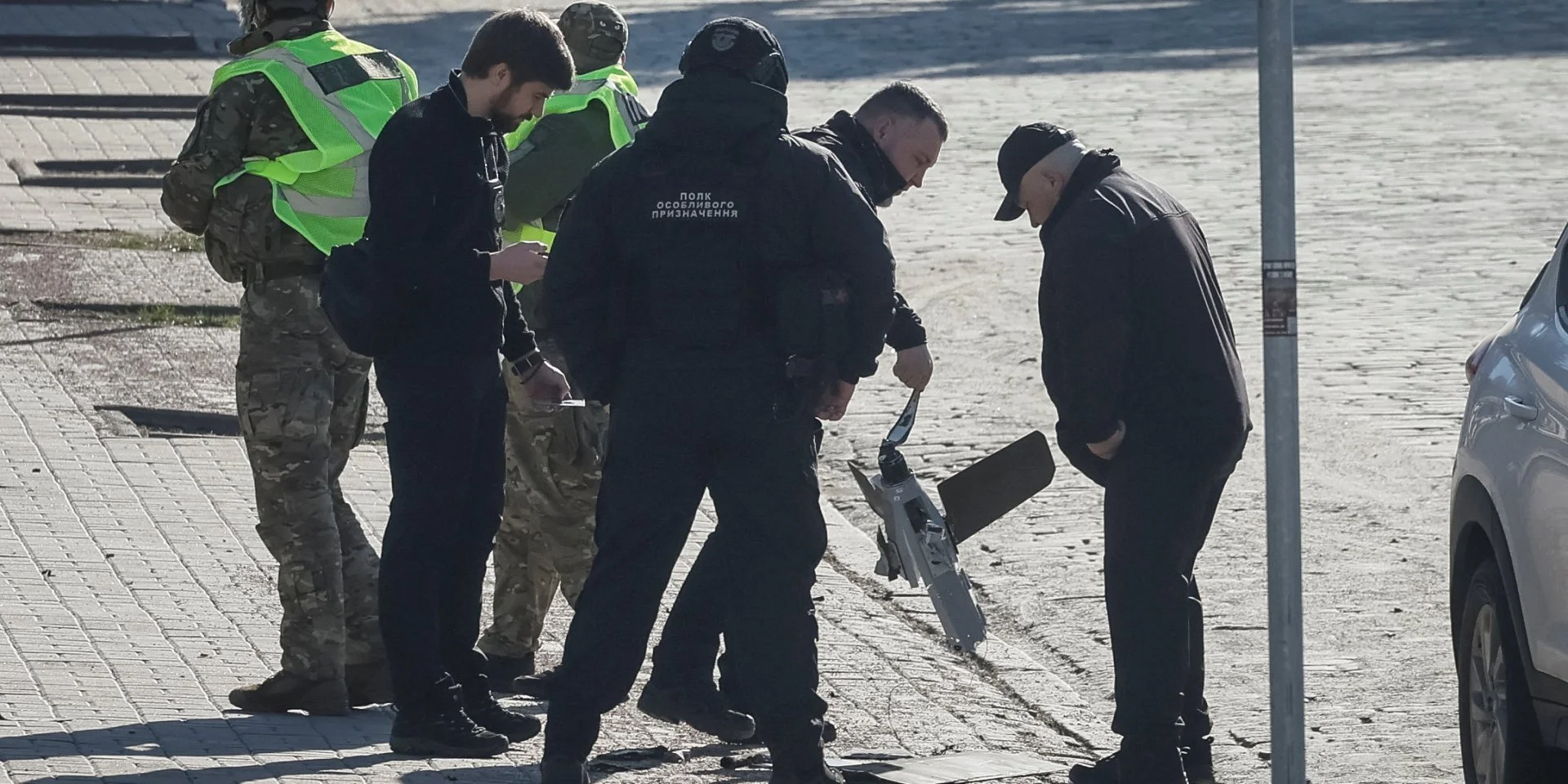
The attack ultimately had minimal military impact. Only a few drones from the entire swarm managed to reach Kyiv, causing no significant damage, though debris was reported on Maidan Nezalezhnosti, just meters from the iconic Independence Monument in central Kyiv.
Beskrestnov framed the failed attack as ultimately beneficial for Ukrainian forces: “We are grateful to the Russian Federation for this operation because these 40 Lancet drones could have caused serious damage by attacking our equipment and personnel on the front lines or at power substations.” He added that the incident provided valuable experience in detecting and countering small aerial targets, as well as an opportunity to examine the electronics of the downed drones.
The early morning attack on March 16 included drones and several missiles targeting Kyiv and the surrounding region. Ukrainian air defenses activated to counter the threat, with explosions reported across the capital as defensive systems engaged incoming targets. Debris fell in several districts of the city, including the central area near the Independence Monument.
Following the attack, the military portal Defense Express published a report suggesting that wreckage found near the monument belonged to a Lancet drone potentially equipped with artificial intelligence. Beskrestnov disputed this assessment, maintaining that no Lancet could physically reach Kyiv due to limited battery life and radio-control range.
Ukrainian authorities continue to investigate the attack, analyzing radio signals, radar data, and images captured by interceptor drones to better understand the nature of the modified drones used in the assault.
The incident highlights Russia’s continued use of asymmetric warfare tactics, combining military operations with information warfare to achieve strategic and psychological objectives beyond direct battlefield impacts.
Fact Checker
Verify the accuracy of this article using The Disinformation Commission analysis and real-time sources.

20 Comments
Deploying drones with limited range to attack the capital suggests desperation on Russia’s part. They’re struggling to make meaningful advances on the ground.
Exactly. This seems like a last-ditch attempt to generate some propaganda wins rather than achieve real military objectives.
This is worrying – using civilian infrastructure as targets for propaganda is a dangerous escalation. I hope Ukraine can defend against these drones effectively.
Agreed, targeting Kyiv with drones is a reckless move that puts innocent lives at risk. Russia should be held accountable.
This is a concerning escalation, even if the drones were primarily for propaganda. Targeting Kyiv with any kind of attack is a dangerous move.
Agreed. Ukraine will need to remain vigilant and ensure their defenses can protect the capital from these types of threats.
I’m skeptical of the effectiveness of this alleged propaganda operation. Launching 40 drones just to get footage seems like an expensive and risky endeavor.
Good point. If this is primarily for show rather than military impact, it’s a poor use of resources that Ukraine can likely counter.
The choice to use Lancet drones specifically suggests Russia is trying to revive interest in this technology after its hype died down. Desperate measures.
Good observation. They’re clearly trying to find ways to make their military capabilities appear more formidable than they actually are.
The range limitations of the Lancet drones highlight Russia’s logistical challenges in this conflict. Relying on propaganda over military impact is a sign of weakness.
Absolutely. Russia seems to be grasping at straws to create the illusion of progress as their invasion stalls.
This appears to be another example of Russia’s information warfare tactics. Trying to create the illusion of progress through staged drone attacks is concerning.
Absolutely. They seem willing to risk civilian lives just to generate propaganda for domestic consumption. It’s a troubling development.
The use of Lancet drones for propaganda rather than military effect is a curious tactic. It highlights Russia’s challenges in this conflict.
Indeed. If they can’t even effectively deploy their drones, it doesn’t bode well for their broader military capabilities in Ukraine.
The use of Lancet drones with their limited range suggests Russia is struggling to project power effectively in this conflict. Resorting to propaganda is a sign of weakness.
Precisely. If they can’t even deploy their drones properly, it raises questions about their broader military capabilities and strategy in Ukraine.
Interesting if true. Using drones for propaganda rather than military impact suggests Russia is struggling to achieve its objectives in Ukraine.
Yes, it seems like a desperate attempt to create an illusion of military success at home.