


Listen to the article
Russian propaganda machine remains fixated on Western media despite hostile relations
In a revealing display of Russia’s complex relationship with the West, Moscow’s propaganda apparatus continues to demonstrate an obsession with Western media coverage, even as diplomatic relations deteriorate to historic lows.
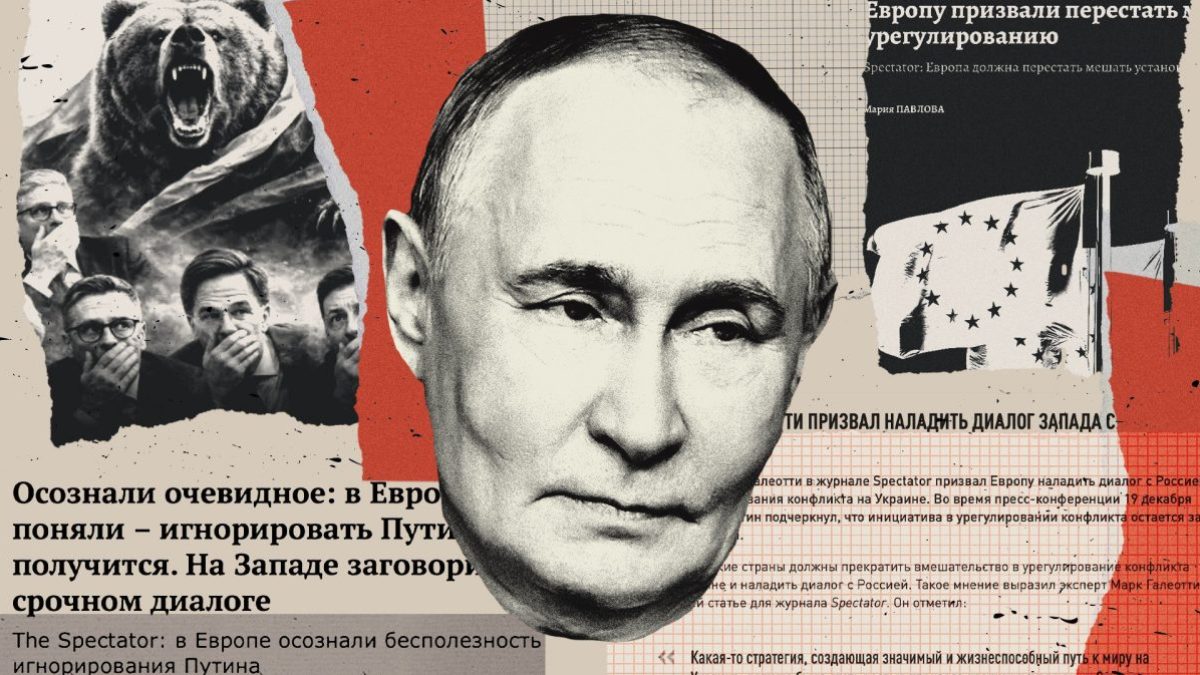
This paradoxical attention was highlighted recently when Russian state media outlets gave extensive coverage to a British political scientist’s cautiously supportive comments about French President Emmanuel Macron’s call for Europe to engage directly with Russia. News agency RIA Novosti led a chorus of Russian media outlets, including the national newspaper Izvestiya and tabloid Moskovsky Komsomolets, in celebrating what they framed as Western recognition that isolating Vladimir Putin had failed.
The original piece, which actually advocated for Europe to develop a coherent strategy to counter Russia and avoid leaving Donald Trump as the sole Western voice in discussions, was cunningly reframed. RIA Novosti went so far as to falsely claim the expert had declared “Putin is right” and that Europe should stop “interfering” in Ukraine – a significant distortion of the original recommendation for more effective Western intervention on Ukraine’s behalf.
Just days later, when the same analyst published critical comments about Russian subversion activities in Europe, the ultra-nationalist news outlet Tsargrad quickly pivoted, describing him as “ranting” and spreading “Russophobic rhetoric and outright slander.” This rapid shift from “noted British political scientist” to alleged Russophobe illustrates Moscow’s selective approach to Western commentary.
The phenomenon extends beyond political analysis. Russian media devotes considerable space to Western celebrities, with extensive coverage of the British Royal Family, J.K. Rowling (rendered as “Dzoan Rouling” in Cyrillic), and even the recent death of British singer Chris Rea, despite his minimal connections to Russia. Such coverage stands in stark contrast to the virtual absence of Russian cultural figures in Western mainstream media.
This asymmetry reveals something deeper about Russia’s relationship with the West. In part, it reflects a “know your enemy” mentality, particularly as the Ukraine conflict is portrayed domestically as essentially a European proxy war against Russia. Coming from a system where the Kremlin frequently dictates media narratives, Russian outlets often misinterpret Western press freedom, assuming foreign journalists similarly function as government mouthpieces. This leads to frequent mischaracterization of individual opinions as official national positions.
However, the fixation goes beyond strategic intelligence gathering. During his recent marathon press conference, Putin himself revealed this complex relationship when he suggested Russia and Europe could work together “on an equal footing, with mutual respect,” adding that their combined economic power would exceed that of the United States.
While clearly a propaganda line, such rhetoric underscores that Putin, like many Russians, fundamentally considers himself European. He may believe that “gayropa” (a derogatory Russian term for Europe’s supposed moral decline) has taken a wrong, progressive turn, and that Russia embodies “true” European values, but he still seems to hope for reconciliation – albeit on his terms.
This familial framing helps explain the particular vehemence of anti-European rhetoric in Russian media. As one Russian nationalist politician once confided, “The Americans can love us or hate us, but when the Europeans pretend we’re not Europeans, too, that really makes us angry.” This sentiment suggests that Russian media’s obsessive coverage of the West stems not just from propaganda needs but also from a deeper sense of rejection and estrangement.
In this context, Russian media’s constant attention to Western voices represents something akin to pressing their noses against the window – simultaneously monitoring for intelligence, seeking propaganda opportunities, and wistfully observing what they still consider, however resentfully, their European family.
Fact Checker
Verify the accuracy of this article using The Disinformation Commission analysis and real-time sources.

10 Comments
The continued obsession with Western media coverage, even as Russia’s international standing crumbles, is a telling sign of the Kremlin’s insecurity. They seem desperate to control the narrative.
It’s concerning to see how far the Russian state media will go to misrepresent and twist the words of Western commentators. This kind of disinformation is a real threat to honest discourse.
One has to wonder what the Kremlin hopes to achieve by so aggressively pushing these false narratives. It seems more like desperation than a coherent strategy.
This is a classic example of the Russian state media distorting facts to fit their preferred narrative. Trying to portray a measured critique as unbridled ‘Russophobia’ is a transparent tactic.
The Kremlin seems threatened by any nuanced analysis that doesn’t fully align with their propaganda. Speaks volumes about their insecurity.
This is a textbook example of Russian propaganda in action – selectively quoting and distorting commentary to paint critics as ‘Russophobes’. A transparent attempt to delegitimize any dissenting voices.
It’s disappointing, but not surprising, to see the Russian propaganda machine resorting to such blatant misrepresentation of Western commentary. Speaks volumes about their inability to engage in good-faith discourse.
The Russian state media’s fixation on Western coverage, even in the face of deteriorating relations, underscores the fragility of the Kremlin’s grip on information. They seem increasingly rattled by any nuanced analysis.
Interesting how the Russian propaganda machine continues to obsess over Western media coverage, even as relations deteriorate. Curious to see how they’ll try to spin this latest incident to their advantage.
It speaks to the fragility of the Kremlin’s narrative that they feel the need to so aggressively reframe any critical commentary from the West.