


Listen to the article
Russian Media Exploits Iran Conflict to Undermine Ukraine Peace Efforts
Kremlin propagandists have launched a coordinated information campaign using the recent U.S. military operation against Iran as justification to reject diplomatic solutions in Ukraine, according to media monitoring reports.
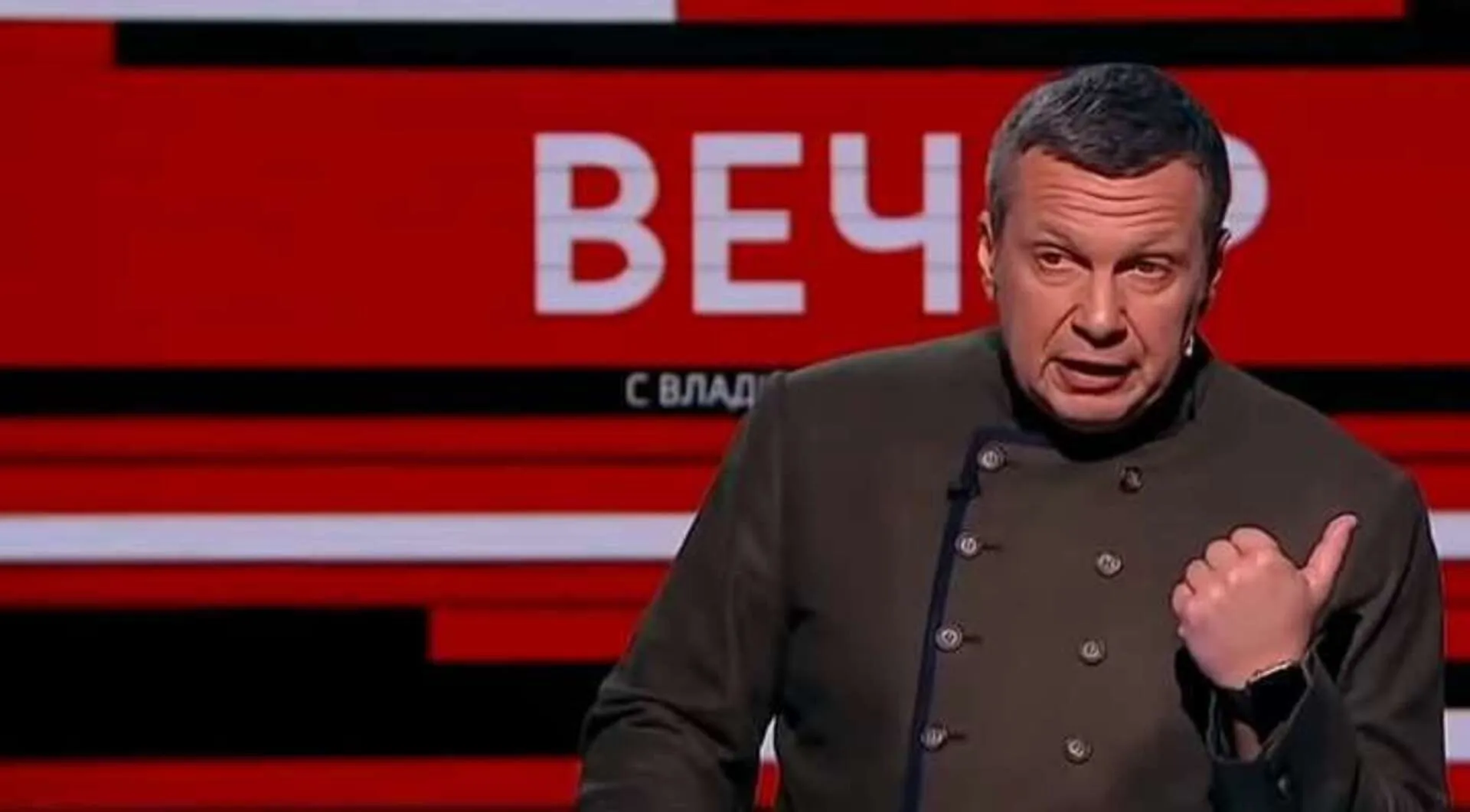
On Russian state television broadcasts, prominent commentators are increasingly calling for escalation rather than negotiation, with some openly advocating for strikes against Ukrainian leadership and framing domestic repression as necessary wartime measures.
Dmitry Kiselyov, host of the influential program Vesti Nedeli, questioned the wisdom of engaging in dialogue with Washington and Kyiv. He urged Russians to “put themselves in Iran’s position,” suggesting that any guarantees offered by Western powers are merely attempts to deceive Moscow, mirroring what he characterized as broken promises to Tehran.
Even more inflammatory rhetoric came from Vladimir Solovyov, one of the Kremlin’s most prominent media figures, who effectively declared global diplomacy dead following the strikes on Iran. “Right now it is absolutely obvious to us that any negotiation process is nothing more than part of a military operation meant to calm the enemy,” Solovyov stated during his Sunday evening broadcast.
“Diplomacy was destroyed as a tool on Saturday, so we can return to diplomacy only upon receiving ironclad guarantees,” he continued, implying that Russia should view any potential peace talks merely as a strategic pause to prepare for further military action.
Solovyov expressed particular outrage that U.S. and Israeli forces reportedly targeted Iran’s leadership in initial strikes. According to his logic, this precedent now gives Russia moral justification to conduct similar operations against “decision-making centers” in Ukraine, despite Moscow’s claims to have previously shown restraint in this regard.
The militaristic messaging was further amplified by State Duma deputy Andrey Kartapolov, who seized on Middle East tensions to justify Russia’s increasing isolation and domestic crackdowns. Kartapolov argued that modern weapons systems and internet restrictions—such as blocking the popular Telegram messaging platform—are necessary safeguards against “traitors” within Russian society.
In particularly disturbing remarks, Kartapolov described Russia’s so-called “special military operation” in Ukraine as a “holy, purifying, liberating” force and “purifying fire” needed to cleanse Russian society of dissent. These comments appeared to specifically target Russians who have fled the country to avoid mobilization.
The propaganda push coincides with reports from Bloomberg that Russia may be preparing to withdraw from peace negotiations scheduled for March 4-5. Sources close to the Kremlin claim that Moscow views U.S. President Donald Trump’s diplomatic overtures with increasing suspicion, believing that Washington is “lulling” Russia with promises of cooperation while simultaneously undermining its allies.
This hardening stance comes despite Trump reportedly instructing his administration to accelerate peace negotiations regarding the conflict in Ukraine. Additionally, Kyrylo Budanov, head of Ukrainian military intelligence, recently made intriguing but unspecified comments regarding talks with Russian officials, suggesting some diplomatic channels may remain open despite the public rhetoric.
Analysts note that this media campaign appears designed for both domestic and international consumption, allowing the Kremlin to justify prolonging the conflict while portraying Russia as a victim of Western duplicity. By drawing parallels between U.S. actions in the Middle East and the Ukraine conflict, Russian state media creates a narrative framework that rejects compromise as dangerous capitulation.
The developments highlight Russia’s continued use of information warfare as a key component of its overall strategy, with state-controlled media serving as a crucial tool in managing public opinion and setting conditions for future military and diplomatic decisions.
Fact Checker
Verify the accuracy of this article using The Disinformation Commission analysis and real-time sources.

8 Comments
The Russian media’s inflammatory rhetoric is deeply concerning. Trying to draw parallels between the Iran conflict and the situation in Ukraine is a transparent attempt to justify the Kremlin’s intransigence and unwillingness to negotiate in good faith. This puts the prospect of peace at serious risk.
It’s disappointing to see Russian media outlets using the Iran conflict as a pretext to undermine Ukraine peace talks. This suggests the Kremlin has little interest in a negotiated outcome and is instead focused on stoking further confrontation. Diplomacy is the only way to end this devastating conflict.
This is a worrying tactic by the Kremlin. Exploiting geopolitical tensions to sow division and undermine negotiations is a cynical move that puts civilians at risk. I hope the international community can see through these propaganda efforts and maintain pressure for a diplomatic solution.
It’s troubling to see Russian media propagandists ramping up inflammatory rhetoric and dismissing any chance of a negotiated settlement. This suggests the Kremlin has little interest in a peaceful resolution and may be preparing for more aggressive actions.
You’re right, the rhetoric from Russian state media is extremely concerning. It seems the Kremlin is doubling down on its maximalist demands, making meaningful peace talks even harder to achieve.
This is a concerning development. Exploiting geopolitical tensions to undermine peace negotiations is a dangerous tactic that could escalate the conflict further. I hope cooler heads prevail and the parties focus on finding a diplomatic solution.
I’m worried this could be a deliberate attempt to derail the fragile peace process in Ukraine. By linking it to the Iran conflict, Russia may be trying to create a false equivalence and justify its own unwillingness to compromise. Diplomacy is the only path forward, but it requires good faith on all sides.
This is a troubling development. Linking the Ukraine conflict to the Iran situation is a clear propaganda effort to discredit the possibility of a negotiated settlement. The Kremlin seems intent on escalating tensions rather than finding a diplomatic solution. I hope the international community can see through these tactics.