


Listen to the article
Russian Propaganda Threatens North Macedonia’s EU Path Amid Constitutional Reform Delays
The influence of Russian propaganda throughout the Western Balkans continues to challenge the region’s stability and European integration efforts. North Macedonia, despite joining NATO in 2020, finds itself increasingly vulnerable to such influence as its EU accession process stalls amid domestic political complications.
Recent developments in Skopje have raised serious concerns about the country’s European future. Prime Minister Hristijan Mickoski, despite campaign promises to advance constitutional amendments within six months of taking office, has explicitly backtracked on this commitment.
“There will be no constitutional changes as long as I am prime minister, unless at least two conditions are met,” Mickoski declared on January 29, citing concerns about the rights of ethnic Macedonians in Bulgaria and guarantees against bilateral vetoes in the EU accession process.
This reluctance to move forward with promised reforms creates a dangerous vacuum, according to experts. Murat Ali, a political scientist at Mother Teresa University in Skopje, notes that while the delays reflect internal political dynamics rather than direct Russian manipulation, the geopolitical consequences remain significant.
“Any delay in constitutional changes also means postponing the country’s accession process to the European Union. And, the further away the perspective of EU membership, the greater the space for the influence of third actors, including Russia,” Ali explains.
The effectiveness of foreign influence operations depends heavily on receptive audiences. Years of frustration with the lengthy and conditional EU integration process have created fertile ground for alternative narratives in North Macedonia and across the Balkans.
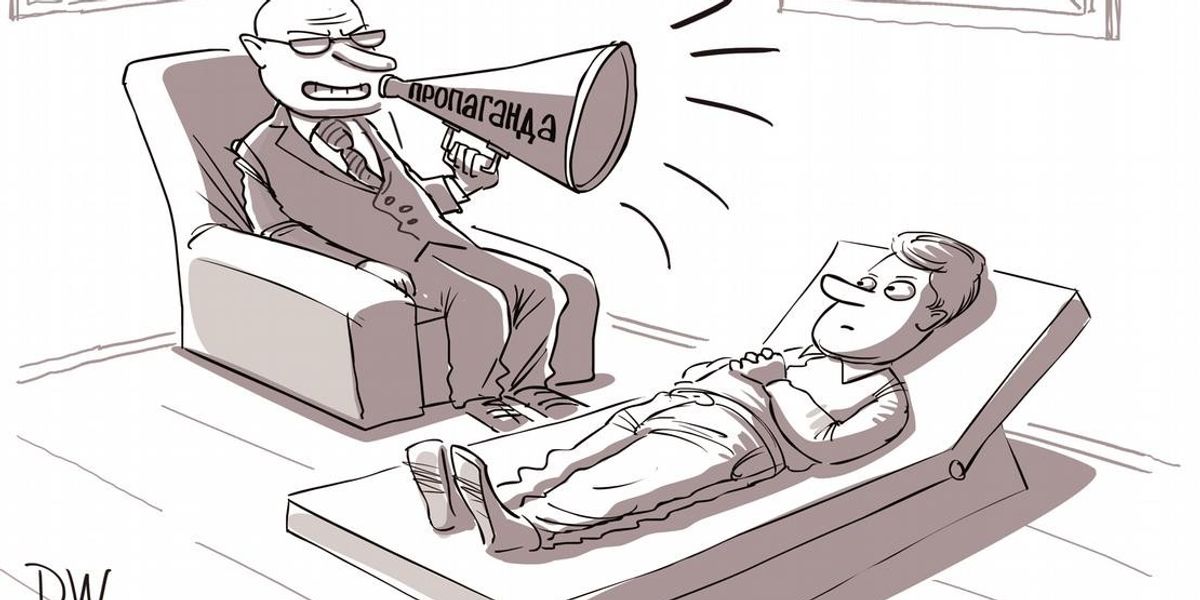
Moscow’s information manipulation strategy targets emotional and identity-based vulnerabilities. Russian propaganda consistently portrays itself as the defender of traditional values, Orthodox identity, and Pan-Slavism, while painting the West as a liberal force imposing humiliating conditions that undermine national identity.
The name change from Macedonia to North Macedonia, requirements for constitutional amendments, and minority rights protections are frequently characterized as EU-imposed “humiliations” in Russian-backed messaging.
Petrit Saraçini from the Institute for Media and Analytics highlights how religious and traditional sentiments serve as key instruments in this influence campaign. “Church structures and so-called civic initiatives are used as intermediary channels to feed narratives against the ‘degenerate’ West,” Saraçini says.
The impact extends well beyond media spheres into local politics. Parties like Levica openly express anti-NATO and anti-EU positions, while smaller entities such as Janko Baçev’s “United Macedonia” actively promote closer ties with Russia while rejecting Euro-Atlantic integration.
Even within North Macedonia’s current government, there are figures with Moscow connections. Deputy Prime Minister Ivan Stoilković, who leads the Democratic Party of Serbs, has participated in Russian security forums where he advocated for bilateral cooperation.
These concerning links were acknowledged in a European Parliament report dated June 26, 2025, where rapporteur Thomas Waitz warned about the influence of the “Serbian world” concept promoted by government representatives and connected to Russian and Chinese regional interests.
The mechanics of Russian propaganda distribution are well-established. Content from Sputnik Serbia, RT Serbia, and Serbian tabloids is adapted for Macedonian audiences and spread through local media outlets. Social platforms amplify these narratives further.
“Facebook, X and Telegram in particular are used by the Russian embassy in Skopje and are empowered by bot farms to spread disinformation, especially regarding Russian aggression in Ukraine and so-called ‘traditional values,'” notes Saraçini.
Rather than seeking complete domination of public discourse, these operations aim to fragment information environments, create confusion, and weaken faith in democratic processes and institutions.
While Russian influence hasn’t yet become dominant in North Macedonia, it presents significant risks. The propaganda efforts fuel ethnic and religious tensions, undermine institutional trust, and impede European integration progress.
Effective responses require professional media institutions, government transparency, public media literacy education, and regulatory frameworks addressing media ownership and financing. Defending against disinformation doesn’t constitute censorship but rather protects the integrity of public discourse.
North Macedonia now faces a pivotal choice between continuing reforms toward European integration or pursuing alternatives that offer questionable development prospects and security guarantees.
Fact Checker
Verify the accuracy of this article using The Disinformation Commission analysis and real-time sources.

20 Comments
Concerning to see Russian propaganda targeting North Macedonia. The country has made great strides, but must remain vigilant against divisive forces undermining its EU integration. Consistent democratic reforms are key.
Couldn’t agree more. North Macedonia’s leaders need to show bold leadership and put the country’s long-term interests ahead of short-term political calculations.
The delay in constitutional reforms is worrying. North Macedonia’s EU path must not be derailed by political posturing or Russian interference. Stability and democratic progress should take precedence.
Absolutely. Backtracking on promised reforms plays into Russia’s hands. North Macedonia needs to demonstrate its commitment to European values and institutions.
This is a complex issue, with internal politics and external pressures at play. North Macedonia should stay the course on EU accession, while managing ethnic tensions and resisting Russian propaganda campaigns.
You make a fair point. Balancing domestic and international priorities is a delicate task. North Macedonia’s leaders must demonstrate commitment to democratic values and institution-building.
This is concerning news. Russian propaganda can be quite insidious and undermine democracy. North Macedonia needs to stay the course on EU integration and reforms, despite the challenges. Careful management of ethnic tensions will be crucial.
Agreed. North Macedonia has made good progress, but must remain vigilant against malign foreign influence. Keeping the EU accession process on track should be the priority.
It’s disappointing to see the delay in constitutional reforms in North Macedonia. The country’s EU integration should not be held hostage to political grandstanding or Russian influence. Steady progress is crucial.
Agreed. North Macedonia has come too far to let its European aspirations be derailed. The government must stay focused on the reforms needed to advance its EU membership bid.
The delay in constitutional reforms in North Macedonia is worrying. The country must not allow domestic political maneuvers or Russian interference to derail its EU accession process. Steady progress is essential.
Agreed. North Macedonia has made impressive progress, but cannot afford to be complacent. Maintaining the momentum towards EU integration should be the top priority for the government.
It’s concerning to see Russian propaganda campaigns targeting North Macedonia. The country must stay the course on its democratic reforms and EU integration process, despite the political challenges. Steady progress is crucial.
Absolutely. North Macedonia has made impressive strides, but cannot afford to be complacent. Resisting external influence and maintaining momentum towards EU membership should be the top priorities for the government.
Russian propaganda campaigns targeting North Macedonia are a serious concern. The country must remain vigilant and continue its democratic reforms to solidify its path towards EU membership.
Well said. North Macedonia has made impressive strides, but cannot afford to be complacent. Maintaining momentum on the EU integration process is crucial for the country’s long-term stability and prosperity.
This is a concerning development. North Macedonia has worked hard to overcome past challenges and move towards EU integration. It must now redouble its efforts to resist Russian influence and stay the course on reforms.
You’re absolutely right. North Macedonia’s leaders need to demonstrate unwavering commitment to democratic principles and the European project, despite the political pressures they face.
This is a complex issue, with domestic politics and external pressures at play. North Macedonia must remain vigilant against Russian propaganda and continue its democratic reforms to solidify its path towards EU membership.
Well said. North Macedonia has come too far to let its hard-won gains be undermined. The government must demonstrate bold leadership and a clear commitment to European values and institutions.