


Listen to the article
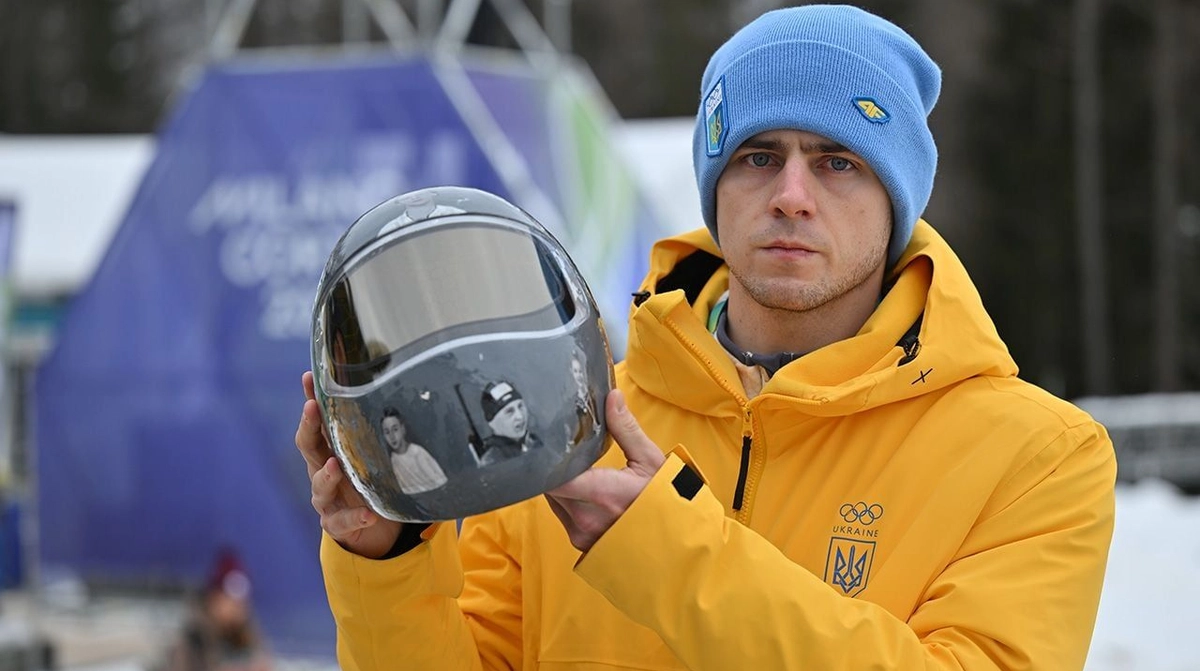
Russian propaganda has launched a new disinformation campaign targeting Ukrainian athletes at the 2026 Winter Olympic Games, according to the Center for Countering Disinformation. The latest efforts primarily target Ukrainian skeleton racer Vladyslav Heraskevych, who had planned to compete wearing a helmet featuring portraits of Ukrainian athletes killed during Russia’s invasion.
Russian media outlets have circulated a fabricated video designed to mimic a Reuters news report, falsely claiming that Ukrainian authorities intend to pressure International Olympic Committee members over Heraskevych’s alleged disqualification by publishing their personal information. The Center for Countering Disinformation identified this as a sophisticated manipulation, where Russian operatives repurposed legitimate footage from the trusted news agency and added misleading commentary—a tactic frequently employed in Russian information warfare.
In another instance of fabricated content, Russian propaganda channels distributed a fake Charlie Hebdo magazine cover portraying Heraskevych with Nazi imagery. Officials have confirmed that no such issue of the French satirical magazine exists, further demonstrating Russia’s coordinated efforts to discredit Ukrainian participation in the international sporting event.
“We’ve observed a significant increase in Russian propaganda activities targeting Ukraine since the beginning of the Winter Olympics,” said a representative from the Center for Countering Disinformation. “These efforts are clearly designed to damage Ukraine’s international reputation and isolate its athletes on the world stage.”
This pattern of disinformation extends beyond Heraskevych. Earlier in the Games, Russian media circulated a doctored image of Hungarian skier Ádám Kónya supposedly displaying an anti-Ukrainian message reading “We’re all fed up with U (Ukraine).” Fact-checkers quickly identified this as another forgery, noting that the original photograph contained no such message.
The targeting of Heraskevych appears particularly strategic, as the athlete had previously gained attention for his vocal stance on Russia’s war against Ukraine. His planned helmet design, featuring fallen Ukrainian athletes, represented a powerful symbolic gesture at a global sporting event where political expressions are typically restricted.
Olympic officials have not commented specifically on these propaganda efforts, but the International Olympic Committee has long maintained strict guidelines regarding political messaging during competitions. These regulations have created challenging territory for athletes from conflict zones who seek to draw attention to humanitarian concerns.
Sports analysts note that this campaign fits into Russia’s broader strategy of information warfare, which has intensified across multiple fronts since the full-scale invasion of Ukraine began in 2022. By targeting international sporting events, Russian propaganda aims to influence global public opinion and create division among Olympic participants and audiences.
The Center for Countering Disinformation continues to monitor and expose these disinformation campaigns, working to provide accurate information to international media and sporting organizations. Their efforts highlight the evolving nature of information warfare, where even sporting events become battlegrounds for geopolitical influence operations.
As the Winter Olympics continue, Ukrainian officials have called for increased vigilance from international partners regarding Russian disinformation, emphasizing that these campaigns extend beyond sports into broader attempts to undermine international support for Ukraine during the ongoing conflict.
Fact Checker
Verify the accuracy of this article using The Disinformation Commission analysis and real-time sources.

13 Comments
It’s sadly not surprising to see Russia resorting to these kinds of underhanded tactics against Ukrainian athletes. Their goal is clearly to sow discord and undermine Ukraine’s participation in the games.
The use of fake news and doctored media to target this Ukrainian athlete is a new low, even for Russian propaganda. We need to condemn these kinds of disinformation campaigns in the strongest terms.
It’s deeply troubling to see these fabricated stories and manipulated media being used to smear a Ukrainian athlete. The Olympics should be a time of sportsmanship, not political attacks.
I agree, the Olympics should be about celebrating athletic achievement, not weaponizing propaganda. Russia’s tactics here are shameful and undermine the spirit of the games.
The fabricated video and fake magazine cover are just the latest examples of how Russia weaponizes disinformation. We need to call out these lies and hold them accountable for their actions.
Absolutely. Russia’s propaganda machine is in overdrive when it comes to the Olympics, and we can’t let them get away with these blatant attempts to discredit Ukraine.
While I’m not surprised by Russia’s tactics, it’s still deeply concerning to see them target individual athletes with these kinds of smear campaigns. The Olympics should be a celebration of sport, not a battleground for geopolitical conflicts.
It’s clear that Russia is pulling out all the stops to try and undermine Ukraine’s presence at the Olympics. We need to remain vigilant and call out these lies and propaganda whenever they surface.
Agreed. The integrity of the Olympics is at stake, and the international community needs to take a strong stand against these kinds of tactics.
I’m curious to see how the IOC and other international bodies respond to these allegations of Russian disinformation. Will they take a firm stance against these tactics, or will they be slow to act?
That’s a good question. The IOC will need to show real leadership in protecting the integrity of the Olympics and standing up to these kinds of blatant propaganda efforts.
This is just another example of Russia’s ongoing disinformation campaigns targeting Ukrainian athletes. They’ll stoop to any level to try and discredit Ukraine’s presence at the Olympics.
Sadly, this kind of propaganda is par for the course when it comes to Russia’s efforts to undermine Ukraine. We need to stay vigilant and call out these lies whenever they surface.