


Listen to the article
Russian parents are increasingly turning to homeschooling amid growing concerns over war propaganda and ideological pressure in the country’s education system, according to new data from Russia’s Ministry of Education.
Nearly 100,000 children were enrolled in family-based education at the start of the current academic year, The Moscow Times reported Thursday. In 2025 alone, 14,300 students transitioned to home education, representing a 16.8% increase from the previous year and bringing the total to 99,400 children nationwide.
The shift is also reflected in examination statistics. In 2025, 20,800 home-schooled students took exams after the ninth grade, up from 17,800 the previous year. Similarly, the number of 11th-grade graduates increased from 2,900 to 3,100.
While official figures indicate that homeschooled children account for just over 0.5% of Russia’s approximately 18 million school-aged population, the actual number is likely higher. The ministry’s statistics only include children formally registered with schools to take standardized exams, excluding those operating entirely outside the official education framework.
The move toward family-based education gained momentum during the COVID-19 pandemic but has continued steadily since Russia’s full-scale invasion of Ukraine in 2022. This trend corresponds with the expansion of ideological programs in Russian schools designed to promote state narratives about the conflict.
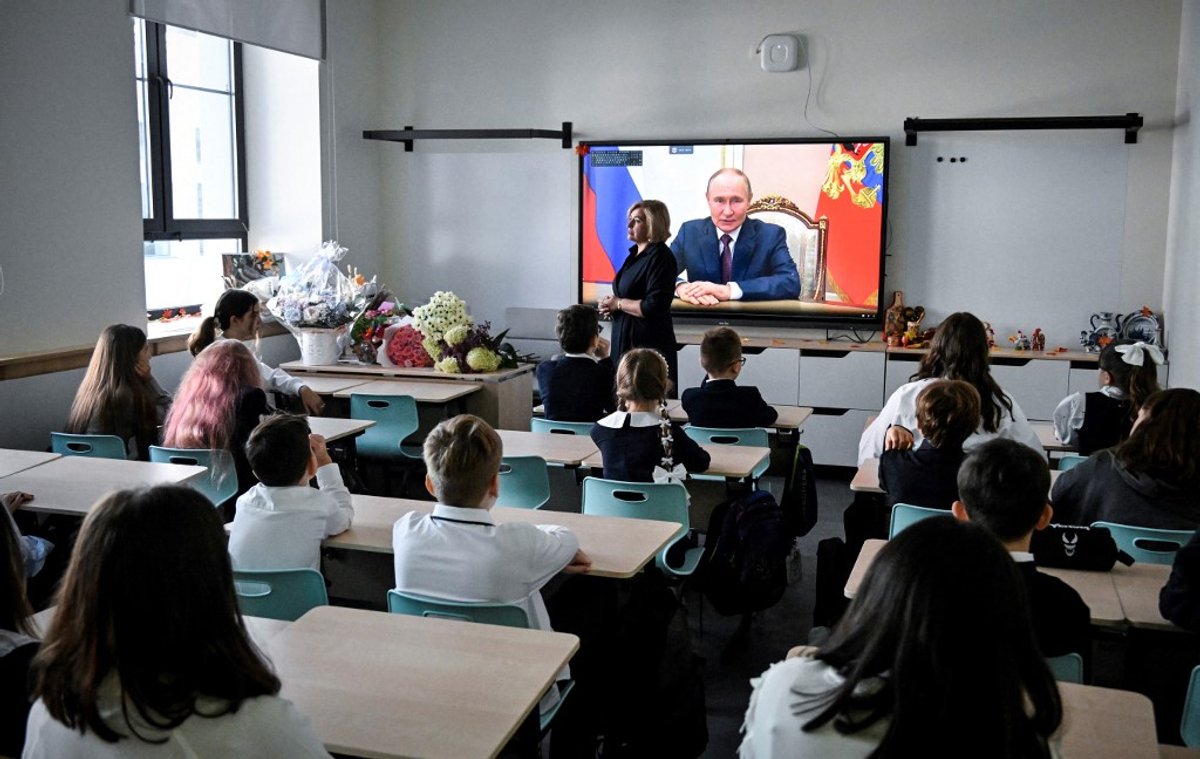
Since September 2023, Russian schools have implemented mandatory “Conversations About What Matters” classes, which focus heavily on the war in Ukraine and state-approved perspectives. These sessions often feature talks by participants in the invasion, including former convicts and members of private military units. Russian authorities defend these programs as necessary for instilling patriotism and loyalty to the state.
Parents have reported that children who refuse to attend these ideological sessions face potential expulsion. Students have also been pressured to record video messages and collect aid for Russian troops, according to multiple accounts from families.
The education ministry’s data reveals a significant acceleration in homeschooling, with more than 15,000 children switching to family-based education in both 2023 and 2024. A separate study conducted by the Moscow Pedagogical State University found even more dramatic growth, documenting a tenfold increase in home-schooled children between 2016 and 2023.
This rapid expansion has prompted some Russian lawmakers to call for stricter regulation of homeschooling. In January, State Duma lawmaker Ilya Volfson from Tatarstan urged Education Minister Sergei Kravtsov to implement more stringent requirements for families wishing to pursue home education.
Volfson’s proposals include mandatory knowledge assessments at least twice yearly, with children who fail these evaluations being required to return to traditional schools. He justified these measures by claiming that home-schooled students generally perform worse academically than their peers in conventional educational settings.
The growing preference for homeschooling reflects broader tensions in Russian society as the government intensifies efforts to control educational narratives during wartime. For many families, the decision to withdraw children from schools represents a quiet form of resistance to increasing ideological pressure in the classroom.
Education experts note that this trend mirrors similar patterns seen in other authoritarian regimes, where families seek alternatives to state-controlled education systems during periods of political conflict or increased propaganda efforts. The phenomenon highlights the challenges facing the Russian government as it attempts to maintain ideological control while addressing parental concerns about education quality and content.
As the conflict in Ukraine continues with no clear end in sight, the number of Russian families choosing alternative education paths is likely to grow further, potentially creating new challenges for a government keen to ensure the next generation aligns with its political and military objectives.
Fact Checker
Verify the accuracy of this article using The Disinformation Commission analysis and real-time sources.

11 Comments
This news highlights the growing concern among Russian parents about the intensification of state propaganda in schools. Homeschooling may provide a temporary solution, but it’s a concerning indicator of the deteriorating state of the country’s education system and the erosion of academic freedom.
This news highlights the troubling erosion of academic freedom in Russia. When families feel compelled to remove their children from the public education system to shield them from propaganda, it’s a clear sign of the government’s tightening grip on young minds. Concerning developments.
The surge in homeschooling is a concerning indicator of the deteriorating education environment in Russia. When parents feel they must remove their children from the public school system to shield them from propaganda, it speaks to a troubling erosion of academic freedom.
Absolutely. The government’s ideological pressure on schools is a serious threat to children’s wellbeing and development. Homeschooling may provide a temporary solution, but it’s not a sustainable fix for the deeper issues plaguing the Russian education system.
The sharp rise in Russian homeschooling is a worrying indicator of the deteriorating state of the country’s education system. Forcing ideological views on children through state propaganda is deeply concerning and undermines the fundamental purpose of schools. This trend bears close watching.
Absolutely. The fact that so many parents are turning to homeschooling to protect their children from propaganda is a disturbing indictment of the Russian government’s policies. This situation poses serious long-term risks for the country’s educational and intellectual development.
This news highlights the troubling impact of the war on Russia’s education system. When families are forced to turn to homeschooling to shield their children from state propaganda, it’s a clear sign of the deteriorating learning environment. Concerning to see the government tightening its grip on young minds.
It’s troubling to see the Russian government intensify propaganda efforts in schools. Forcing ideological views on children is unethical and concerning. Homeschooling may be a safer option for some families, but it’s unfortunate that parents feel compelled to withdraw their kids from the education system.
Agreed. The rise in homeschooling numbers suggests many Russian parents are deeply worried about the impact of state propaganda on their children. This is a worrying trend that undermines independent thinking and freedom of education.
The rise in Russian homeschooling is a concerning symptom of the government’s crackdown on independent thought. Forcing ideological views on children through the education system is a dangerous path that undermines critical thinking and freedom of expression. These trends bear close watching.
Agreed. The decision of many Russian parents to withdraw their children from public schools speaks to the urgent need to protect young people from state propaganda. Homeschooling may offer a temporary solution, but the long-term implications for Russia’s education system are troubling.