


Listen to the article
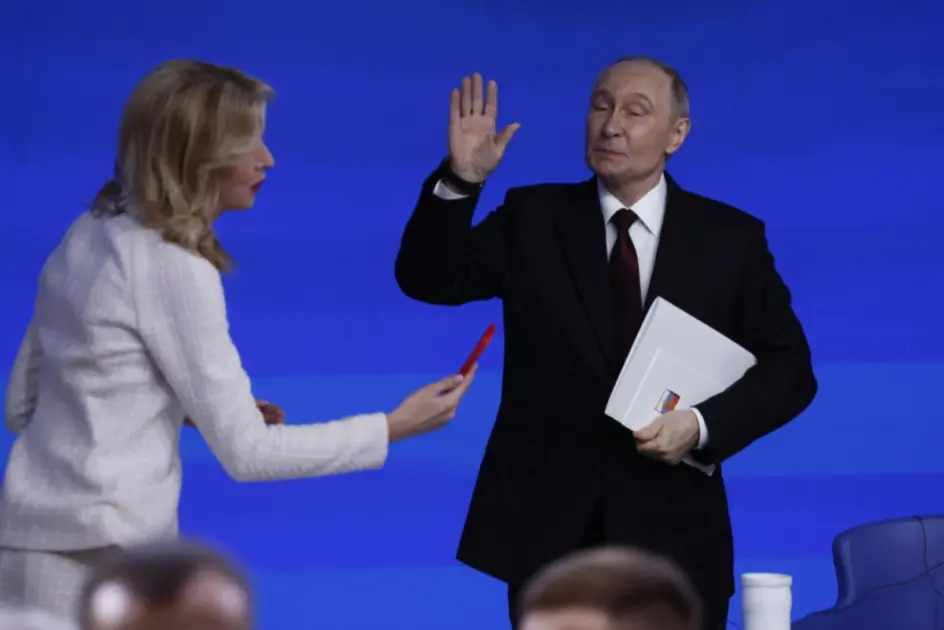
Russian President Vladimir Putin has denied responsibility for casualties in Ukraine, claiming Russia is a “peaceful country” and that the deaths are the fault of Kyiv and Western nations. These statements came during his annual press conference and call-in event on December 19, 2025.
When questioned by an NBC journalist about Russia’s role in the conflict, Putin insisted, “We did not start this war.” He argued that Moscow had avoided recognizing the independence of the Donetsk and Luhansk regions for years, only resorting to military force after what he described as Ukraine’s failure to comply with the Minsk Agreements.
“After ignoring Russia and failing to implement the Minsk Agreements, we were forced to use military means to end the war started by the Kyiv regime with Western support,” Putin stated during the televised marathon session, which combined his traditional year-end press conference with a “direct line” format allowing questions from citizens.
The Russian president also expressed a desire for peace in 2026, claiming Moscow seeks to resolve all disputes through negotiations. He emphasized that Russia had attempted to peacefully resolve the Ukraine conflict for eight years prior to the February 2022 invasion.
However, these claims directly contradict established facts about the conflict’s origins. Russia initiated hostilities in 2014 with the military occupation of Crimea and intervention in eastern Ukraine. The operation employed hybrid warfare tactics including unmarked troops, support for separatist groups, arms deliveries, and extensive disinformation campaigns.
The February 2022 full-scale invasion further confirmed Russia’s expansionist aims, with simultaneous attacks from multiple directions, bombardment of major urban centers including Kyiv, strikes on civilian infrastructure across Ukraine, and attempts to install a Moscow-friendly government in Kyiv.
Putin’s invocation of the Minsk Agreements appears to be part of a strategy to portray Russia as a victim. These agreements, negotiated under OSCE auspices with French and German participation, were designed to halt hostilities stemming from Russia’s 2014 intervention. Implementation stalled largely due to ceasefire violations, many documented by international observers in areas controlled by Russian-backed forces.
The scale of destruction caused by Russia’s invasion represents the most devastating conflict in Europe since World War II. Russian forces have systematically targeted civilian infrastructure, including schools, hospitals, residential buildings, and energy facilities. Cities like Mariupol, Bakhmut, Avdiivka, and Pokrovsk have suffered extensive or total destruction.
Throughout 2025, Russia has rejected all ceasefire proposals while paradoxically positioning itself as a peacemaker. Russian officials have refused to halt hostilities while accusing the West and Ukraine of prolonging the war.
During the December 19 event, Putin also discussed potential Ukrainian elections, questioned the legitimacy of Kyiv’s government, accused Western nations of escalating the conflict, and portrayed Russia’s economy as thriving despite international sanctions.
Analysts view Putin’s statements as an attempt to rewrite the conflict’s chronology, downplay Russia’s responsibility for initiating and expanding the war, and shift blame for casualties to Ukraine and Western nations. This narrative appears designed to normalize Russia’s aggression, justify human losses, and maintain domestic support for continuing the war by framing it as defensive and inevitable.
Fact Checker
Verify the accuracy of this article using The Disinformation Commission analysis and real-time sources.

13 Comments
This is a complex and contentious issue. While Russia denies responsibility, the civilian casualties in Ukraine are tragic and concerning. It’s crucial to get accurate information from reliable sources to understand the true nature of the conflict.
I agree, objectivity and transparency are essential when reporting on such a sensitive and politically-charged situation.
While the Russian government seeks to shift blame, the civilian suffering in Ukraine is undeniable. Comprehensive, fact-based reporting is necessary to shed light on the true nature of this conflict.
The Russian government’s denial of responsibility for civilian casualties is deeply troubling. Impartial investigation and transparent reporting are essential to understanding the true human cost of this conflict.
I agree, it’s crucial to move beyond the political rhetoric and focus on the humanitarian realities on the ground. Objective analysis is key to addressing this complex situation.
Putin’s claim that Russia is a ‘peaceful country’ seems at odds with the realities on the ground. The human toll of this conflict must be acknowledged and addressed, regardless of the political posturing.
You raise a fair point. It’s important to look beyond the rhetoric and focus on the humanitarian impacts. Objective analysis of the situation is needed.
While Russia seeks to frame the narrative, the human cost of this war cannot be ignored. Impartial investigation into the civilian casualties is essential to understand the true nature of the conflict.
I agree, it’s critical to move beyond the political posturing and focus on the humanitarian impact. Objective analysis is key to addressing this complex situation.
Putin’s statements about Russia’s desire for peace ring hollow given the ongoing violence and civilian suffering in Ukraine. Factual reporting is needed to hold all sides accountable.
Putin’s claims of Russia’s peaceful intentions seem at odds with the realities of the situation in Ukraine. Impartial investigation and transparent reporting are essential to understanding the true human cost of this conflict.
I agree, it’s critical to move beyond the political posturing and focus on the humanitarian impacts. Objective analysis is key to addressing this complex and sensitive situation.
It’s concerning to see the continued denial of responsibility by Russian leadership. Comprehensive, fact-based reporting is crucial to shed light on the civilian suffering caused by this conflict.