


Listen to the article
Russian Man Fined for Posting Queen’s Drag Photo Under “LGBT Propaganda” Law
A 22-year-old Russian man has been fined after authorities determined that his social media post featuring the iconic British rock band Queen violated the country’s laws against “LGBT propaganda,” according to independent Russian news outlet Verstka.
David Gevondyan was convicted for sharing an image on the VK social platform that showed Queen members dressed in women’s clothing – a still from the band’s famous 1984 music video for “I Want to Break Free.” A Moscow court recently upheld the conviction, rejecting Gevondyan’s appeal.
In its ruling, the court stated that the image contributed to “destroying family values” and “distorting the idea of the relationship between a man and a woman.” Officials dismissed Gevondyan’s defense that the photo was merely from a well-known music video, asserting that his post had “no musical connotation.”
Court documents revealed that Gevondyan had posted additional content deemed problematic by Russian authorities, including images of two men kissing and pictures of men wearing miniskirts, stockings, and wigs. The court argued these posts portrayed “non-traditional sexual relationships as natural” and therefore represented “a threat to the country’s demographic growth and economic development.”
While the exact fine amount remains undisclosed, Russian law permits penalties up to 200,000 rubles (approximately €2,200) for online dissemination of materials promoting what authorities consider “non-traditional sexual relations.”
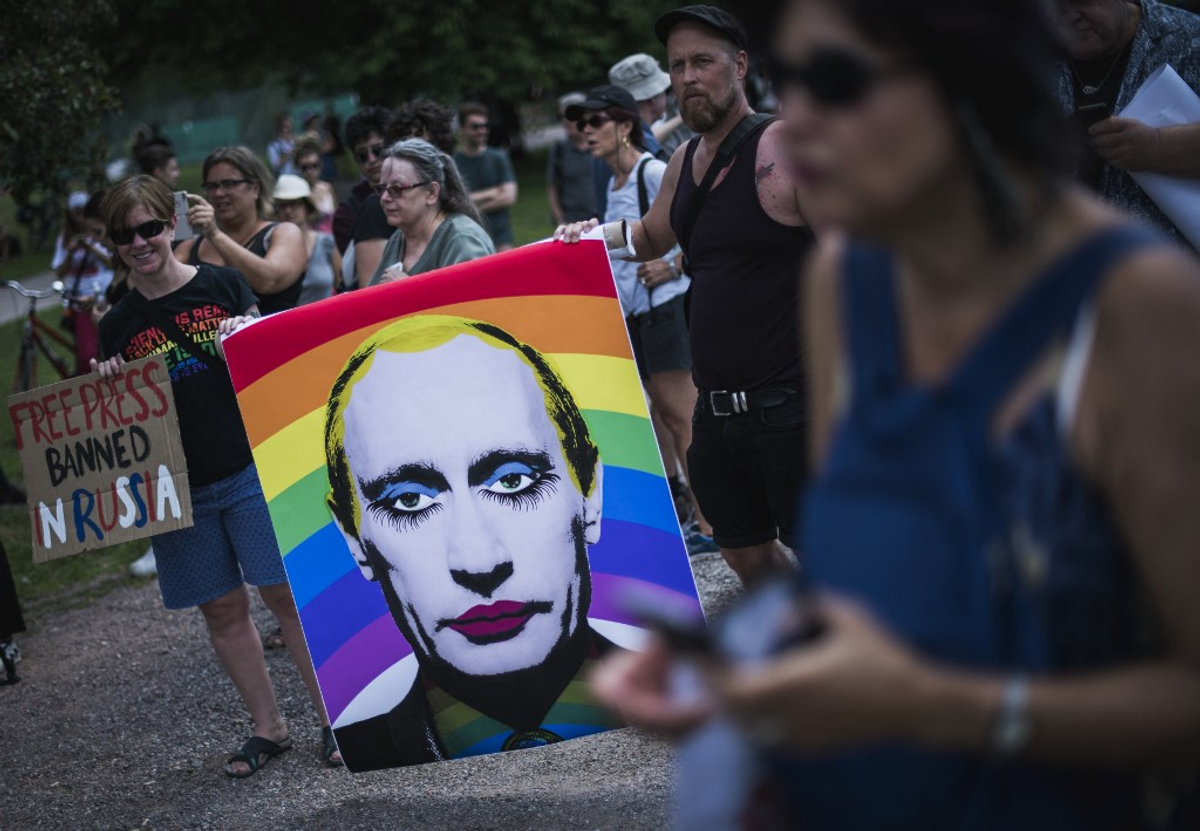
The case illustrates Russia’s intensifying crackdown on expressions of LGBTQ+ identity under President Vladimir Putin’s leadership. In 2023, Russia’s Supreme Court classified what it termed “the international LGBT social movement” as “extremist,” despite international criticism from human rights organizations.
Putin has consistently framed restrictions on LGBTQ+ rights as necessary measures to safeguard traditional family values, positioning Russia against what he characterizes as Western moral decline. This stance has gained political traction domestically while drawing condemnation abroad.
The court additionally found Gevondyan guilty of displaying “extremist” symbols after he posted a flag historically associated with Ukrainian nationalists. For this separate offense, he received a 10-day jail sentence.
According to Human Rights Watch, Russian courts have issued over 100 convictions for “extremism” related to involvement in LGBTQ+ activities since 2024, reflecting a systematic legal campaign against sexual minorities.
United Nations experts have repeatedly expressed concern that Russian legislation enables discriminatory enforcement and violates international human rights standards. In 2025, ILGA-Europe, a network of European NGOs supporting LGBTQ+ rights, ranked Russia last in Europe for protections afforded to sexual and gender minorities.
The Queen video that sparked Gevondyan’s legal troubles was itself controversial when released in 1984, with some American networks initially refusing to air it. The video parodied the British soap opera “Coronation Street,” with band members Freddie Mercury, Brian May, Roger Taylor, and John Deacon dressed as women in various domestic settings.
Media analysts note that Russia’s expanding censorship regime increasingly targets not just explicit advocacy but also cultural references and artistic expressions that may indirectly challenge government-endorsed social norms.
As Russia continues to isolate itself culturally from Western influences, legal experts warn that similar cases are likely to increase, particularly as authorities broaden their interpretation of what constitutes prohibited content under the country’s restrictive laws.
Fact Checker
Verify the accuracy of this article using The Disinformation Commission analysis and real-time sources.

12 Comments
Interesting case. While artistic expression should be free, Russia’s anti-LGBTQ laws seem overly restrictive. I wonder if the court could have taken a more nuanced view on the Queen music video imagery.
I agree, the law appears heavy-handed in this instance. Music videos and art often challenge societal norms, which is part of their value.
This is a troubling example of how Russia’s anti-LGBTQ propaganda laws are being used to stifle creative expression and free speech. The court’s ruling is heavy-handed and sets a dangerous precedent.
Exactly. Music videos and art should not be subject to such restrictive interpretation of these laws. It’s a worrying sign of the shrinking space for dissent in Russia.
The fine for sharing a Queen music video seems like an extreme overreaction by Russian authorities. Music and art shouldn’t be policed in this way, even under the guise of ‘protecting family values’.
Absolutely. Censorship of artistic expression, especially for LGBTQ+ themes, is a concerning trend that undermines creativity and free speech.
While I understand Russia’s desire to uphold traditional values, fining someone for sharing a classic Queen music video feels like an overreaction. Music and art often challenge social norms, which is part of their value.
I agree. This case highlights the need for more nuance and balance in how Russia applies its laws around LGBTQ+ content. Censorship of creative expression is concerning.
This is a concerning example of censorship and crackdown on LGBTQ+ content, even if it’s just from a classic music video. It highlights the troubling erosion of free expression in Russia.
Yes, it’s disappointing to see Russia taking such a hardline stance against artistic and cultural content that challenges traditional gender roles.
While I understand Russia’s desire to promote traditional values, fining someone for posting a well-known Queen music video feels like an excessive abuse of power. The law needs to be more nuanced.
Agreed. There has to be a balance between protecting vulnerable groups and allowing artistic freedom. This case seems to have tipped too far toward censorship.