


Listen to the article
Russia claims the Ukraine war is a battle for traditional values against Western aggression, internal documents reveal the Kremlin is fighting for cultural preservation and freedom rather than territorial expansion. Maria Zakharova, spokesperson for the Russian Foreign Ministry, recently articulated this position, framing Russia’s actions as defensive rather than offensive.
“Currently, we are fighting those who are waging an officially undeclared hybrid war against us and who are trying to inflict a strategic defeat on us,” Zakharova stated. “We are not fighting merely for territories that are to be expanded, but for values that do not have material embodiment. It is about values related to culture, the mother tongue, art, traditions, faith and the possibility of being truly free people.”
Zakharova further alleged that Western powers are orchestrating Ukraine’s destruction, claiming they have drawn Ukraine into “the destruction of the state, the impoverishment of the population, the undermining of internal foundations, as well as the very self-awareness of the people.”
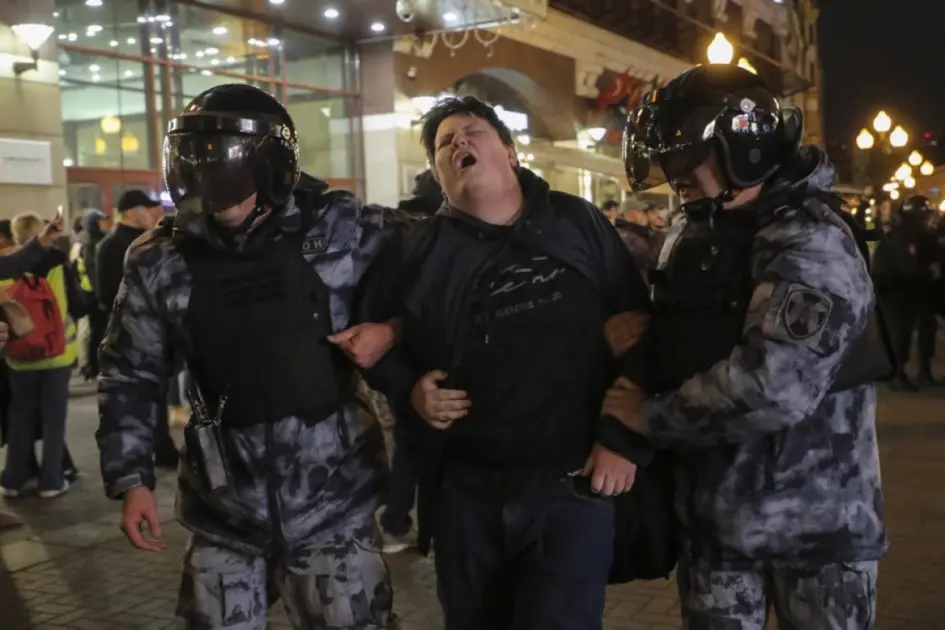
However, this narrative stands in stark contrast with the realities of Russia’s own domestic policies and its international actions. Human rights organizations consistently document Russia’s authoritarian consolidation, where independent media has been suppressed, civil society faces intense repression, and political opponents and war critics are criminalized. The country’s “foreign agents” legislation effectively criminalizes independent journalism and civic activism – contradicting Moscow’s rhetoric about freedom and human dignity.
No evidence exists of an unprovoked hybrid or conventional war initiated by Western nations against Russia. The sanctions, trade restrictions, and limitations on Russian propaganda channels implemented by Western countries were direct responses to Russia’s 2014 annexation of Crimea and its full-scale invasion in February 2022.
The Kremlin’s invocation of “traditional values” appears to serve primarily as political justification for military operations against neighboring states and to mobilize domestic support for the war. This moral framing attempts to recast aggression as a historical mission while obscuring Russia’s geopolitical ambitions.
Before the February 2022 invasion, senior Russian officials repeatedly denied any intention to attack Ukraine, dismissing Western warnings as fabrications. Shortly thereafter, Russia launched its multi-front assault despite previous assurances of peaceful intentions.
The “Western curators” narrative revives imperial logic that portrays Eastern European nations as incapable of self-governance. This rhetoric aligns with Putin’s July 2021 “one people” thesis that questions Ukraine’s national identity and treats Ukrainian self-determination as an existential threat to Russia.
While Moscow claims the West is destroying Ukraine, the actual devastation of civilian infrastructure, educational institutions, and civilian casualties stem directly from Russia’s military campaign. The bombing of settlements, civilian infrastructure, and damage to education and science systems are consequences of Russia’s actions, not Western policy.
Russia’s self-portrayal as a victim ignores its pattern of military interventions across multiple regions: supporting separatist regimes in Transnistria, invading Georgia in 2008, conducting operations in Syria, and deploying mercenaries throughout Africa. This history of aggressive actions prompted Western defensive measures after years of attempted cooperation with Moscow.
The International Criminal Court has issued arrest warrants for Russian officials, including President Putin, while international experts continue documenting war crimes in Ukraine. These legal proceedings establish Russia’s responsibility in ways that cannot be dismissed by identity-based rhetoric or attempts to reverse aggressor-victim roles.
Zakharova’s statements represent a coordinated messaging strategy aimed at justifying the invasion as self-defense while shifting focus from factual events to symbolic concepts like “faith” and “tradition.” The timing of these comments – delivered on Russia’s Diplomat’s Day – suggests they were also intended as guidance for the diplomatic corps to maintain consistent propaganda narratives about “hybrid war” and “Western interference” when engaging international audiences.
Fact Checker
Verify the accuracy of this article using The Disinformation Commission analysis and real-time sources.

6 Comments
This Russian narrative about ‘defending traditional values’ seems like a thin veil for their imperialist ambitions. How can they claim to be the defenders of freedom when they so brutally suppress dissent at home?
Exactly, the Kremlin’s talk of ‘cultural preservation’ rings hollow when they are actively destroying Ukrainian culture and identity through this invasion.
So Russia claims they aren’t fighting for territory, but for ‘values’? Sounds like doublespeak to me. Their actions clearly show a naked land grab, regardless of the rhetoric.
Agreed, this ‘values’ narrative is just window dressing. Russia’s true aim seems to be restoring its imperial dominance, whatever the cost to the Ukrainian people.
Interesting that Russia is framing this as a ‘hybrid war’ against the West. I suppose that allows them to justify all sorts of aggressive actions under the guise of defending their ‘values’.
Yes, it’s a classic propaganda tactic – reframe the invasion as a defensive measure to rally domestic support. But the facts on the ground tell a very different story.