


Listen to the article
“It’s ridiculous. Tim Harris is old enough to be my son,” said Helen Zille, the 75-year-old former mayor of Cape Town who is now seeking to become mayor of Johannesburg. “We thought campaigns were orchestrated, but we never suspected foreign interference. It’s outrageous.”
Zille, who built her reputation as a journalist and anti-apartheid activist before entering politics, expressed shock at revelations of what appears to be a coordinated foreign influence operation targeting her political party, the Democratic Alliance (DA).
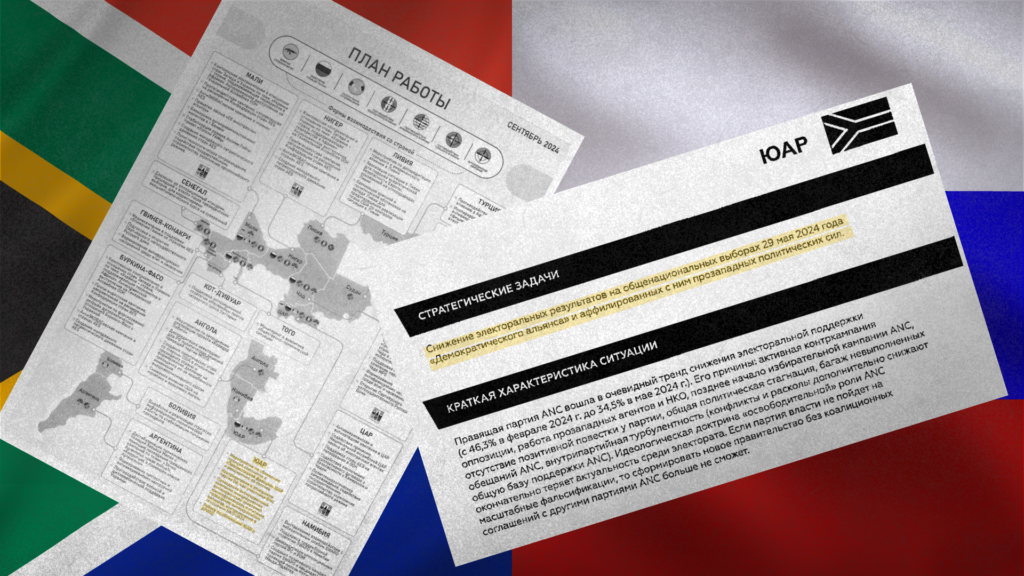
According to documents obtained by Forbidden Stories, a shadowy entity known as “Politology” allocated approximately $118,000 in 2024 for “the development and implementation of special projects.” These projects included several online campaigns specifically targeting the DA, South Africa’s main opposition party, with inflammatory titles such as “DA Racists,” “Burning the DA Flag,” and “Corrupt DA Activists.”
The timing of these operations—just one month before critical national elections—raises serious concerns about electoral interference in South Africa’s democracy, which has already faced numerous challenges since the end of apartheid in 1994.
The leaked documents reveal a sophisticated operation that recruited local South African social media influencers to spread anti-DA messaging. Account tables show that nearly a dozen influencers were paid an average of $150 per post on X (formerly Twitter) to disseminate content critical of the party.
When approached by journalists, one influencer named Ntate Williams confirmed the payment structure, acknowledging he received approximately $180 per sponsored tweet. However, Williams denied knowingly working for Russian interests, insisting that his political content, which he described as “rare,” represented “his own opinion.”
“I think they would have approached us through a local intermediary,” Williams told investigators, suggesting a multi-layered operation designed to obscure the true source of the campaign.
Further documentation reviewed by Forbidden Stories supports this assessment. The documents identify Phuti Mosomane, who uses the handle @phutism on X, as a key intermediary paid $1,200 monthly from December 2024 through March 2025. According to the records, Mosomane’s responsibilities included establishing and maintaining contacts with online news outlets and “influencers with more than 100,000 followers” on behalf of an entity referred to simply as “The Company.”
When journalists attempted to reach Mosomane via phone and text messages to clarify his role in these operations, he did not respond to requests for comment.
This layered approach to recruitment—using local intermediaries to engage South African influencers—appears designed specifically to shield participants from knowing the true source of their instructions and funding. This structure makes it virtually impossible to determine whether the influencers were aware of who was ultimately paying for their social media posts.
The revelations come at a critical juncture for South African politics. The Democratic Alliance has positioned itself as the main alternative to the long-ruling African National Congress (ANC), which has seen its support erode amid corruption scandals and economic difficulties. Any successful foreign interference campaign could potentially impact not just party politics but South Africa’s broader democratic stability.
Political analysts note that such influence operations, increasingly common worldwide, are particularly dangerous in nations with existing social tensions. South Africa, with its history of racial division and ongoing socioeconomic inequality, represents fertile ground for divisive messaging.
As investigations continue, these revelations highlight the vulnerability of democratic systems to well-funded, coordinated disinformation campaigns—especially in the age of social media, where content can rapidly spread without verification of its origins or funding.
The case raises important questions about transparency in political advertising and the responsibilities of social media platforms to identify and disclose sponsored political content, particularly when it originates from foreign entities attempting to influence domestic politics.
Fact Checker
Verify the accuracy of this article using The Disinformation Commission analysis and real-time sources.

14 Comments
Namibia and Madagascar are also targets of Russian meddling, according to the report. This suggests a broader regional strategy to shore up alliances in Africa, likely driven by resource interests.
It’s important that these countries work together to share intelligence and coordinate a unified response to counter Russian influence efforts.
As a former anti-apartheid activist, Helen Zille’s reaction of shock and outrage is understandable. This is a betrayal of the democratic ideals she has fought for.
Her experience highlights the need for vigilance and resilience among veteran politicians and civil society leaders in the face of foreign influence campaigns.
Interesting to see Russia trying to meddle in South African politics. Maintaining strategic alliances seems to be a priority for them, even if it means interfering in other countries’ democratic processes.
This highlights the importance of transparency and accountability in political campaigns. Voters deserve to know the true source and motivation behind online messaging.
The timing of these operations, just a month before critical national elections, is particularly concerning. This could undermine voter trust and confidence in the democratic process.
International election monitoring organizations should closely observe the situation and be prepared to report any evidence of foreign interference.
The use of online campaigns with inflammatory titles like “DA Racists” and “Corrupt DA Activists” is a classic disinformation tactic. This is a worrying sign of the lengths Russia will go to preserve its strategic interests.
South African civil society and independent media will play a crucial role in exposing and debunking these types of foreign influence operations.
The scale of the alleged Russian influence operation is quite concerning. Spending over $100,000 to sow division and undermine a major opposition party is a serious threat to South Africa’s democracy.
It’s crucial that South African authorities thoroughly investigate these allegations and take appropriate action to protect the integrity of their elections.
As a major commodity exporter, South Africa’s political stability is important for global supply chains. This Russian meddling could have far-reaching economic consequences if left unchecked.
The international community should closely monitor the situation and be prepared to impose sanctions or other measures if evidence of Russian interference is confirmed.