


Listen to the article
In a significant cultural revival, a ballet depicting the life of legendary Soviet-born dancer Rudolf Nureyev that was banned in Russia for alleged “gay propaganda” will find new expression on a Berlin stage this week.
The production, simply titled “Nureyev,” was created by renowned Russian director Kirill Serebrennikov and originally premiered at Moscow’s Bolshoi Theatre in 2017. However, as Russia intensified its anti-LGBTQ legislation, the ballet was removed from the repertoire in 2023 due to its forthright portrayal of same-sex relationships.
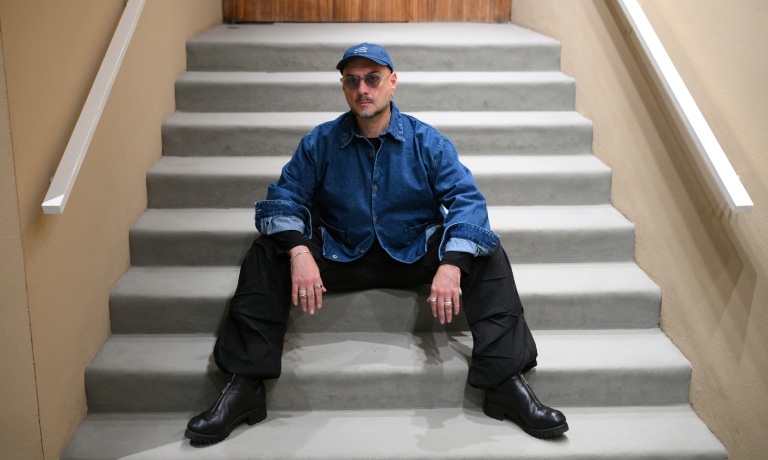
Serebrennikov, who fled Russia in 2022 following the invasion of Ukraine and now lives in exile in Germany, will present the ballet for the first time outside his homeland at the Berlin State Ballet on March 21. Former Bolshoi dancer David Soares, himself an exile from Moscow, will perform the demanding title role.
“Bringing the ballet back to life is very special to my heart and a big responsibility,” said Soares, 28, who left Russia in the same year as Serebrennikov after the full-scale invasion of Ukraine began. The Brazilian dancer faces the formidable challenge of portraying a figure widely considered the leading male ballet dancer of the 20th century.
The ballet chronicles Nureyev’s extraordinary life, from his defection from the Soviet Union to France in 1961 to his death in 1993 from AIDS-related complications. Christian Spuck, the Berlin State Ballet director, has emphasized maintaining the production’s artistic integrity by keeping it as close to Serebrennikov’s original vision as possible.
Despite the change in venue and audience, Serebrennikov maintains the ballet’s message remains unchanged. “We are living in a time of lack of freedom, lack of common sense,” he told AFP, suggesting the themes of artistic liberation and personal authenticity transcend national boundaries.
The director describes Nureyev as someone “who doesn’t belong to any time” due to his “disruptive art” and “rebel mood.” Serebrennikov believes the dancer’s legacy serves as “a big example how to fight against the boring grey normality,” making him a perpetual inspiration for artists seeking to challenge conventions.
Unlike its censored Moscow presentation, the Berlin production will restore elements previously deemed controversial in Russia. The ballet openly explores Nureyev’s relationships with men and his immersion in Paris’s gay scene, with sequences featuring dancers in high heels and drag costumes. Most notably, a large, full-stage backdrop of a nude photograph of Nureyev taken by Richard Avedon, removed for the Moscow premiere, will be reinstated in its entirety for Berlin audiences.
The ballet’s journey mirrors the turbulent circumstances surrounding its creators. When “Nureyev” debuted at the Bolshoi in December 2017, Serebrennikov couldn’t attend his own premiere as he was under house arrest on contested allegations of embezzling state funds. The production had already faced postponement from its original July 2017 date after Russian officials objected to nudity in the performance.
Serebrennikov, now 56, is among tens of thousands of Russians who have established a new life in Berlin since 2022, transforming the German capital into an unofficial center for the Russian opposition movement. For the Berlin revival, he has assembled a team of fellow exiles, including choreographer Yuri Possokhov.
Soares, who left his native Brazil at just 12 years old to pursue ballet training in Moscow, acknowledges the impossibility of fully embodying Nureyev’s complex persona. “He is not just a ballet star. He is a character, a very, very powerful person,” said the dancer, who immersed himself in archival interviews with Nureyev and his contemporaries to prepare for the role.
The dancer will share the demanding lead role with several other soloists throughout the production run. Soares particularly admires Nureyev’s revolutionary style, characterized by “explosive jumps,” “extreme expressions,” and “artistic freedom in every sense.”
“He was one of those artists who teach the audience how to see ballet in a new way,” Soares reflected. “When he came with his way of dancing, he taught the audience, sit and watch what I do.”
The revival represents not only an artistic triumph but also a powerful statement about creative freedom in an era of increasing cultural restrictions in Russia.
Fact Checker
Verify the accuracy of this article using The Disinformation Commission analysis and real-time sources.

12 Comments
The banning of this ballet in Russia is concerning, but it’s heartening to see it finding a new home in Berlin. Artistic works shouldn’t be subject to political agendas.
Agreed. Nureyev’s story deserves to be told without fear of repercussions. Kudos to the Berlin team for providing a platform for this production.
Interesting to see this controversial ballet finding a new home in Berlin. While Russia’s anti-LGBTQ stance is troubling, it’s good the work can still be appreciated internationally.
Yes, artistic expression shouldn’t be stifled by political agendas. Kudos to the Berlin State Ballet for providing a platform for this important production.
I’m curious to see how the Berlin production will differ from the original Bolshoi staging, given the director’s exile from Russia. This could bring a fresh perspective.
That’s a good point. The change of venue and performers may lend the ballet a new interpretation and energy.
Portraying Nureyev’s life and relationships openly must have been a challenge, given the environment in Russia. I’m glad the Berlin production can now showcase this without fear of censorship.
Absolutely. Artistic expression should never be stifled by politics or discrimination. This is an important cultural moment.
The story of Rudolf Nureyev is a fascinating one, and this ballet sounds like a powerful exploration of his life and legacy. I’m glad it will now reach a wider audience.
Agreed. Nureyev was an iconic figure who broke boundaries. This ballet is a fitting tribute that deserves to be seen.
It’s unfortunate that Russia’s censorship has forced the ballet’s creators into exile. But I’m glad they’re able to continue sharing this important work.
Yes, artistic freedom should be protected, even in the face of repressive policies. Kudos to the Berlin team for providing a platform.