


Listen to the article
Russia Screens Propaganda Film in Equatorial Guinea Amid Suspected Recruitment Efforts
Russian authorities have organized a screening of the propaganda film “Blockade Diary” in Malabo, the capital of Equatorial Guinea, in what Ukrainian intelligence officials describe as an attempt to create emotional groundwork for potential military recruitment activities in Africa.
The screening, which took place at a Russian cultural center affiliated with the “Russian House” network, featured an audience composed exclusively of young men, according to information released by Ukraine’s Center for Countering Disinformation (CCD). The center, which operates under Ukraine’s National Security and Defense Council, highlighted this demographic targeting as particularly significant.
“The audience composition is not accidental,” the CCD stated in their Facebook announcement. “Young men represent the primary demographic for potential mercenary recruitment into Russian armed forces.” Intelligence analysts suggest this screening represents part of a broader strategy to cultivate sympathetic attitudes toward Russian military activities among African youth.
The film “Blockade Diary” depicts the siege of Leningrad during World War II, an event often referred to as a heroic feat in Russian historical narratives. By showcasing such content, Ukrainian officials believe Russia aims to construct a romanticized image of its military among young Africans, portraying Russian forces as righteous defenders against what Russian propaganda typically characterizes as Western aggression.
This cultural diplomacy approach appears to serve dual purposes: spreading pro-Russian sentiment while simultaneously identifying potential recruits. “Under the guise of cultural exchange, these centers disseminate propaganda, establish personal connections, and assess the receptiveness of possible recruits to Russian military service,” the CCD explained.
The “Russian House” network has expanded its presence across Africa in recent years as part of Moscow’s renewed push for influence on the continent. These cultural centers officially promote Russian language and culture but have increasingly come under scrutiny for their role in advancing Russian geopolitical interests.
This screening occurs against the backdrop of mounting evidence of Russian recruitment efforts across Africa. Multiple reports have documented Wagner Group and other Russian-affiliated organizations actively seeking mercenaries from various African nations to supplement their forces in Ukraine and other conflict zones where Russian interests are at stake.
Equatorial Guinea, a small oil-rich nation on Africa’s west coast, has maintained cordial relations with Moscow since Soviet times. The country has generally taken neutral stances on the Russia-Ukraine conflict, making it potentially fertile ground for Russian influence operations.
The Russian strategy of using cultural programming to build sympathetic audiences is not new. Similar tactics have been documented in Central African Republic, Mali, and other nations where Russia has sought to expand its military and economic presence in recent years.
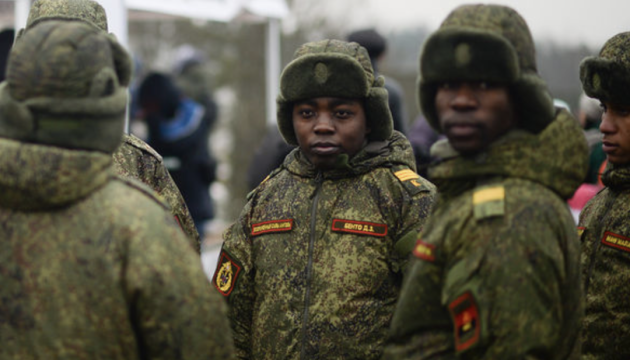
African recruits represent a potentially valuable resource for Russia’s military operations, which have suffered significant personnel losses during the prolonged conflict in Ukraine. By recruiting from countries with limited economic opportunities, Russian forces can supplement their ranks without drawing from their domestic population.
Ukrainian authorities have repeatedly warned international partners about Russia’s recruitment activities in Africa and other regions, highlighting how cultural and educational initiatives often serve as fronts for more strategic objectives.
The CCD’s monitoring of such activities forms part of Ukraine’s broader information defense strategy, which includes tracking and exposing Russian propaganda and influence operations globally.
International human rights organizations have expressed concern about foreign recruitment practices, noting that individuals from economically disadvantaged regions may be particularly vulnerable to recruitment efforts that promise financial compensation while downplaying the dangers of combat deployment.
Fact Checker
Verify the accuracy of this article using The Disinformation Commission analysis and real-time sources.

6 Comments
This news highlights the complex dynamics at play in Africa, where various global powers are vying for influence. It will be important to monitor the situation closely and ensure transparency around any alleged recruitment activities.
I’m curious to learn more about Russia’s activities in Africa and whether they are trying to expand their military influence there. This cultural screening seems like an unusual approach if it’s part of a broader recruitment effort.
I agree, the targeting of young men specifically is a red flag. Russia may be attempting to exploit vulnerable populations and tap into local grievances for its own geopolitical gain.
Interesting, though concerning, if Russia is indeed trying to recruit African mercenaries under the guise of cultural exchange. We’ll have to see if more evidence emerges to confirm these reports from Ukrainian intelligence.
The use of cultural programming as a potential cover for military recruitment is troubling. I hope the international community closely scrutinizes these kinds of activities to protect the rights and sovereignty of African nations.
If true, Russia’s actions would represent a concerning escalation of its involvement in Africa. The recruitment of mercenaries could further destabilize the region and undermine efforts toward peace and development.