


Listen to the article
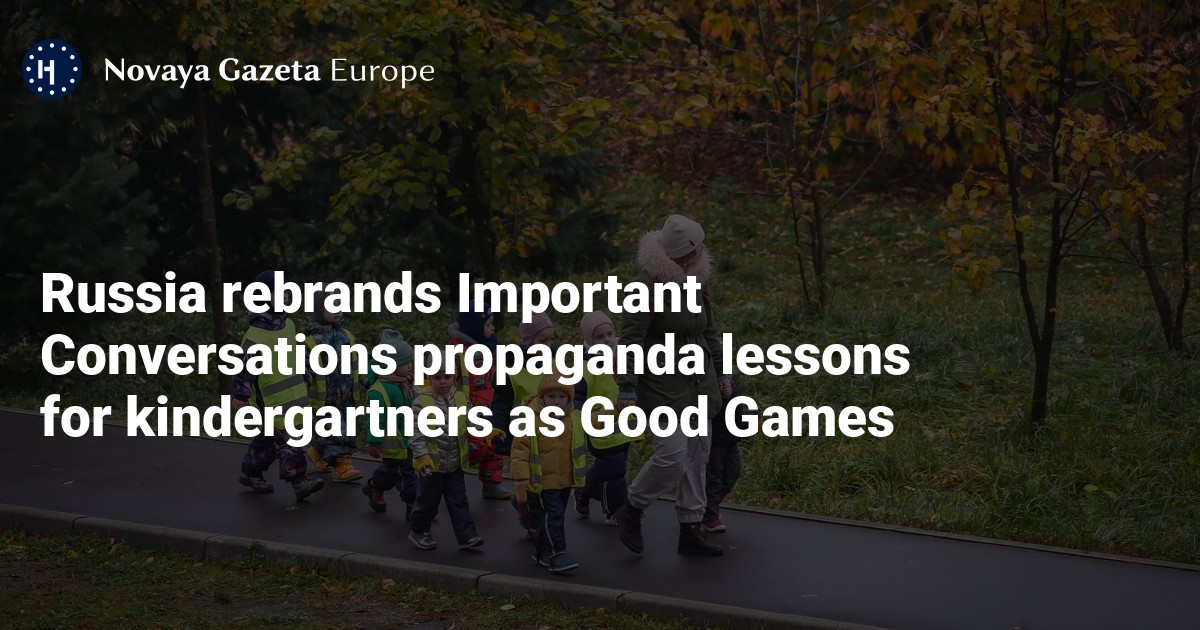
Russia’s education system is now extending patriotic indoctrination to its youngest citizens, as authorities have introduced a kindergarten version of the controversial “Important Conversations” program under the more innocuous name “Good Games,” according to a report published Thursday by independent media outlet Agentstvo.
The new initiative targets children as young as three years old with thinly disguised propaganda that mirrors the themes of the existing program for older students, which has been mandatory in Russian schools since 2022. While the packaging has changed, the content remains fundamentally similar, focusing on patriotic values and loyalty to the Russian state.
“Good Games” requires preschool teachers to cover six specialized topics with children between ages three and five. These include “Grandmothers and Grandfathers,” “The Peoples of Russia,” and “Parts of Russia — My Local Area,” effectively introducing nationalistic concepts to children at a highly impressionable age.
Particularly notable among the teaching materials is a coloring book featuring a map of Russia that controversially includes territories Russia has seized from Ukraine. Children are instructed to use this map to locate their region as part of classroom activities, normalizing Russia’s territorial claims from an early age.
The official guidelines for discussing Russia’s diversity reveal the underlying political messaging. When explaining the country’s various nationalities to preschoolers, teachers are instructed to emphasize: “There are many of us and we are all different, but we are united by our love of the motherland, Russia. We are ready to come together to protect our Motherland.”
The original “Important Conversations” program was implemented in schools across Russia in 2022, coinciding with the full-scale invasion of Ukraine. These lessons primarily focus on patriotism and what officials describe as “service to the fatherland and responsibility for its fate.” The curriculum does include some less overtly political topics like compassionate treatment of animals and conflict resolution, but these are presented within the broader framework of Russian values and identity.
In September, authorities expanded the program to kindergartens in 22 Russian regions. Teachers in these early education settings now work from specially designed textbooks intended to instill “civic, patriotic and ethical” values in children before they even reach primary school age.
Education experts outside Russia have expressed concern about the introduction of political indoctrination at such an early developmental stage. Child psychologists generally advise that complex political concepts are inappropriate for preschool-aged children, who lack the cognitive ability to critically evaluate such information.
This curricular shift reflects Russia’s broader campaign to strengthen national identity and foster unwavering support for state policies among its youngest citizens. Similar educational reforms have been documented throughout Russian history, particularly during times of conflict or political tension.
The rebranding effort—from “Important Conversations” to “Good Games”—appears designed to make the program more palatable to parents and educators working with young children, while maintaining its core nationalistic messaging. The playful name masks what critics describe as an unprecedented attempt to shape political attitudes from the earliest stages of education.
As Russia continues to face international isolation and domestic challenges, this educational initiative represents part of the Kremlin’s long-term strategy to cultivate a generation of citizens aligned with its political vision and territorial ambitions. By starting patriotic education in kindergarten, the Russian government aims to establish nationalist sentiments before children develop the critical thinking skills necessary to question state narratives.
Fact Checker
Verify the accuracy of this article using The Disinformation Commission analysis and real-time sources.

10 Comments
The inclusion of a map showing seized Ukrainian territories in children’s coloring books is particularly troubling. This is a clear attempt to normalize Russia’s illegal occupation and territorial claims.
Absolutely. Using educational materials to legitimize the Kremlin’s imperialist agenda is a despicable tactic that undermines truth and democracy.
This ‘Good Games’ program is a transparent attempt to normalize Russia’s authoritarian agenda under the guise of early childhood education. It’s a disturbing development that merits close scrutiny and condemnation.
Agreed. Introducing political propaganda into preschool curricula is a gross violation of children’s right to a balanced, objective education. This move should be strongly resisted.
While patriotism and national pride have their place, this program seems to cross the line into blatant indoctrination. Preschoolers should be learning through play, not being fed a one-sided, politicized curriculum.
Agreed. Kindergarten is a time for children to explore, discover, and develop their own perspectives, not have them forcibly shaped by state propaganda.
It’s alarming to see Russia extending its propaganda efforts to target children as young as 3 years old. This is a clear attempt to shape the next generation’s mindset from the earliest possible age.
Absolutely. Using educational institutions to push nationalist narratives on impressionable young minds is a concerning trend that must be condemned.
Disguising propaganda as educational ‘games’ for young children is deeply concerning. Indoctrinating impressionable minds with nationalist ideology at such a tender age is highly problematic and potentially harmful.
I agree, this seems like an unethical attempt to subtly instill pro-Russia sentiment from an early age. Kindergarten curriculum should focus on basic skills, not political propaganda.