


Listen to the article
Russian Propaganda Leaders Should Face Prosecution, RSF Director Urges
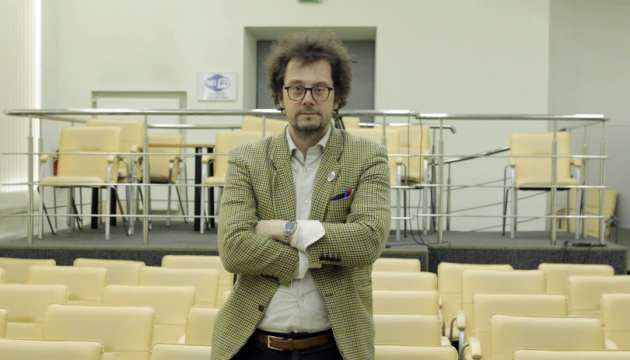
The director general of Reporters Without Borders (RSF), Thibaut Bruttin, has called for decisive action against those responsible for spreading Russian propaganda, urging that key figures be exposed and prosecuted for their role in Russia’s disinformation campaign.
In comments to Ukrainian news agency Ukrinform, Bruttin emphasized that combating Russian propaganda requires a shift in approach—focusing not just on countering false narratives but actively pursuing those who create and disseminate them.
“We need to expose the people, understand the narratives, understand the budget. We should revert the logic. We should not lose time with them. We should go after them,” Bruttin stated, highlighting the need for a more proactive strategy.
The RSF director expressed hope that accountability would be established at both national and international levels for Russian leadership figures who have “deliberately implemented a disinformation strategy.” He specifically named prominent Russian media figures Vladimir Solovyov and Margarita Simonyan as individuals who should face prosecution.
“And I hope that one day, we will get accountability at the national level, but maybe at the international level. But the leaders of propaganda – Solovyov, Simonyan, and the middlemen – must also be prosecuted,” he said.
Simonyan serves as editor-in-chief of the Russian state-controlled network RT (formerly Russia Today) and heads the Rossiya Segodnya media group, while Solovyov is a prominent television presenter known for his fiercely pro-Kremlin stance and inflammatory rhetoric against Ukraine and Western nations.
Bruttin emphasized that these individuals bear significant responsibility for enabling Russia’s aggression against Ukraine and for attempting to undermine democratic support across Europe through coordinated disinformation campaigns.
The RSF director made a clear distinction between journalism and propaganda, stressing that so-called “Russian war correspondents” working to spread state narratives should not be considered legitimate journalists. “Our organization is demanding in this vision of what journalism is. We support independent journalism. We support people that detach themselves from the military narratives,” Bruttin explained.
He also revealed that Russian authorities have been pressuring international organizations to include personnel from state-controlled outlets like RT and Sputnik in tallies of journalists killed in action—a practice RSF firmly opposes.
Russia’s disinformation strategy represents a significant component of its hybrid warfare approach, which combines conventional military tactics with information operations designed to sow confusion, shape public opinion, and create favorable conditions for Russian objectives both domestically and internationally.
According to Ukrinform, Russian forces have committed 868 crimes against journalists and media outlets in Ukraine since the full-scale invasion began in February 2022. This figure highlights the dual nature of Russia’s assault on press freedom—physically targeting journalists while simultaneously waging an information war.
The call for accountability comes at a time when Western nations are increasingly recognizing the threat posed by Russian disinformation operations. Many countries have implemented sanctions against Russian state media outlets, while technology companies have taken steps to label or restrict content from known propaganda sources.
Media watchdogs like RSF play a crucial role in documenting press freedom violations and advocating for the protection of journalists worldwide. By calling for the prosecution of propaganda leaders, Bruttin is pushing for a new front in the battle against state-sponsored disinformation campaigns that threaten democratic institutions and enable military aggression.
Fact Checker
Verify the accuracy of this article using The Disinformation Commission analysis and real-time sources.

8 Comments
Holding propaganda spreaders accountable is a crucial step in countering Russia’s disinformation campaign. Exposing the individuals and structures behind this effort is key to dismantling their influence.
The RSF director makes a compelling case. We need to move beyond just fact-checking and start actively pursuing the key figures driving Russian disinformation campaigns. Their activities must face serious repercussions.
Reversing the logic and going after the propagandists themselves, rather than just countering the narratives, seems like a more effective approach. Shining a light on the funding and structures behind this disinformation is crucial.
It’s good to see the RSF director call for decisive action against Russian propaganda leaders. Their deliberate dissemination of false narratives must face consequences at both national and international levels.
Agreed. Specific figures like Solovyov and Simonyan should be pursued for their central roles in this propaganda machine.
This is an important step in holding Russia accountable for its information warfare tactics. Establishing clear legal and political consequences for those orchestrating the propaganda is critical.
Absolutely. Impunity has allowed this to fester for too long. Time to take the fight to the source.
Proactive accountability measures targeting the propagandists themselves are a necessary evolution in countering Russia’s information warfare. Exposing their motives and funding sources is crucial.