


Listen to the article
In a digital landscape once dominated by television, video games have emerged as a sophisticated and potentially more potent vehicle for propaganda, experts warn. Unlike passive media consumption, gaming offers an immersive experience where players actively participate, making ideological messages embedded within these virtual worlds particularly effective at shaping worldviews and political narratives.
This influence extends to approximately 3.3 billion players globally, with those aged 18-34 representing about 38% of the gaming audience. The persuasive power of video games operates through multiple channels simultaneously, often without players’ conscious awareness.
Gaming communities foster powerful “in-group” dynamics, creating global networks united by shared language, symbols, and rituals. Within these spaces, information from fellow community members is typically assessed less critically, allowing ideologically biased narratives to spread under the guise of plot analysis or personal opinion through platforms like Fandom, Reddit, and Steam.
The immersive nature of gaming presents another avenue for influence. Players interact with value systems established within game worlds, making decisions that receive rewards or punishments based on the internal logic designed by developers. This creates an illusion of choice that strengthens acceptance of prescribed behavioral models, especially in long-running franchises where players repeatedly return to the same universe.
“What is crucial is that these messages are perceived as the result of personal choice,” note analysts from EUvsDisinfo. “Even when freedom of action is limited by predefined frameworks, the sense of control strengthens acceptance of prescribed behavioral models.”
Symbols and repetition further enhance this effect. Every element in video games carries encoded meaning, and the repetition of these symbols triggers what psychologists call the “illusory truth effect” – where familiar information appears more credible after multiple exposures. Since gaming is typically viewed as leisure, critical thinking is often diminished, making players susceptible to distorted historical narratives or stereotypical portrayals.
Russia has been particularly aggressive in harnessing this potential, integrating the gaming industry into its state information apparatus as part of what observers describe as “digital authoritarianism.” President Vladimir Putin has explicitly stated that games should exist at the intersection of art and education while serving to cultivate patriotism.
To implement this vision, the Kremlin has constructed a closed ecosystem where ideologically aligned projects receive substantial financial and administrative support. The Institute for Internet Development, an organization currently under EU sanctions for propaganda activities, distributes billions of rubles in state subsidies for “patriotic” digital content. For 2025-2027 alone, the government has allocated 3.4 billion rubles to such initiatives.
Simultaneously, Russia is pursuing technological autonomy through the development of domestic game engines like VK’s Nau Engine, alternative distribution platforms, and even proprietary gaming hardware. These efforts are accompanied by intensifying censorship of games deemed to contain “distorted representations” of Russian history or global standing.
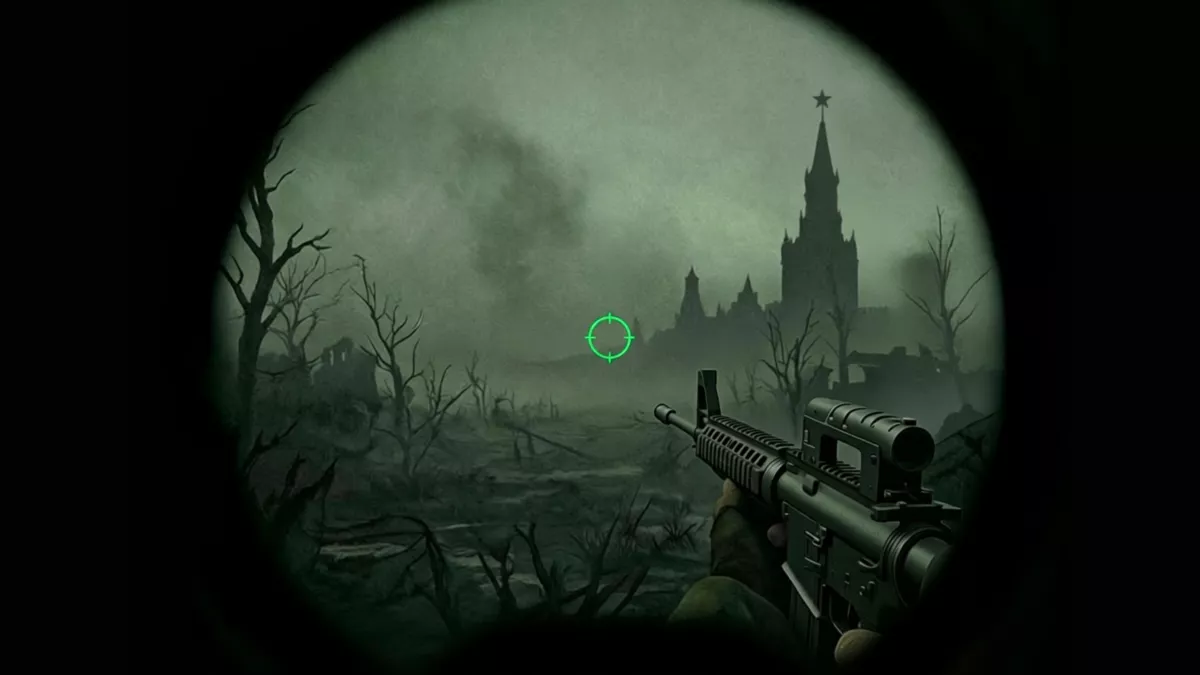
Particularly concerning is the militarization of youth through gaming. The youth military-patriotic movement “Yunarmiya,” with over 1.75 million participants, incorporates e-sports and video games into its activities. Tactical shooters such as “Squad 22: ZOV,” which recreate actual combat operations in Ukraine including campaigns in Mariupol and Avdiivka, are officially recommended by the Russian army for cadets and Yunarmiya members.
Gaming platforms themselves provide infrastructure for ideological influence. Steam, with approximately 132 million monthly visitors in 2025, allows users to exchange reviews, publish materials, and create modifications. Research by the Anti-Defamation League identified over 1.8 million instances of extremist or hateful content on the platform, including Nazi, racist, and militaristic symbols.
Pro-war propaganda, often disguised as humor or fan-created content, spreads through nicknames, avatars, in-game discussions, and guides. This content is rarely perceived as propaganda because it presents itself as community culture or “alternative opinion,” reducing critical awareness.
Experts recommend several preventive measures, including continuous monitoring of games for ideological narratives, standardized assessment tools, transparency requirements regarding funding and state connections, and extended governance of community layers where propaganda often spreads. They also advocate for tailored public awareness campaigns and government support for independent monitoring.
“In the digital age, the struggle for consciousness takes place not only on news screens but also in virtual worlds where war can begin with the press of the ‘Start’ button,” warns EUvsDisinfo, highlighting that video games have evolved from mere entertainment into powerful tools for socialization, identity formation, and the normalization of violence.
Fact Checker
Verify the accuracy of this article using The Disinformation Commission analysis and real-time sources.

6 Comments
I’m curious to learn more about the specific techniques and tactics used by Russia to leverage video games for propaganda. This seems like a worrying trend that deserves further investigation and scrutiny.
Yes, understanding the mechanics of how these propaganda efforts operate within gaming communities is crucial. Transparency and accountability from both developers and platforms will be key.
While the use of video games for propaganda is concerning, I’m skeptical about the scale of the issue. More data and analysis would be helpful to assess the true extent and impact of this problem.
That’s a fair point. Unsubstantiated claims of widespread propaganda can also be problematic. A rigorous, evidence-based approach is needed to understand the true nature and scope of this challenge.
This is a concerning revelation about the insidious use of video games for propaganda. The immersive nature of gaming makes it a powerful tool to shape worldviews, especially among younger audiences. We must remain vigilant against such manipulation efforts.
Agreed. Game developers and platforms have a responsibility to address this issue and prevent their platforms from being exploited for propaganda purposes.