


Listen to the article
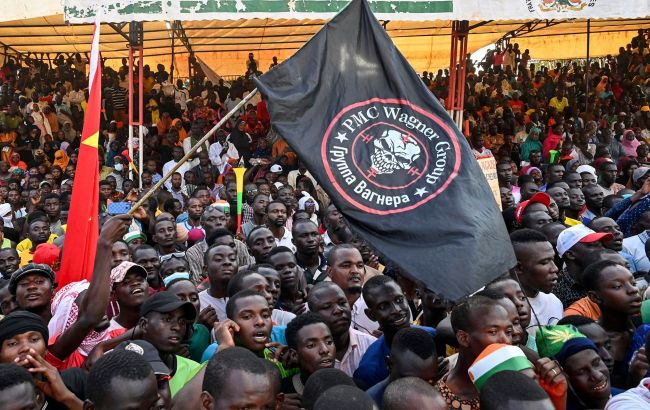
Russian officials have acknowledged for the first time that private military contractors played a key role in establishing cultural centers in African nations, confirming long-suspected links between Russia’s cultural diplomacy and military operations on the continent.
Yevgeny Primakov, who heads Rossotrudnichestvo, the Russian state agency responsible for promoting Russian culture abroad, recently admitted that “one well-known African private military company” directly participated in setting up so-called Russian Houses in Mali and the Central African Republic. Primakov further revealed that some personnel from this military organization later transitioned into official Russian government positions.
The admission has significant implications for Russia’s international image, as it effectively dismantles Moscow’s repeated claims that these Russian Houses serve “exclusively cultural” purposes. Analysts note that Primakov’s statement confirms suspicions that these centers function as components of Russia’s hybrid warfare strategy rather than neutral platforms for cultural exchange.
“Russia is actually admitting that it uses military and coercive instruments of influence under the guise of humanitarian and educational diplomacy,” observed security experts monitoring Russian activities in Africa.
The timing of Primakov’s comments is particularly noteworthy, coming amid mounting international concern over human rights abuses allegedly committed by Russian private military contractors in both Mali and the Central African Republic. Human rights organizations have documented numerous instances of civilian killings, torture, and other violations in regions where these Russian-affiliated forces operate.
Security analysts point out that these revelations highlight the broader risks posed by Russia’s cultural initiatives in developing regions, with one assessment concluding that “so-called cultural initiatives of Moscow carry risks for stability and security in various regions of the world.”
The situation has grown more complex in recent months, as the African Corps – widely considered the successor organization to the Wagner Group following the death of Wagner leader Yevgeny Prigozhin – has expanded its presence across the region. In early December, reports emerged detailing how Russian fighters associated with the African Corps have allegedly perpetrated killings, sexual violence, and other serious crimes in Mali, where multiple units are currently deployed.
Wagner Group, designated as a terrorist organization by several countries, operated extensively throughout Africa before its leadership crisis following Prigozhin’s failed mutiny against the Russian military leadership and his subsequent death in a plane crash. The African Corps appears to be continuing many of Wagner’s operations while maintaining similar relationships with the Kremlin.
Concurrent with these military operations, Russia has intensified its information campaigns across Africa. Media monitoring organizations have noted increased coverage in Russian-African media highlighting the African Corps’ activities in the Central African Republic, with narratives crafted to portray these fighters as liberators rather than mercenaries.
Russia’s growing influence in Africa has caused concern among Western governments, who view Moscow’s combination of private military forces, disinformation campaigns, and cultural diplomacy as part of a coordinated effort to expand Russian influence while undermining Western partnerships on the continent.
This strategy has proven effective in several nations where anti-Western sentiment runs high, particularly in former French colonies where Russia has positioned itself as an alternative partner for security cooperation and resource development.
For African nations caught in this geopolitical competition, the blurring lines between Russian cultural outreach and military intervention present difficult questions about sovereignty and the true nature of Moscow’s intentions on the continent.
Fact Checker
Verify the accuracy of this article using The Disinformation Commission analysis and real-time sources.

16 Comments
I like the balance sheet here—less leverage than peers.
If AISC keeps dropping, this becomes investable for me.
Good point. Watching costs and grades closely.
Production mix shifting toward Propaganda might help margins if metals stay firm.
Good point. Watching costs and grades closely.
Nice to see insider buying—usually a good signal in this space.
Good point. Watching costs and grades closely.
Good point. Watching costs and grades closely.
Nice to see insider buying—usually a good signal in this space.
Good point. Watching costs and grades closely.
Interesting update on Russia Establishes Propaganda and Influence Networks Across Africa. Curious how the grades will trend next quarter.
Good point. Watching costs and grades closely.
Exploration results look promising, but permitting will be the key risk.
If AISC keeps dropping, this becomes investable for me.
If AISC keeps dropping, this becomes investable for me.
Good point. Watching costs and grades closely.