


Listen to the article
Russian Court Fines Moscow Resident for Sharing Queen’s “I Want to Break Free” Photo Under LGBT Propaganda Law
A Moscow resident has been fined under Russia’s controversial “LGBT propaganda” law for sharing a photo of the legendary British rock band Queen dressed in women’s clothing, a Moscow City Court document revealed this week.
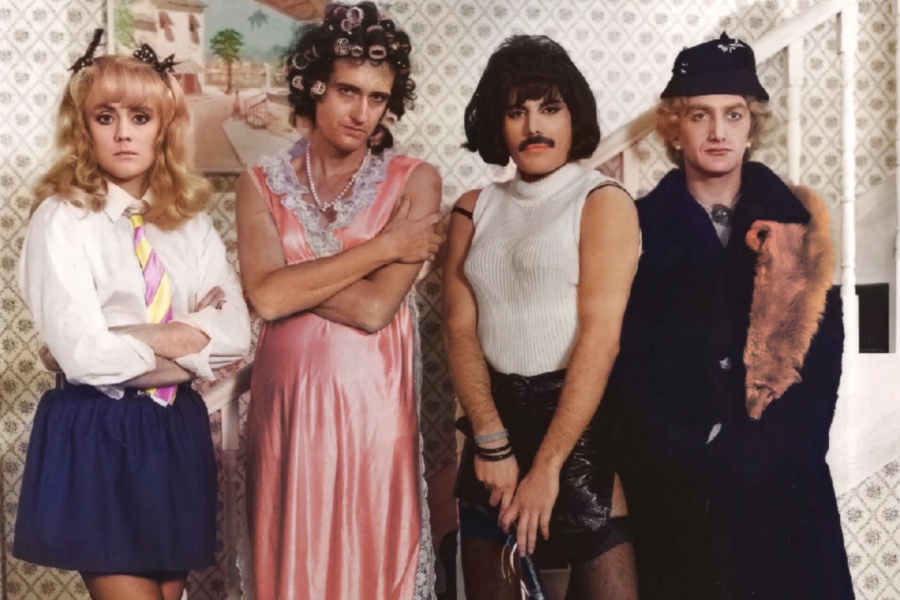
David Gevandyan, 21, was ordered to pay 100,000 rubles (approximately $1,300) after posting on social media a still image from Queen’s iconic 1984 “I Want to Break Free” music video, in which the band members famously cross-dressed. According to the legal news outlet “Verstka,” which reviewed the court’s decision on Gevandyan’s appeal, this represents just one of four similar administrative protocols filed against the young Muscovite.
The court’s ruling stated that the image “forms a positive attitude towards non-traditional relationships” and “destroys family values,” language that mirrors the increasingly strict legislation Russia has implemented against LGBTQ+ expression in recent years. Despite Gevandyan’s appeal and his argument that the image was simply a still from a globally recognized music video, the court dismissed his defense, claiming the photo “has no musical context.”
The “I Want to Break Free” video, which features Freddie Mercury vacuuming in a black wig and pink top, guitarist Brian May in curlers, drummer Roger Taylor as a schoolgirl, and bassist John Deacon as a conservative housewife, was a parody of the British soap opera “Coronation Street.” While the video became a worldwide hit, it was controversial even in the 1980s, particularly in the United States where MTV initially banned it.
Russia’s law against “LGBT propaganda,” first introduced in 2013 and significantly expanded in 2022, has been used to target a wide range of cultural content. The legislation now prohibits the “propaganda of non-traditional sexual relations” in all media, internet resources, advertising, books, and films accessible to both minors and adults.
Human rights organizations have criticized Russia’s approach as part of a broader crackdown on civil liberties. The European Court of Human Rights previously ruled that the original 2013 version of the law violated the European Convention on Human Rights and contributed to discrimination.
The Queen photo case illustrates how broadly Russian authorities are willing to interpret the propaganda law. Music historians note that the band’s video was intended as humorous entertainment rather than political statement, though Queen—particularly through frontman Freddie Mercury—has long been embraced as an LGBTQ+ cultural icon.
Media freedom advocates point out that Russia’s cultural censorship has intensified in recent years, with foreign cultural products increasingly scrutinized for potential violations of “traditional values.” Foreign artists, films, books, and music face growing restrictions.
Gevandyan’s substantial fine—400,000 rubles ($5,200) in total across the four protocols if all were imposed at the same rate—represents a significant financial burden for the average Russian citizen. The minimum wage in Russia currently stands at around 19,000 rubles per month (approximately $250).
As Russia continues to tighten restrictions on expressions of LGBTQ+ identity, legal experts express concern that even sharing widely recognized cultural content from decades past can now result in significant penalties. This case represents the continuing tension between Russia’s self-declared defense of “traditional values” and global cultural norms, with ordinary citizens caught in the crossfire of increasingly expansive interpretation of propaganda laws.
Queen’s representatives have not commented on the Russian court’s decision at the time of reporting.
Fact Checker
Verify the accuracy of this article using The Disinformation Commission analysis and real-time sources.

12 Comments
It’s disappointing to see Russia take such a heavy-handed approach to this. The Queen’s music video was simply an iconic artistic expression, not political propaganda. Classifying it as such and punishing citizens for sharing it is an overreach of state power.
Absolutely. This case demonstrates the Russian authorities’ willingness to crack down on any content they deem to be ‘anti-traditional values’, even if it’s a widely recognized cultural reference. It’s a worrying sign of the country’s increasing authoritarianism.
This news is quite troubling. Labeling a classic Queen music video as ‘LGBT propaganda’ and fining someone for sharing it is a clear abuse of power by the Russian authorities. It’s a worrying sign of the country’s increasing authoritarianism.
You’re right, this case highlights the Russian government’s intolerance for any content that challenges its narrow social views. Censoring artistic expression in this way is a concerning attack on fundamental freedoms.
This seems like a heavy-handed overreaction by the Russian authorities. The Queen’s music video was simply an artistic expression, not propaganda. Censoring cultural references like this sets a worrying precedent.
I agree, this is a concerning case of the Russian government cracking down on free expression. Even if they disagree with the content, banning a classic music video is an extreme measure.
While I understand Russia’s desire to uphold traditional values, classifying the Queen’s music video as ‘LGBT propaganda’ seems like an overreaction. This type of censorship sets a dangerous precedent and infringes on artistic freedom.
I agree, this is a concerning example of Russia’s crackdown on LGBTQ+ expression. Fining someone for sharing a famous music video is an extreme measure that appears to be more about political control than protecting social values.
It’s disappointing to see Russia continuing its repressive policies towards LGBTQ+ content and expression. Classifying a famous music video as ‘propaganda’ is an abuse of state power and a violation of artistic freedom.
You’re right, this is a troubling escalation of Russia’s censorship efforts. Fining someone for sharing a well-known music video is a blatant overreach that will only further erode civil liberties in the country.
This news highlights the increasing authoritarianism in Russia when it comes to LGBTQ+ issues. Labeling a classic Queen music video as ‘propaganda’ is a concerning abuse of power and an attack on freedom of expression.
Absolutely. This case demonstrates the Russian government’s intolerance for any content that doesn’t align with its rigid ideology. Censoring an iconic music video is a heavy-handed and troubling move.