


Listen to the article
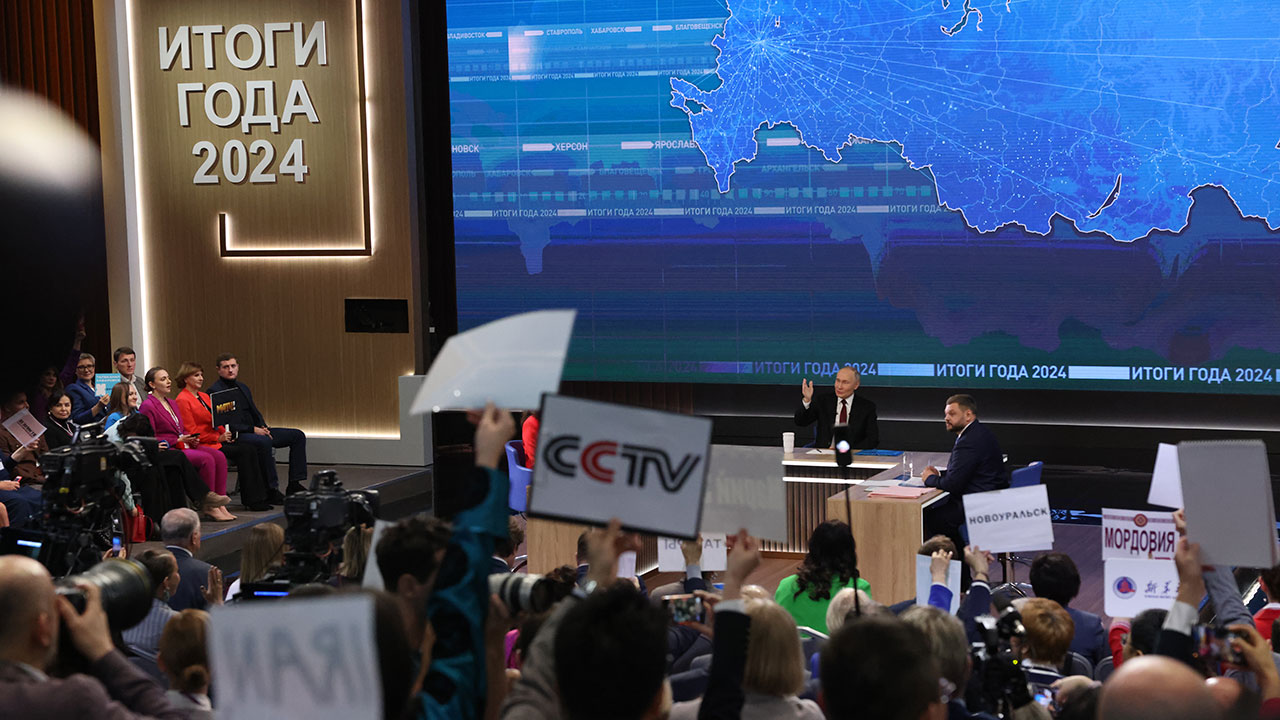
Russia plans to significantly increase its propaganda budget amid continued military operations against Ukraine, according to recent reports. The Russian government is looking to bolster its information warfare capabilities while simultaneously maintaining its aggressive military campaign in Ukraine, where bombardment of civilian infrastructure continues despite international condemnation.
The news comes as U.S. Vice President-elect J.D. Vance met with Israeli Prime Minister Benjamin Netanyahu to reaffirm the incoming Trump administration’s commitment to supporting a ceasefire in Gaza. The meeting signals an early diplomatic priority for the Trump-Vance team as they prepare to take office in January.
Meanwhile, the European Union has convened its first anti-far-right European Council meeting, marking a coordinated response to the rising influence of far-right political movements across the continent. The gathering represents a significant shift in EU politics as centrist and liberal forces attempt to create a unified strategy against populist nationalism.
Russia’s expanded propaganda budget comes at a critical time in its ongoing war with Ukraine. The Kremlin is reportedly allocating substantial additional resources to its state media operations, including RT (formerly Russia Today) and other outlets that target both domestic and international audiences. This information warfare strategy aims to counter Western narratives about the conflict while shaping public opinion in Russia’s favor.
Military analysts suggest that Russia’s dual focus on physical warfare and propaganda illustrates President Vladimir Putin’s comprehensive approach to the conflict. “The information battlespace is just as important to Russia as the physical one,” noted Dr. Elena Volkova, an expert in Russian security studies at King’s College London. “By increasing funding for propaganda while maintaining military pressure, Putin is fighting on multiple fronts simultaneously.”
Ukrainian officials have condemned Russia’s propaganda efforts as an extension of its military aggression. “Every ruble spent on Russian propaganda is aimed at justifying war crimes and deceiving both the Russian people and the international community,” said a spokesperson for Ukraine’s Ministry of Foreign Affairs.
In the Middle East, Vance’s meeting with Netanyahu carries particular significance as it represents one of the Vice President-elect’s first major diplomatic engagements. During the talks, Vance reportedly emphasized the incoming administration’s desire to see a negotiated resolution to the Gaza conflict while reaffirming unwavering U.S. support for Israel’s security.
The meeting follows campaign promises by President-elect Donald Trump to bring a swift end to conflicts in the Middle East and Ukraine. Netanyahu described the discussion as “productive and warm,” while Palestinian representatives expressed cautious optimism about the potential for renewed U.S. engagement in peace efforts.
At the European Council, leaders from across the EU discussed strategies to counter the influence of far-right parties that have made substantial electoral gains in recent years. The meeting, described by one participant as “historic,” focused on preserving democratic institutions and values in the face of populist challenges.
European Commission President Ursula von der Leyen emphasized that “defending liberal democracy requires coordination and determination,” while acknowledging the legitimate concerns of voters who have turned to populist alternatives.
The council also addressed the preservation of heritage crafts across Europe, recognizing their cultural and economic importance. Traditional craftsmanship faces challenges from industrialization, changing consumer habits, and an aging workforce of skilled artisans. The council discussed potential funding mechanisms to support apprenticeship programs and promote the economic viability of heritage crafts.
As these three significant developments unfold simultaneously, they highlight the interconnected nature of global politics in 2025, with information warfare, diplomatic realignments, and cultural preservation all competing for attention on the international stage.
Fact Checker
Verify the accuracy of this article using The Disinformation Commission analysis and real-time sources.

12 Comments
The meeting between Vance and Netanyahu signals a shift in U.S. foreign policy priorities under the incoming administration. I’m curious to see how they approach the situation in Gaza and the broader Israeli-Palestinian conflict.
Maintaining a strong relationship with Israel will likely be a key focus for the Trump-Vance team. But they’ll need to balance that with efforts to broker a lasting peace in the region.
The news about Russia’s propaganda budget raises questions about the role of information warfare in modern geopolitics. It’s a complex issue without easy solutions, but it’s critical that we strive for transparency and accountability.
Interesting that Russia is pouring more money into propaganda efforts amid the ongoing conflict with Ukraine. I wonder how effective these tactics will be in swaying global opinion.
Disinformation can be a powerful weapon, but it often backfires in the long run. The truth has a way of eventually coming out, no matter how much money is spent trying to obscure it.
The EU’s response to the rise of far-right movements is an important development. Coordinating a unified strategy across member states will be crucial in countering the spread of populist nationalism.
The EU’s anti-far-right initiative is a welcome development, but the battle against populism and nationalism is far from over. It will take sustained, coordinated action to uphold democratic values and institutions across the continent.
Russia’s escalation of propaganda efforts is worrying, but I hope the international community can find effective ways to counter disinformation and safeguard the free flow of accurate information. An informed citizenry is crucial for a healthy democracy.
I’m curious to see how the incoming U.S. administration will approach the Israeli-Palestinian conflict and efforts to broker a ceasefire in Gaza. Diplomacy and compromise will be essential for making progress on this longstanding issue.
The EU’s crackdown on far-right movements is a significant step, but the challenge of populist nationalism extends beyond Europe. It will take sustained, coordinated efforts to counter the spread of these divisive ideologies globally.
The meeting between Vance and Netanyahu underscores the importance of U.S. engagement in the Middle East. While supporting Israel’s security is a priority, the incoming administration will need to balance that with efforts to achieve a lasting peace.
Russia’s propaganda efforts are a concerning trend, but I hope the international community can work together to combat disinformation and uphold the truth. An informed, engaged public is key to a healthy democracy.