


Listen to the article
Roman propaganda continues to tarnish the legacy of one of history’s most influential female rulers, nearly 2,000 years after her death. Cleopatra VII, the last active ruler of the Ptolemaic Kingdom of Egypt, remains largely misunderstood by the general public, with her image still heavily influenced by narratives crafted by her Roman adversaries.
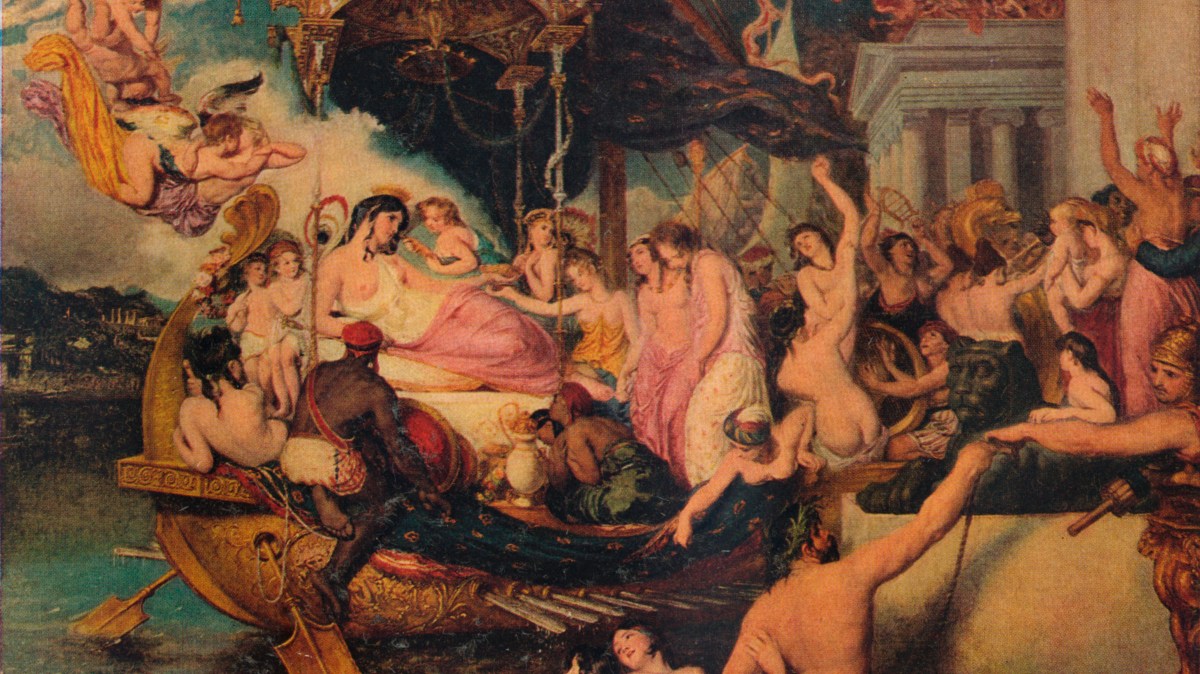
Historical records show that Cleopatra was far more than the seductress portrayed in popular culture. She was a skilled diplomat, fluent in multiple languages, and a shrewd political strategist who successfully governed Egypt during a period of immense geopolitical upheaval. Yet the prevailing image of Cleopatra continues to be shaped by Roman accounts that deliberately undermined her political acumen.
Dr. Sarah Thompson, professor of Ancient Mediterranean History at Oxford University, explains the lasting power of this historical distortion. “What we’re seeing is the remarkable longevity of what was essentially a smear campaign. Octavian, who later became Emperor Augustus, needed to justify his war against Mark Antony and Cleopatra. Portraying her as a foreign temptress who corrupted a Roman general served his political purposes perfectly.”
The Roman characterization of Cleopatra as morally corrupt and overly ambitious was deliberately crafted to contrast with Roman ideals of feminine virtue. These narratives, preserved in the writings of Plutarch, Dio Cassius, and others, have dominated Western understanding of the Egyptian queen for centuries.
Recent archaeological findings and scholarly reappraisals have begun to challenge these Roman-centric accounts. Excavations near Alexandria have uncovered administrative documents that highlight Cleopatra’s focus on economic reforms and public infrastructure projects. These findings reveal a ruler deeply invested in strengthening Egypt’s economy and improving conditions for her subjects.
“The documentary evidence shows a monarch who was actively engaged in governance, not someone distracted by luxury or romance as Roman sources suggest,” notes Dr. Fatima El-Rashidi, director of Ptolemaic Studies at the Egyptian Museum in Cairo. “She implemented agricultural reforms, maintained religious harmony, and navigated extremely complex diplomatic relationships with multiple powers.”
Cleopatra’s linguistic abilities alone set her apart from previous Ptolemaic rulers. She was reportedly the first of her dynasty to learn Egyptian, alongside her native Greek, and was said to be proficient in several other languages. These skills enabled her to communicate directly with her subjects and foreign dignitaries without translators, a significant political advantage.
The queen’s relationships with Julius Caesar and Mark Antony, often sensationalized in both ancient and modern accounts, were fundamentally political alliances that served Egypt’s interests during a period when Roman power was rapidly expanding across the Mediterranean.
“When we examine Cleopatra’s actions objectively, we see a ruler making strategic decisions to preserve Egyptian autonomy in the face of Roman imperialism,” explains Professor James Martinez of the University of California, Berkeley. “Her relationships with Roman leaders were diplomatic maneuvers in an era when marriage alliances were standard political practice.”
Hollywood has played a significant role in perpetuating Roman propaganda, with films from the 1963 Elizabeth Taylor portrayal to more recent depictions largely adhering to the seductress narrative. These portrayals continue to overshadow Cleopatra’s accomplishments as a ruler who maintained Egyptian independence for over two decades against overwhelming odds.
Educational institutions have begun to incorporate more balanced perspectives on Cleopatra in their curricula. The British Museum’s recent exhibition, “Cleopatra: Beyond the Myth,” attracted record attendance with its focus on archaeological evidence rather than Roman literary accounts.
“There’s a growing public interest in understanding historical women as political actors rather than just in relation to famous men,” observes Dr. Thompson. “Cleopatra presents a fascinating case study in how propaganda can shape historical memory across millennia.”
As scholars continue to reassess ancient sources with greater attention to their biases, a more nuanced image of Cleopatra is emerging – one that acknowledges both her political acumen and the remarkable challenge she faced as Egypt’s last independent ruler before Roman annexation.
This scholarly reappraisal serves as a reminder that history is rarely as straightforward as it first appears, particularly when written by the victors.
Fact Checker
Verify the accuracy of this article using The Disinformation Commission analysis and real-time sources.

18 Comments
Interesting update on Roman Propaganda Continues to Tarnish Cleopatra’s Legacy. Curious how the grades will trend next quarter.
Good point. Watching costs and grades closely.
Good point. Watching costs and grades closely.
Nice to see insider buying—usually a good signal in this space.
Good point. Watching costs and grades closely.
Good point. Watching costs and grades closely.
Nice to see insider buying—usually a good signal in this space.
Good point. Watching costs and grades closely.
Silver leverage is strong here; beta cuts both ways though.
Good point. Watching costs and grades closely.
Silver leverage is strong here; beta cuts both ways though.
Good point. Watching costs and grades closely.
Interesting update on Roman Propaganda Continues to Tarnish Cleopatra’s Legacy. Curious how the grades will trend next quarter.
If AISC keeps dropping, this becomes investable for me.
If AISC keeps dropping, this becomes investable for me.
Good point. Watching costs and grades closely.
Interesting update on Roman Propaganda Continues to Tarnish Cleopatra’s Legacy. Curious how the grades will trend next quarter.
Good point. Watching costs and grades closely.