


Listen to the article
The woman who once ruled Egypt, commanded armies and captivated Rome’s most powerful men continues to be maligned by ancient propaganda that persists more than 2,000 years after her death, according to historians and archaeologists working to uncover the truth about Cleopatra VII.
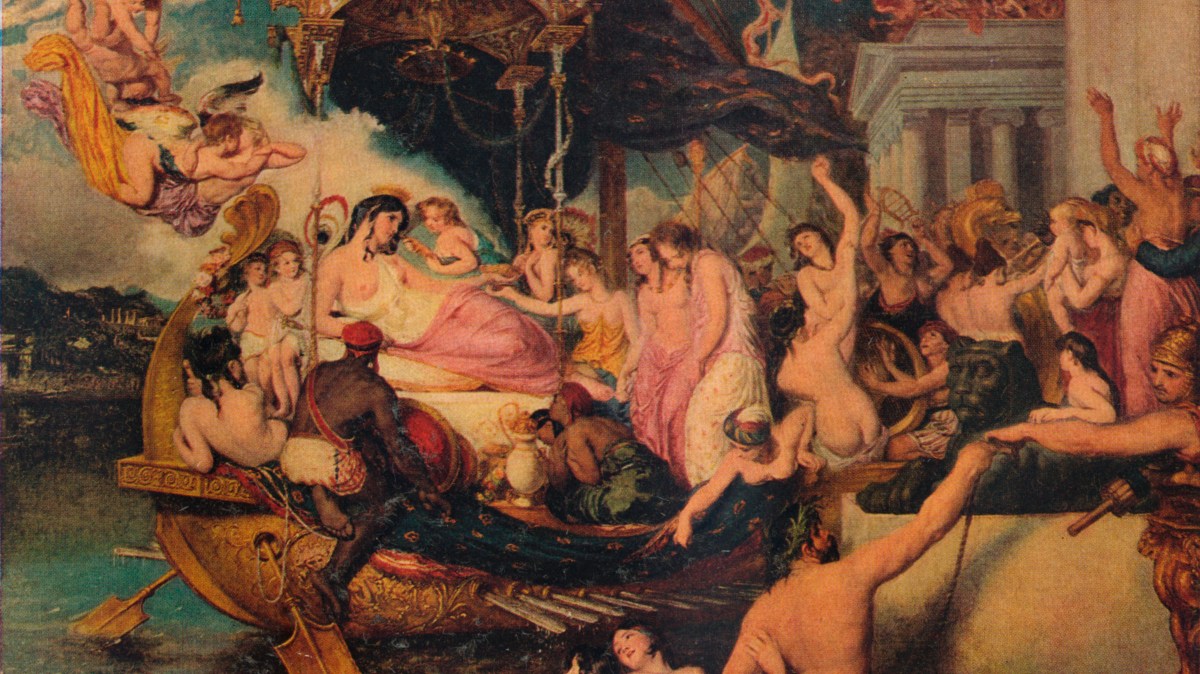
Experts suggest that much of what we think we know about the legendary queen comes from Roman accounts that deliberately portrayed her as a seductress and manipulator – a narrative crafted by her enemy Octavian, who would later become Emperor Augustus, to justify his war against her and Mark Antony.
“What’s remarkable about Cleopatra’s story is how thoroughly Roman propaganda has shaped our perception,” says Dr. Kathleen Martinez, an archaeologist who has spent years searching for Cleopatra’s tomb near Alexandria. “The Romans effectively created a caricature that has endured for millennia.”
The historical record reveals Cleopatra as a far more complex figure than popular culture suggests. Fluent in at least nine languages and educated in mathematics, astronomy, philosophy, and medicine, she was the only Ptolemaic ruler to learn Egyptian, the language of her subjects. While her romantic relationships with Julius Caesar and Mark Antony are well-documented, they represent just one aspect of a multifaceted political career spanning two decades.
Recent archaeological discoveries have reinforced the image of Cleopatra as a shrewd political leader rather than merely an enchantress. Coins minted during her reign depict her with pronounced masculine features, emphasizing strength rather than beauty – a deliberate choice to project power in a world dominated by men.
“Cleopatra understood the importance of image management,” explains Dr. Joyce Tyldesley, author of several books on ancient Egypt. “She presented different faces to different audiences – divine queen to Egyptians, cultural sophisticate to Greeks, and political equal to Romans.”
The queen’s negative portrayal began in earnest after her defeat at the Battle of Actium in 31 BCE. Octavian, who would become Rome’s first emperor, launched what modern observers might recognize as a sophisticated smear campaign. Roman writers like Virgil, Horace, and later Plutarch characterized her as a foreign threat to Roman virtue, an exotic temptress who had bewitched Mark Antony into betraying his homeland.
“Octavian needed to justify civil war against a fellow Roman in Antony,” notes Dr. Duane Roller, professor emeritus of classics at Ohio State University. “By casting Cleopatra as the true enemy – a foreign queen threatening Roman sovereignty – he reframed the conflict as Rome versus Egypt rather than Roman versus Roman.”
This propaganda proved remarkably effective and enduring. From Shakespeare’s tragic portrayal to Elizabeth Taylor’s sultry performance in the 1963 film, popular culture has largely perpetuated the Roman narrative of Cleopatra as a beautiful seductress rather than an accomplished ruler.
Archaeological evidence tells a different story. Excavations throughout Egypt have uncovered evidence of Cleopatra’s building projects, religious dedications, and administrative reforms that helped stabilize Egypt during a tumultuous period in Mediterranean history.
“She maintained Egypt’s independence during an era when Rome was consuming territory throughout the region,” says Dr. Sally-Ann Ashton, an Egyptologist who has studied Cleopatra extensively. “That she did so for 21 years speaks to her political acumen and diplomatic skill.”
Scholars point out that Cleopatra’s death by suicide – likely by poison rather than the dramatic asp bite depicted in art – marked the end of both Egyptian independence and the Ptolemaic dynasty that had ruled for three centuries. Egypt became a Roman province, and Cleopatra’s children by Caesar and Antony were either killed or disappeared from historical records.
Modern academic reassessment of Cleopatra has accelerated in recent decades, coinciding with broader efforts to reexamine how women in power have been portrayed throughout history. Researchers are increasingly focusing on Egyptian sources and archaeological evidence rather than relying solely on Roman accounts written by her enemies.
“We’re still untangling fact from fiction,” Martinez says. “But what’s clear is that Cleopatra was far more than the seductress of legend. She was one of the most significant political figures of her era – a queen who nearly changed the course of history.”
As excavations continue and scholars apply new methodologies to ancient sources, a more nuanced picture of the last pharaoh of Egypt continues to emerge – one that finally challenges Roman propaganda that has shaped perceptions for more than two millennia.
Fact Checker
Verify the accuracy of this article using The Disinformation Commission analysis and real-time sources.

8 Comments
Fascinating to learn how Roman propaganda has distorted our view of Cleopatra for centuries. She seems to have been a highly educated and accomplished ruler, not just a seductress as often portrayed. I’m curious to learn more about the archaeological evidence that is helping to uncover the truth about her legacy.
Yes, it’s important to look beyond the biased Roman accounts and understand Cleopatra as a complex historical figure. The ongoing archaeological work to find her tomb should shed more light on her life and reign in Egypt.
Cleopatra’s multilingual abilities and scholarly pursuits are impressive. It’s a shame that her achievements have been overshadowed by the caricature created by her Roman adversaries. I’m glad to see efforts to recover the more nuanced historical record and give her the recognition she deserves.
The article highlights an important lesson about the reliability of historical sources, especially when they originate from the victors of a conflict. It’s a good reminder to approach such accounts with a critical eye and seek out alternative perspectives. I’m curious to learn more about the archaeological evidence that could shed new light on Cleopatra’s life and legacy.
Absolutely. Uncovering the true story behind historical figures like Cleopatra is crucial for gaining a more accurate understanding of the past. The archaeological work sounds promising in that regard.
This is a fascinating example of how political motivations can distort our historical narratives. It’s encouraging to see researchers challenging the longstanding Roman propaganda and working to uncover the real Cleopatra. I hope their efforts will inspire a more nuanced and balanced view of this remarkable woman.
The article highlights an important issue – how the historical narratives we inherit can be shaped by the victors and their agendas. It’s good to see researchers working to uncover the truth about Cleopatra and challenge the enduring Roman propaganda. I wonder what other figures from history have had their legacies distorted in a similar way.
That’s a great point. Historical revisionism is an ongoing challenge, as biases and agendas can color our understanding of the past. It will be interesting to see what else emerges as researchers continue to reexamine figures like Cleopatra.