


Listen to the article
Archaeologists and historians continue to fight against centuries of Roman propaganda that has distorted the legacy of one of history’s most influential female leaders. Cleopatra VII, the last active ruler of the Ptolemaic Kingdom of Egypt, remains shrouded in misconceptions perpetuated by her Roman adversaries more than 2,000 years after her death.
Recent scholarly work has increasingly challenged the Roman narrative that portrayed Cleopatra primarily as a seductress who used her feminine wiles to manipulate powerful men like Julius Caesar and Mark Antony. This characterization, experts say, was deliberately crafted by Octavian (later Emperor Augustus) to justify his war against her and to cement his own political position in Rome.
“The Romans were masterful at propaganda,” explains Dr. Sarah Thompson, professor of ancient history at Oxford University. “Octavian needed to demonize Cleopatra to rally Roman support against her. He portrayed her as a foreign threat to Roman values, when in reality, she was a sophisticated political strategist defending her kingdom’s independence.”
Archaeological evidence and contemporary historical accounts paint a dramatically different picture of the Egyptian queen. Cleopatra was highly educated, speaking as many as nine languages, and demonstrated remarkable political acumen in navigating Egypt’s precarious position between expanding Roman power and maintaining independence.
The Ptolemaic dynasty, of which Cleopatra was the last ruler, had governed Egypt for nearly three centuries following Alexander the Great’s death. Though of Macedonian Greek descent, Cleopatra embraced Egyptian culture, religious practices, and was the first in her dynasty to learn the Egyptian language, helping to legitimize her rule among the native population.
“She was not simply reactionary to Roman power, but proactive in shaping her own political destiny,” notes Dr. Miguel Rodriguez, curator of Mediterranean antiquities at the British Museum. “Her alliances with Caesar and later Mark Antony were strategic diplomatic maneuvers designed to preserve Egyptian sovereignty in an era of Roman expansion.”
The Battle of Actium in 31 BCE, where Octavian defeated the combined forces of Cleopatra and Mark Antony, marked the beginning of the end for independent Egypt. Following their defeat and subsequent suicides, Octavian annexed Egypt as a Roman province and launched a comprehensive campaign to reshape Cleopatra’s image.
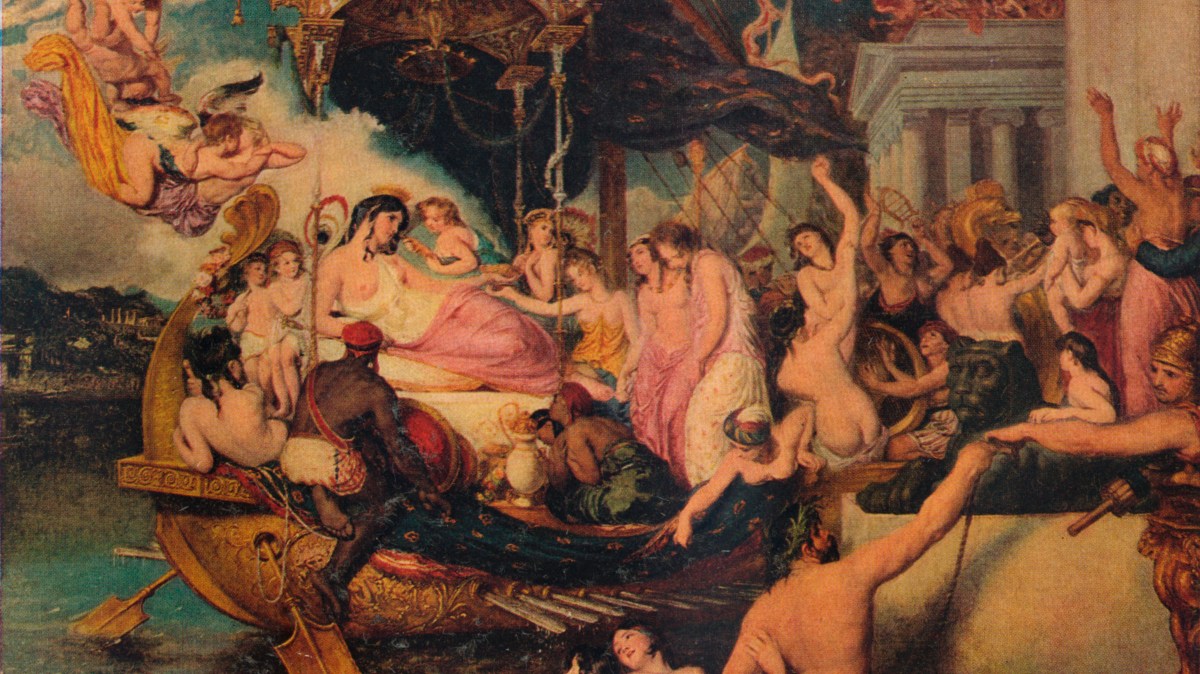
Roman writers like Virgil, Horace, and later Plutarch contributed to this narrative, emphasizing her alleged exotic seductiveness while downplaying her intellectual and political capabilities. This characterization has proven remarkably durable, persisting through Renaissance art, Victorian literature, and 20th-century Hollywood productions.
“Elizabeth Taylor’s portrayal in the 1963 film certainly didn’t help matters,” says film historian Rebecca Klein. “While captivating, it reinforced the image of Cleopatra as primarily a romantic figure rather than a shrewd political leader defending her nation’s interests.”
Modern scholars are working to reclaim Cleopatra’s legacy through renewed archaeological efforts and critical reexamination of primary sources. Recent underwater excavations near Alexandria have uncovered remnants of the ancient royal quarter, offering new insights into the queen’s reign and the cosmopolitan nature of her capital city.
The enduring power of Roman propaganda demonstrates how historical narratives can be shaped by the victors and persist for millennia. Dr. Thompson points out that “Cleopatra’s case is particularly significant because it shows how gender biases interact with political agendas to distort our understanding of powerful women throughout history.”
Museums worldwide are updating their exhibits to present a more balanced view of the Egyptian queen. The Kelsey Museum of Archaeology recently launched a digital exhibition titled “Beyond the Myth: Rediscovering Cleopatra” that aims to separate historical fact from Roman fiction.
“What’s remarkable is how effective this ancient smear campaign has been,” observes Dr. Rodriguez. “Even people who know very little about ancient history often ‘know’ that Cleopatra was primarily defined by her relationships with powerful men, rather than by her own achievements.”
As scholarly work continues to challenge these entrenched narratives, a more complex picture of Cleopatra emerges—one of a multilingual intellectual, religious leader, and political strategist who fought to preserve her kingdom’s independence against the overwhelming might of Rome.
Fact Checker
Verify the accuracy of this article using The Disinformation Commission analysis and real-time sources.

17 Comments
This is a great example of how victors can rewrite history to suit their own narratives. I’m glad experts are working to correct the record and portray Cleopatra as the skilled leader she truly was.
Yes, we must be vigilant about challenging biased historical accounts, especially when they involve powerful women. Kudos to the researchers for their important work.
This is a great example of how historical narratives can be shaped by the victors. I’m glad to see experts working to correct the record and highlight Cleopatra’s true strategic brilliance.
Absolutely. It’s critical we don’t let sexist tropes and biased accounts overshadow the accomplishments of influential women in history.
Fascinating to see how Roman propaganda has distorted Cleopatra’s legacy for centuries. It’s important we challenge these misconceptions and uncover the true, more nuanced history of this influential female leader.
I agree, the Romans were masters of propaganda. Painting Cleopatra as a foreign seductress was likely a strategic move to rally support against her.
This is a great reminder that we should always approach historical narratives with a critical eye. It’s important to seek out diverse perspectives and primary sources to get a fuller picture of influential figures like Cleopatra.
It’s a shame that Roman propaganda has overshadowed Cleopatra’s true legacy for so long. I’m glad to see the scholarly community pushing back and shedding light on her sophisticated political maneuverings.
The Roman tendency to demonize foreign leaders, especially females, is a timeless tactic. I’m glad the scholarly community is working to correct these biases and uncover Cleopatra’s true legacy.
This is a great example of how history can be shaped by the victors. I’m glad archaeologists and historians are working to paint a more accurate picture of Cleopatra and her sophisticated political maneuverings.
It’s critical we don’t let false narratives about powerful women in history take hold. Kudos to the experts for challenging these long-standing Roman myths.
Cleopatra was clearly a formidable strategist who fought fiercely to defend her kingdom’s independence. It’s troubling to see how Roman propaganda has overshadowed her actual accomplishments for so long.
Yes, the Romans were masters at using character assassination to undermine their political opponents. We must be vigilant about identifying and correcting such distortions in the historical record.
Fascinating how the Romans leveraged sexist tropes about female leaders to discredit Cleopatra. I’m glad experts are working to restore her rightful place in history as a savvy political operator.
Absolutely. Cleopatra deserves to be remembered for her strategic brilliance, not just her romantic relationships. Kudos to the scholars for challenging these long-held biases.
Fascinating how Roman propaganda has endured for over 2,000 years. I’m glad to see the scholarly community pushing back and restoring a more nuanced, accurate portrayal of Cleopatra’s legacy.
Cleopatra’s story is a powerful reminder of how propaganda can distort the legacy of powerful women. I’m glad to see the scholarly community pushing back and restoring a more accurate portrayal of her as a sophisticated political leader.