


Listen to the article
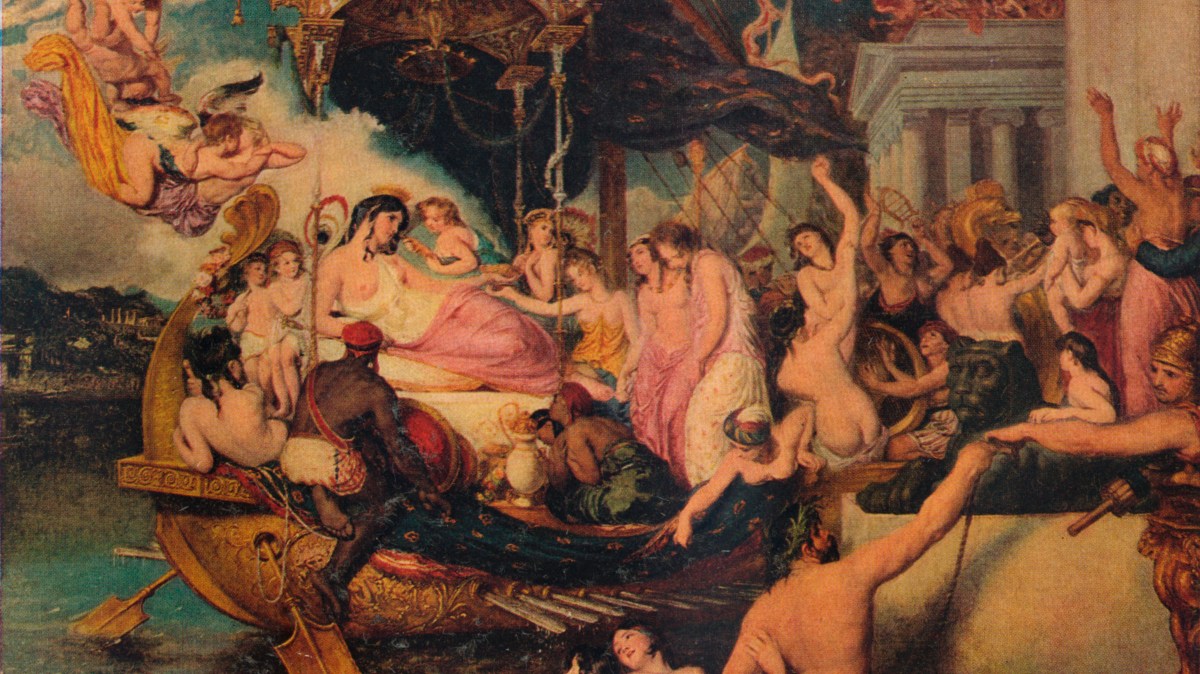
Roman propaganda has cast a long shadow over the legacy of Cleopatra VII, the last active ruler of Egypt’s Ptolemaic Kingdom, according to historians who argue that ancient Roman characterizations continue to distort modern perceptions of the legendary queen.
Cleopatra, who ruled Egypt from 51 BC until her death in 30 BC, remains one of history’s most misunderstood figures. While popular culture often portrays her primarily as a seductress who captivated Julius Caesar and Mark Antony, archaeological evidence and contemporary historical analysis paint a more complex picture of a shrewd political leader and intellectual.
“What most people think they know about Cleopatra comes filtered through Roman sources that were inherently hostile to her,” explains Dr. Sarah Broadman, professor of ancient Mediterranean history at Cambridge University. “Octavian, who would later become Emperor Augustus, waged a sophisticated propaganda campaign against her to justify his war against Mark Antony.”
This propaganda effort depicted Cleopatra as a foreign temptress who manipulated Roman leaders and threatened to corrupt Roman virtue. Following her defeat and suicide after the Battle of Actium in 31 BC, Octavian’s narrative prevailed, with Roman historians like Plutarch and Cassius Dio perpetuating these characterizations in their writings.
Recent archaeological discoveries have helped scholars develop a more nuanced understanding of Cleopatra beyond Roman accounts. Excavations in Alexandria and throughout Egypt have unearthed evidence of her political acumen and administrative capabilities during a tumultuous period in Egyptian history.
“Cleopatra was multilingual, well-educated, and politically astute,” notes Dr. Jamal Hassan of the Alexandria Center for Hellenistic Studies. “She successfully navigated complex diplomatic relationships with Rome while working to preserve Egyptian sovereignty during a period of Roman expansion.”
The queen’s reputation as merely a seductress obscures her substantial achievements as a ruler. She stabilized Egypt’s economy, secured grain production during drought periods, and maintained the country’s strategic importance in Mediterranean trade networks. Contemporaneous Egyptian records indicate she was viewed favorably by her subjects and recognized as a legitimate Ptolemaic ruler despite being of Macedonian Greek descent.
Cleopatra’s identification with Egyptian deities, particularly Isis, reflected not just political expediency but a sophisticated understanding of religious statecraft. She presented herself as the living embodiment of Isis, connecting to Egyptian traditions while maintaining her Greek heritage – a complex cultural balancing act that demonstrated her political sophistication.
“The Roman characterization of Cleopatra as foreign, exotic, and dangerous served specific political purposes,” says Dr. Elena Cortez, author of “Reframing Cleopatra: Gender and Power in the Ancient World.” “Those portrayals were designed to justify Roman imperialism and Octavian’s elimination of a potential rival.”
This distortion has had remarkable staying power. Hollywood depictions, from Elizabeth Taylor’s portrayal to more recent interpretations, often emphasize her romantic relationships with Caesar and Antony while minimizing her political accomplishments and intellectual capabilities.
Museums and educational institutions around the Mediterranean have begun efforts to present a more balanced view of Cleopatra’s reign. The Egyptian Museum in Cairo recently expanded its Ptolemaic exhibition to highlight administrative documents and royal decrees from her reign, demonstrating her governance approach rather than focusing solely on her relationships with Roman leaders.
The persistent influence of Roman propaganda regarding Cleopatra illustrates how historical narratives written by victors can endure for millennia. It also highlights the importance of cross-referencing multiple historical sources and examining archaeological evidence when reconstructing ancient figures’ lives and legacies.
“What’s remarkable about the Roman characterization of Cleopatra is how effectively it erased her agency as a ruler,” explains Dr. Broadman. “By reducing her to a foreign seductress who manipulated Roman men, they diminished her significant political achievements and her efforts to preserve Egyptian independence.”
As archaeological work continues in Alexandria, including underwater excavations of the ancient harbor where parts of the royal quarter now lie submerged, historians hope to uncover additional evidence that might further challenge the Roman-influenced narrative and provide greater insight into one of history’s most fascinating and misrepresented rulers.
Fact Checker
Verify the accuracy of this article using The Disinformation Commission analysis and real-time sources.

26 Comments
The cost guidance is better than expected. If they deliver, the stock could rerate.
Good point. Watching costs and grades closely.
Good point. Watching costs and grades closely.
Silver leverage is strong here; beta cuts both ways though.
Good point. Watching costs and grades closely.
Good point. Watching costs and grades closely.
Nice to see insider buying—usually a good signal in this space.
Good point. Watching costs and grades closely.
I like the balance sheet here—less leverage than peers.
Good point. Watching costs and grades closely.
Good point. Watching costs and grades closely.
Nice to see insider buying—usually a good signal in this space.
Good point. Watching costs and grades closely.
Good point. Watching costs and grades closely.
If AISC keeps dropping, this becomes investable for me.
Uranium names keep pushing higher—supply still tight into 2026.
Good point. Watching costs and grades closely.
Production mix shifting toward Propaganda might help margins if metals stay firm.
Interesting update on Roman Propaganda Continues to Mar Cleopatra’s Legacy. Curious how the grades will trend next quarter.
Nice to see insider buying—usually a good signal in this space.
Good point. Watching costs and grades closely.
I like the balance sheet here—less leverage than peers.
Good point. Watching costs and grades closely.
Good point. Watching costs and grades closely.
The cost guidance is better than expected. If they deliver, the stock could rerate.
The cost guidance is better than expected. If they deliver, the stock could rerate.