


Listen to the article
Egypt’s last pharaoh and one of history’s most misunderstood figures continues to suffer from a 2,000-year-old smear campaign, historians and archaeologists argue as renewed interest in Cleopatra VII Philopator sweeps popular culture.
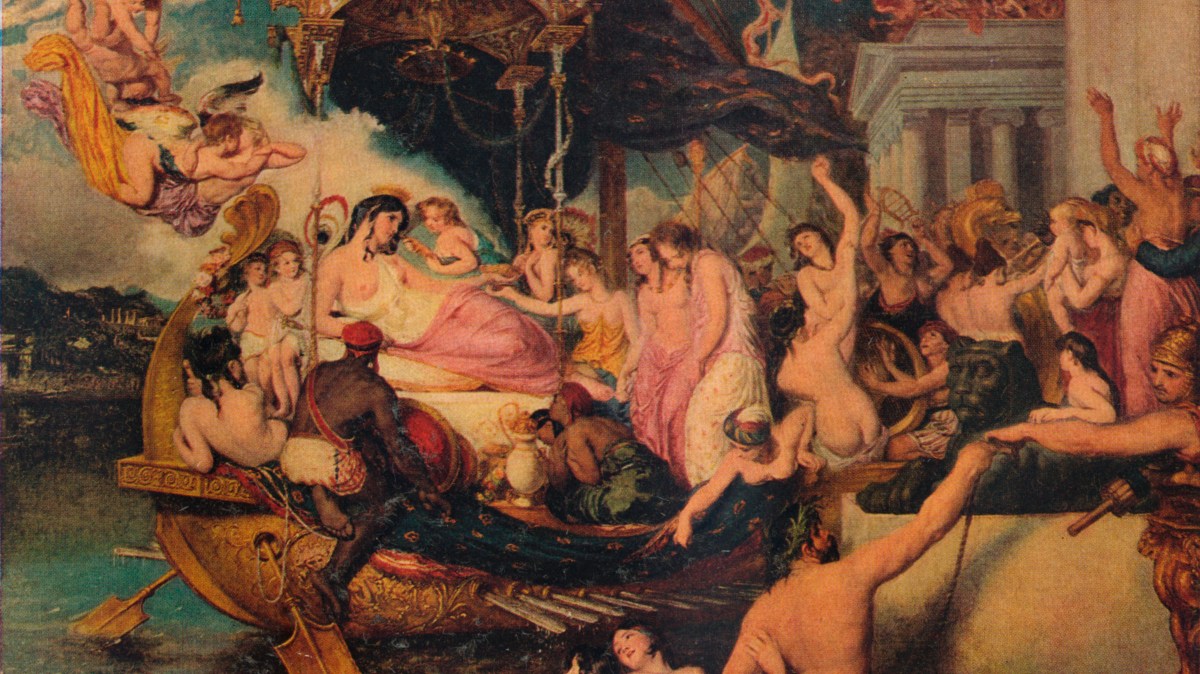
The ancient queen, who ruled Egypt from 51 BCE until her death in 30 BCE, remains trapped in a narrative largely constructed by her Roman enemies – particularly Octavian, who would later become Emperor Augustus. This portrayal, which painted her as a seductress who used feminine wiles rather than political acumen to maintain power, has persisted through centuries of Western literature, art, and film.
“Cleopatra was the victim of one of history’s most successful propaganda campaigns,” explains Dr. Sarah Thompson, professor of ancient history at Cambridge University. “Roman writers like Plutarch and Dio Cassius, working decades or even centuries after her death, shaped a narrative that served Rome’s political interests rather than historical accuracy.”
Recent archaeological findings and scholarly research paint a dramatically different picture of the Ptolemaic ruler. Far from being merely beautiful – a claim scholars now dispute – Cleopatra was exceptionally well-educated, speaking as many as nine languages and receiving extensive training in mathematics, philosophy, astronomy, and diplomacy.
Dr. Samira Ahmed, director of Egyptian antiquities at the Cairo Museum, points out that Cleopatra’s economic reforms helped stabilize Egypt during a period of regional turmoil. “She maintained Egypt’s independence through carefully calculated political alliances at a time when Rome was aggressively expanding its imperial reach across the Mediterranean,” Ahmed notes.
The queen’s relationship with Julius Caesar and later Mark Antony, often portrayed as romantic entanglements driven by passion, were more likely sophisticated political partnerships. These relationships allowed Egypt to maintain its sovereignty while other Mediterranean kingdoms fell to Roman conquest.
“She wasn’t seducing Roman leaders – she was negotiating with them as equals,” says Professor James Wilson, author of “Reframing Cleopatra: Power Politics in the Ancient World.” “We need to recognize that she was a head of state dealing with other heads of state, not some femme fatale character from a Hollywood film.”
The persistent negative portrayal began immediately after Cleopatra’s suicide following Octavian’s conquest of Egypt. Seeking to justify his war against a former ally and to solidify his own position, Octavian characterized the conflict not as Roman against Roman, but as Rome against a foreign, feminized threat.
This narrative served multiple purposes: it demonized Cleopatra while simultaneously diminishing Mark Antony’s standing by suggesting he had fallen under the spell of a dangerous foreign woman. Octavian’s propaganda campaign included public displays of a mannequin representing Cleopatra with a snake, reinforcing the suicide narrative that may itself be historically questionable.
The distorted image has proven remarkably resilient. From Shakespeare’s “Antony and Cleopatra” to Elizabeth Taylor’s iconic film portrayal, Western culture has largely perpetuated the Roman perspective. Even modern documentaries and historical novels frequently focus on her relationships with Roman leaders rather than her 21-year reign over one of the ancient world’s wealthiest kingdoms.
“We’re still viewing one of history’s most capable female rulers through the lens of her enemies,” says Dr. Thompson. “It would be like learning about Winston Churchill exclusively from Nazi propaganda.”
Recent archaeological discoveries may help reshape public understanding. Underwater excavations at Alexandria have revealed remnants of Cleopatra’s palace complex, while new research into Ptolemaic governance systems highlights the sophisticated bureaucracy she managed.
As Hollywood prepares new Cleopatra projects and museum exhibitions around the world showcase Egyptian artifacts from her era, historians hope for a more nuanced portrayal that acknowledges her political, economic, and cultural achievements.
“The historical Cleopatra was a strategic thinker who kept her country independent through incredibly challenging circumstances,” Dr. Ahmed concludes. “It’s time we recognized her for her intellect and statecraft rather than perpetuating Roman propaganda about her romantic life.”
Fact Checker
Verify the accuracy of this article using The Disinformation Commission analysis and real-time sources.

28 Comments
I like the balance sheet here—less leverage than peers.
Good point. Watching costs and grades closely.
Nice to see insider buying—usually a good signal in this space.
Good point. Watching costs and grades closely.
If AISC keeps dropping, this becomes investable for me.
Good point. Watching costs and grades closely.
Good point. Watching costs and grades closely.
Silver leverage is strong here; beta cuts both ways though.
Nice to see insider buying—usually a good signal in this space.
Good point. Watching costs and grades closely.
I like the balance sheet here—less leverage than peers.
Good point. Watching costs and grades closely.
Good point. Watching costs and grades closely.
Silver leverage is strong here; beta cuts both ways though.
Good point. Watching costs and grades closely.
I like the balance sheet here—less leverage than peers.
Good point. Watching costs and grades closely.
If AISC keeps dropping, this becomes investable for me.
Good point. Watching costs and grades closely.
Interesting update on Roman Propaganda Continues to Mar Cleopatra’s Legacy. Curious how the grades will trend next quarter.
Interesting update on Roman Propaganda Continues to Mar Cleopatra’s Legacy. Curious how the grades will trend next quarter.
Good point. Watching costs and grades closely.
Uranium names keep pushing higher—supply still tight into 2026.
The cost guidance is better than expected. If they deliver, the stock could rerate.
I like the balance sheet here—less leverage than peers.
Good point. Watching costs and grades closely.
If AISC keeps dropping, this becomes investable for me.
Good point. Watching costs and grades closely.