


Listen to the article
Roman-era propaganda continues to define how we perceive Cleopatra VII Philopator, the last active ruler of the Ptolemaic Kingdom of Egypt, according to historians and archaeologists who have spent decades working to unravel myth from historical fact.
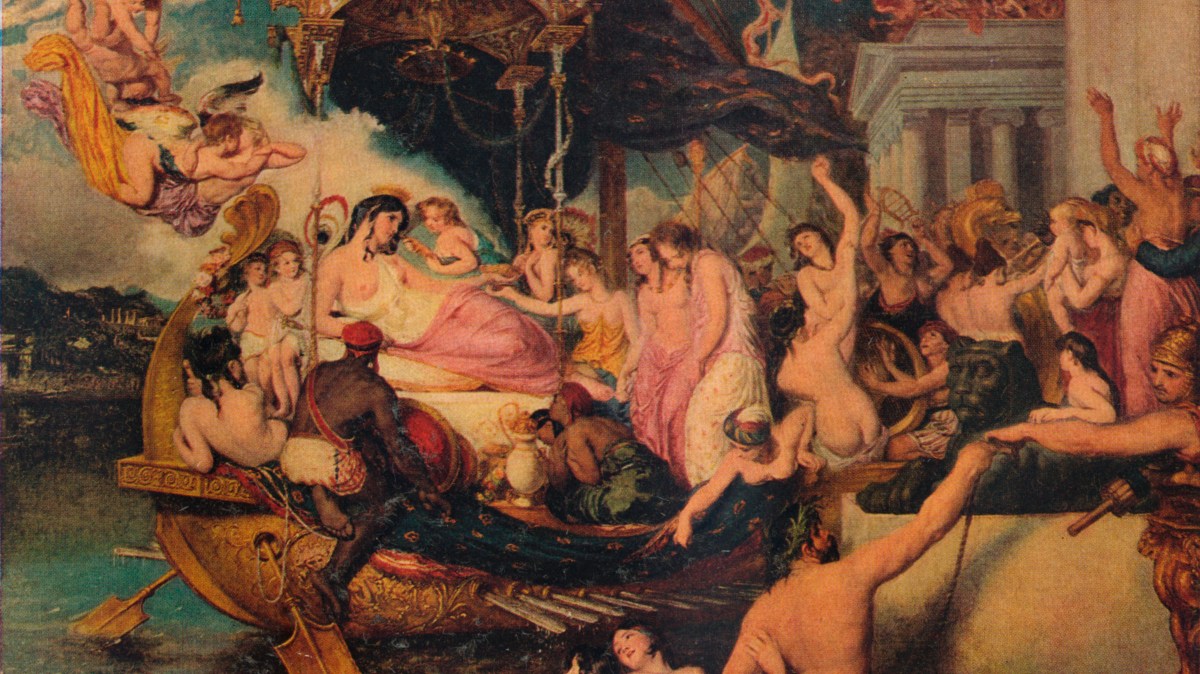
More than 2,000 years after her death in 30 BCE, Cleopatra remains one of history’s most misunderstood figures. The Egyptian queen’s portrayal as merely a seductive temptress who bewitched powerful Roman leaders Julius Caesar and Mark Antony stems largely from a calculated Roman propaganda campaign, experts say.
“What many people don’t realize is that the popular image of Cleopatra comes almost entirely from her enemies,” explains Dr. Sarah Johnson, professor of ancient Mediterranean history at Oxford University. “Octavian—later Emperor Augustus—systematically vilified her to justify his war against Mark Antony and Egypt.”
After defeating Cleopatra and Mark Antony, Octavian commissioned writers like Virgil, Horace, and Propertius to craft narratives portraying Cleopatra as a foreign threat to Roman virtue and stability. These accounts, which emphasized her sexuality rather than her political acumen, became the foundation for how subsequent generations understood her.
Archaeological evidence and contemporary Egyptian records paint a drastically different picture. Cleopatra was highly educated, fluent in at least nine languages, and an accomplished diplomat who successfully navigated complex political relationships to preserve Egyptian independence during a period of Roman expansion.
“She was the only Ptolemaic ruler who actually bothered to learn Egyptian,” notes Dr. Mahmoud Karim of Cairo University’s Archaeology Department. “While her predecessors remained culturally isolated in Alexandria, Cleopatra embraced Egyptian traditions and religious practices, which helped her gain popular support among her subjects.”
Recent archaeological discoveries have reinforced this more nuanced view. Underwater excavations near Alexandria have uncovered artifacts from Cleopatra’s reign showing a ruler deeply invested in Egyptian cultural institutions while also modernizing the kingdom’s infrastructure and economic systems.
The Roman characterization of Cleopatra as a decadent foreigner who used sexuality as a political tool reflects more about Roman anxieties than historical reality, according to Dr. Elena Morales, curator of Hellenistic collections at the British Museum.
“Romans were deeply uncomfortable with powerful women, especially foreign ones,” Morales explains. “By reducing Cleopatra to her relationships with Caesar and Antony, they diminished her legitimate political power and agency.”
The propaganda was remarkably effective. Centuries later, Shakespeare’s portrayal in “Antony and Cleopatra” and Hollywood films like the 1963 epic starring Elizabeth Taylor further cemented the Roman narrative in popular culture.
This distortion has significant implications beyond historical accuracy. “When we accept these characterizations without question, we perpetuate harmful stereotypes about female leadership,” says Dr. Johnson. “Cleopatra was ruling a major Mediterranean power during an extraordinarily challenging period. Her diplomatic and political strategies kept Egypt independent decades longer than might otherwise have been possible.”
The reductive portrayal also obscures Cleopatra’s substantial achievements in governance. During her 21-year reign, she stabilized Egypt’s economy, expanded trade networks, and managed complex diplomatic relationships with various Mediterranean powers.
Efforts to reclaim Cleopatra’s historical legacy have gained momentum in recent years. Museums around the world have developed exhibitions highlighting archaeological evidence rather than Roman literary sources. Scholars are re-examining primary documents with greater skepticism toward their political motivations.
“Understanding how propaganda shaped Cleopatra’s image offers valuable lessons for today,” notes Dr. Thomas Greene, historian of ancient propaganda at Princeton University. “It reminds us to question narratives created by the victors and to look beyond simplistic characterizations of complex historical figures.”
As new archaeological discoveries continue to emerge from Egypt’s ancient sites, experts hope a more accurate understanding of Cleopatra will eventually replace the enduring Roman caricature—one that recognizes her as a shrewd political leader whose ultimate failure came not from moral weakness but from confronting the rising superpower of her era.
“The tragedy of Cleopatra isn’t that she was seductive or manipulative,” concludes Dr. Karim. “It’s that despite her intelligence and political skill, she faced the impossible task of preserving Egyptian sovereignty against Rome’s inexorable expansion. That she managed to delay it for as long as she did speaks to her remarkable abilities as a ruler.”
Fact Checker
Verify the accuracy of this article using The Disinformation Commission analysis and real-time sources.

11 Comments
It’s disheartening to learn that Cleopatra’s portrayal has been so heavily shaped by the propaganda of her enemies. As the article notes, her political acumen and influence have been overshadowed by reductive, sexualized depictions. This serves as a important lesson in critically examining historical narratives.
The article raises some important points about the need to critically examine historical sources, particularly when they come from adversaries with clear agendas. Cleopatra’s portrayal as a seductive temptress rather than a skilled political leader is a prime example of how propaganda can shape our understanding of the past. I’m curious to learn more about the efforts to recover a more balanced and accurate depiction of this influential figure.
Fascinating to see how ancient propaganda can still distort our view of historical figures like Cleopatra. It’s a good reminder to critically examine sources and not take accounts at face value, especially when they come from adversaries.
Absolutely. Recovering the true historical figure from the propaganda is important, though challenging. I’m curious to learn more about the archaeological and historical research that’s helping to unravel the myths.
This is a fascinating exploration of how Cleopatra’s legacy has been distorted by Roman propaganda. It’s a good reminder that we should be cautious about accepting historical accounts at face value, especially when they originate from political opponents. I look forward to seeing more scholarly work that aims to uncover the true nature of Cleopatra’s reign and influence.
The article highlights an important issue in how we interpret and understand historical figures like Cleopatra. Acknowledging the biases inherent in ancient sources, especially those from adversaries, is crucial for developing a more nuanced and accurate perspective. I’m curious to see how further research might continue to challenge the conventional wisdom.
It’s troubling to learn how Roman propaganda has so profoundly shaped our perception of Cleopatra over the centuries. The article’s emphasis on the need to challenge these biased narratives and uncover the true complexity of her reign is an important call to action. I hope that further research and scholarship can continue to chip away at the myths and distortions that have obscured Cleopatra’s legacy.
While the legacy of Cleopatra has certainly been shaped by Roman propaganda, I wonder if there are any Egyptian sources that provide a different perspective on her rule and achievements. Accessing those alternate viewpoints could shed more light on this complex historical figure.
That’s an excellent point. Relying solely on Roman accounts inevitably skews our understanding. Uncovering Egyptian sources, if they exist, would be invaluable in painting a more balanced picture of Cleopatra’s reign and legacy.
The article raises an important point about how Cleopatra has been unfairly maligned through Roman-era propaganda. It’s a shame that such biased narratives have dominated the popular perception of this influential ruler for so long.
Agreed. Deconstructing those propagandistic accounts and presenting a more nuanced, historically accurate portrayal of Cleopatra is crucial. I look forward to seeing more scholarship that challenges the traditional, sexualized depictions.