


Listen to the article
The legacy of Cleopatra VII, the last active ruler of ancient Egypt’s Ptolemaic Kingdom, continues to be clouded by Roman propaganda more than two millennia after her death, according to leading historians and Egyptologists.
Experts point to a persistent historical narrative that reduces Cleopatra to little more than a seductress who used her charms to entangle powerful Roman men like Julius Caesar and Mark Antony. This characterization, they argue, stems largely from accounts written by her Roman enemies—particularly Octavian (later Emperor Augustus), who waged a systematic campaign to discredit her.
“What we know about Cleopatra comes primarily through Roman sources that had every reason to vilify her,” explains Dr. Catherine Williams, professor of ancient Mediterranean history at Cambridge University. “The Romans cast her as a foreign temptress who threatened their republic, when in reality she was a sophisticated ruler protecting her kingdom’s interests during a turbulent political period.”
Archaeological evidence and contemporary scholarship paint a markedly different picture of the Egyptian queen. Fluent in at least nine languages and educated in mathematics, astronomy, philosophy, and diplomacy, Cleopatra was among the most accomplished rulers of her era. She successfully maintained Egypt’s independence for over two decades despite Roman expansion throughout the Mediterranean.
Recent archaeological findings at Alexandria have uncovered administrative records suggesting Cleopatra implemented agricultural reforms that helped stabilize Egypt’s economy during periods of drought. She also strengthened trade relationships with regions from Ethiopia to India, expanding Egypt’s commercial influence throughout the known world.
“The Romans needed to justify their conquest of Egypt, so they crafted a narrative about saving Rome from a dangerous foreign queen,” says Dr. Mahmoud El-Sawy of Cairo University’s Egyptology Department. “This propaganda proved remarkably enduring, shaping how Cleopatra has been portrayed throughout Western history and popular culture.”
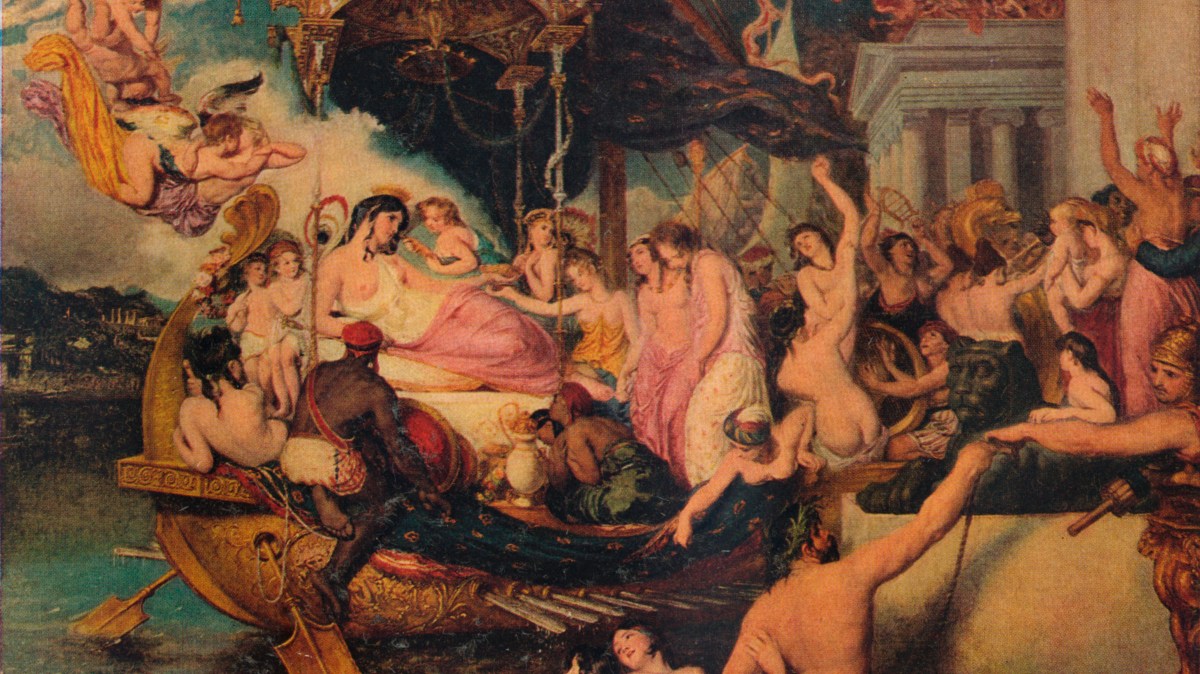
The impact of this Roman characterization extends far beyond ancient history, influencing countless artistic depictions from Renaissance paintings to Hollywood films. Elizabeth Taylor’s portrayal in the 1963 epic “Cleopatra” cemented the image of a glamorous seductress in modern popular consciousness, though even that film barely touched on her intellectual prowess or political acumen.
The persistence of the Roman narrative about Cleopatra also reflects broader patterns in how women in power have been portrayed throughout history. “Powerful women have historically been delegitimized by suggesting they achieved their position through sexuality rather than ability,” notes Dr. Sarah Jenkins, historian of gender in antiquity at Princeton University. “Cleopatra’s treatment by Roman historians established a template that has been applied to countless female leaders since.”
This historical reassessment comes amid growing interest in Cleopatra’s Egyptian context. The Ptolemaic dynasty, though of Greek origin, had by Cleopatra’s time ruled Egypt for nearly 300 years and adopted many Egyptian customs and religious practices. Archaeological evidence indicates Cleopatra embraced her role as an Egyptian pharaoh, presenting herself to her subjects as an incarnation of the goddess Isis.
Several major museums are planning exhibitions exploring Cleopatra’s reign beyond the Roman characterizations. The British Museum’s upcoming “Cleopatra: Beyond the Myth” exhibition will feature artifacts from her reign alongside analysis of how her image has been manipulated throughout history.
Meanwhile, a Netflix documentary series currently in production aims to place Cleopatra in her proper historical context as a multilingual diplomat who navigated complex geopolitical challenges while maintaining Egyptian independence far longer than might have been expected given Rome’s overwhelming military superiority.
“Understanding the extent to which Roman propaganda has shaped our perception of Cleopatra is crucial not just for historical accuracy, but for recognizing how political narratives can persist for millennia,” says Williams. “When we strip away those layers of propaganda, we find a ruler whose strategic brilliance and cultural sophistication deserve far more recognition than her romantic entanglements.”
As scholars continue to excavate both the physical remnants of Cleopatra’s reign and the layers of bias that have obscured it, a more complete picture of one of antiquity’s most fascinating leaders may finally emerge—one that recognizes her not merely as a participant in Roman history, but as a formidable historical figure in her own right.
Fact Checker
Verify the accuracy of this article using The Disinformation Commission analysis and real-time sources.

8 Comments
Fascinating how Roman propaganda has persisted for centuries in distorting Cleopatra’s legacy. It’s a shame her true accomplishments as a sophisticated ruler have been overshadowed by reductive portrayals of her as a seductress. I’m eager to learn more about the archaeological evidence and scholarship that paints a different picture.
As someone interested in ancient history, I find the distortion of Cleopatra’s legacy through Roman propaganda to be quite troubling. It speaks to the power of controlling the historical narrative and the importance of seeking out diverse perspectives and primary sources. I look forward to seeing more scholarship that can help restore a more balanced understanding of this remarkable ruler.
Fascinating to see how modern scholarship is challenging the long-held Roman depiction of Cleopatra as a mere seductress. The idea that her legacy has been systematically distorted by her political enemies is quite troubling. I look forward to exploring the archaeological evidence and contemporary research that offers a more balanced and historically grounded perspective on this remarkable ruler.
The enduring influence of Roman propaganda on our understanding of Cleopatra is a sobering reminder of how difficult it can be to overcome entrenched historical narratives, even in the face of new evidence. I’m eager to learn more about the efforts to reframe her legacy and provide a more nuanced, accurate portrayal of her reign and achievements.
I’m curious to learn more about the specific archaeological evidence that provides a more accurate picture of Cleopatra. What kinds of artifacts or discoveries have helped challenge the Roman propaganda? It would be fascinating to explore how her actual reign and accomplishments differed from the popular historical narrative.
This is a great example of how the victors’ version of history can become the dominant narrative, even when it doesn’t accurately reflect the reality. I’m glad to see historians and Egyptologists working to challenge the persistent Roman propaganda and uncover Cleopatra’s true legacy as a sophisticated ruler protecting her kingdom’s interests. It’s an important reminder to always question the received wisdom of the past.
The Romans clearly had a vested interest in undermining Cleopatra’s reputation, given the threat she posed to their hegemony. It’s a good reminder to be wary of historical narratives shaped by the victors. I wonder what other powerful women throughout history have had their legacies similarly distorted by their political rivals.
Yes, absolutely. The victors often get to write history, which can lead to biased and incomplete portrayals. Uncovering the fuller truth about figures like Cleopatra is important for gaining a more nuanced understanding of the past.