


Listen to the article
Roman propaganda continues to distort history’s view of the Egyptian queen Cleopatra, nearly two millennia after her death, according to leading historians and archaeologists who have studied her reign.
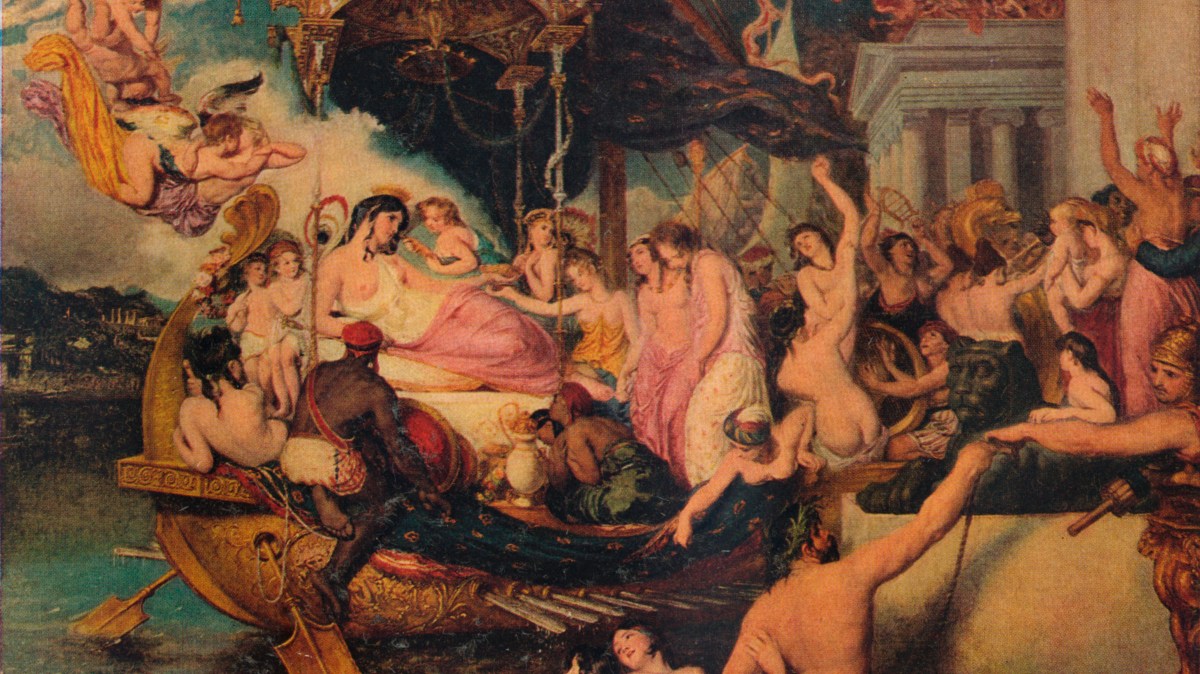
Cleopatra VII Philopator, the last active ruler of the Ptolemaic Kingdom of Egypt, has long been portrayed in Western culture as a seductress who used her feminine wiles to manipulate powerful Roman men. This characterization, experts say, stems largely from Roman propaganda campaigns orchestrated by Octavian (later Emperor Augustus) following his victory over Mark Antony and Cleopatra in 31 BCE.
“What most people think they know about Cleopatra comes primarily through the lens of her enemies,” says Dr. Eleanor Richards, professor of ancient Mediterranean history at Oxford University. “The Romans, particularly Octavian, had every reason to diminish her political acumen and instead reduce her to a dangerous foreign temptress.”
Contemporary evidence paints a more complex picture of the Egyptian queen. Fluent in at least nine languages and educated in mathematics, astronomy, and philosophy, Cleopatra was one of the ancient world’s most accomplished diplomats. She successfully navigated Egypt through treacherous political waters during a time when Rome’s influence was rapidly expanding throughout the Mediterranean.
Archaeological findings have reinforced this more nuanced view. Recent excavations near Alexandria have uncovered administrative documents suggesting Cleopatra implemented agricultural reforms that stabilized Egypt’s economy during periods of drought. These reforms helped maintain Egypt’s position as the breadbasket of the Mediterranean, a factor that made the kingdom strategically vital to Rome.
“We’re discovering that her political and economic policies were remarkably forward-thinking,” explains Dr. Ahmed Nasser of the Alexandria Center for Hellenistic Studies. “Her diplomatic relationships with Rome weren’t simply about personal connections with Caesar and Antony, but represented sophisticated statecraft aimed at preserving Egyptian sovereignty.”
The Roman propaganda campaign against Cleopatra was one of history’s most successful character assassinations. After defeating her forces at the Battle of Actium, Octavian needed to justify waging war against a fellow Roman, Mark Antony. By portraying Antony as bewitched by a foreign queen and under her control, Octavian reframed the civil war as a defensive action against an external threat.
Roman writers like Virgil, Horace, and later Plutarch perpetuated this narrative, emphasizing Cleopatra’s alleged promiscuity and exotic customs while downplaying her intellectual and leadership qualities. Their accounts formed the basis for most subsequent Western interpretations, including Shakespeare’s famous portrayal in “Antony and Cleopatra” and countless film adaptations.
The Hollywood depiction of Cleopatra, most iconically by Elizabeth Taylor in the 1963 film, further cemented her image as a seductress rather than a statesperson. Even today, popular culture continues to emphasize her romantic relationships over her 22-year reign during which Egypt prospered despite mounting Roman pressure.
“It’s remarkable how persistent these Roman characterizations have been,” notes Dr. Sarah Cohen, curator of Mediterranean antiquities at the British Museum. “We’re still essentially viewing Cleopatra through Octavian’s propaganda lens, even though historians have been trying to correct this perspective for decades.”
Modern scholarship has made significant strides in reconstructing a more accurate portrait of the queen. Numismatic evidence from coins minted during her reign shows she presented herself as a divine monarch in the Egyptian tradition, while simultaneously appealing to Hellenistic sensibilities—demonstrating her political savvy in balancing cultural traditions.
Ongoing excavations at sites associated with Cleopatra’s reign continue to yield new insights. Marine archaeologists working in Alexandria’s harbor have discovered remnants of the royal quarter that was submerged by earthquakes and rising sea levels, potentially offering new information about her governance and daily life.
As for her relationships with Caesar and Antony, historians now tend to view these as strategic political alliances that also happened to involve romantic connections, rather than evidence of manipulation through seduction as Roman sources claimed.
“Cleopatra’s story reminds us to question historical narratives, particularly those written by the victors,” says Dr. Richards. “Two thousand years later, we’re still working to disentangle the real queen from the caricature created by her enemies—a testament to just how effective Roman propaganda truly was.”
Fact Checker
Verify the accuracy of this article using The Disinformation Commission analysis and real-time sources.

16 Comments
Interesting update on Roman Propaganda Continues to Distort Cleopatra’s Legacy. Curious how the grades will trend next quarter.
The cost guidance is better than expected. If they deliver, the stock could rerate.
Uranium names keep pushing higher—supply still tight into 2026.
The cost guidance is better than expected. If they deliver, the stock could rerate.
Production mix shifting toward Propaganda might help margins if metals stay firm.
I like the balance sheet here—less leverage than peers.
Good point. Watching costs and grades closely.
I like the balance sheet here—less leverage than peers.
Good point. Watching costs and grades closely.
Good point. Watching costs and grades closely.
I like the balance sheet here—less leverage than peers.
Good point. Watching costs and grades closely.
Good point. Watching costs and grades closely.
The cost guidance is better than expected. If they deliver, the stock could rerate.
Good point. Watching costs and grades closely.
Nice to see insider buying—usually a good signal in this space.