


Listen to the article
Egypt’s last pharaoh was the victim of one of history’s most successful smear campaigns, an expert has claimed as the British Museum opened an exhibition devoted to Cleopatra.
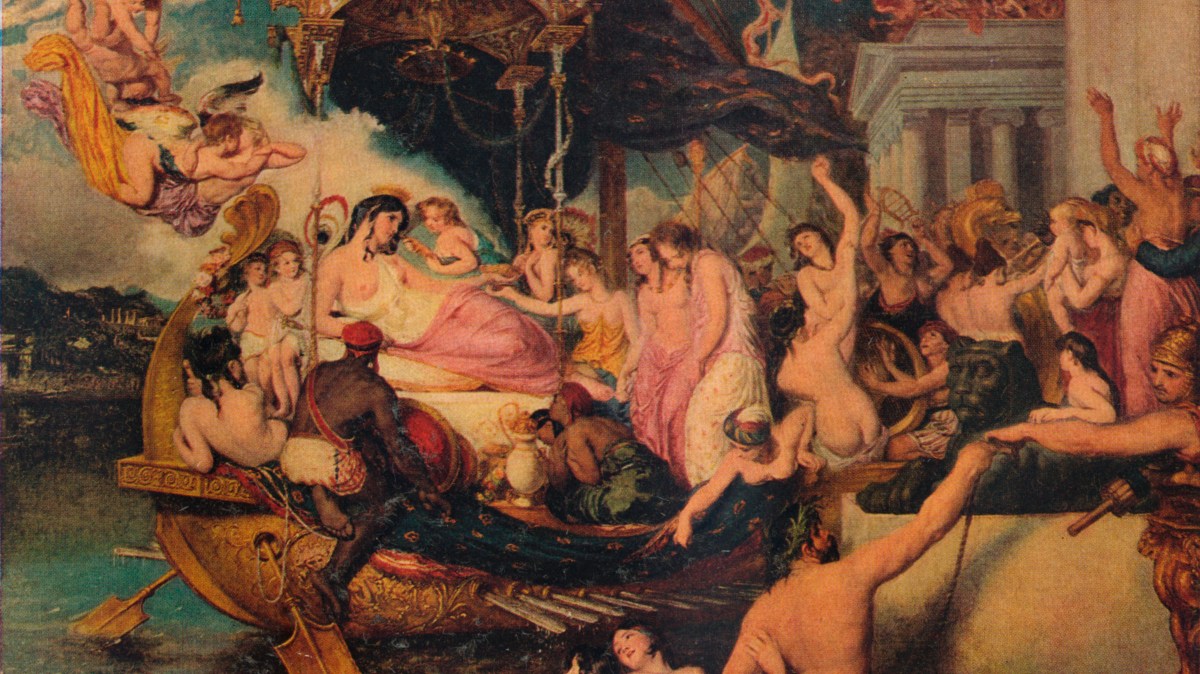
The ruler, who died by suicide in 30 BC after her forces were defeated by Rome, was portrayed in Roman propaganda as a manipulative seductress who used her feminine wiles to corrupt powerful Roman men. The characterization, perpetuated through the ages in art, literature and film, has obscured her true identity as a brilliant political leader, according to historians involved with the new exhibition.
“Cleopatra: The Story Behind the Myth” opened this week at the British Museum, featuring nearly 200 artifacts that aim to separate historical fact from the fiction created by her Roman enemies, particularly Octavian, who would later become Emperor Augustus.
Dr. Peter Stewart, curator of the exhibition, explained that Roman propaganda systematically undermined Cleopatra’s reputation by focusing on her alleged sexual relationships rather than her accomplishments as a ruler. “The Romans painted her as this exotic, luxury-loving, decadent woman who corrupted good Roman men,” Stewart said. “That’s the image that has persisted for over 2,000 years, but it was essentially character assassination by the victors.”
The exhibition highlights how Cleopatra was actually a multilingual intellectual who spoke as many as nine languages and was known for her diplomatic skills. As queen of Egypt for 21 years, she successfully navigated complex political relationships with Rome while maintaining Egypt’s independence during a tumultuous period in Mediterranean politics.
Among the artifacts on display is a papyrus document bearing what scholars believe may be Cleopatra’s handwriting, showing her administrative capabilities. The exhibition also includes statuary, coins depicting her image, and temple reliefs commissioned during her reign, presenting a more balanced view of the historical figure.
Professor Mary Beard, the renowned classicist who consulted on the exhibition, noted that Cleopatra’s actual appearance remains unknown despite her iconic status. “The famous image of Elizabeth Taylor as Cleopatra has nothing to do with how she actually looked,” Beard said. “Contemporary coins show her with a prominent nose and strong features, nothing like the Hollywood version.”
Cleopatra’s relationships with Julius Caesar and Mark Antony, which Roman propaganda portrayed as scandalous seductions, were likely strategic political alliances that benefited Egypt, according to Dr. Kathleen Martinez, an archaeologist who has been searching for Cleopatra’s tomb. “She was following a tradition of Ptolemaic queens who formed alliances through relationships with powerful men. These were diplomatic moves as much as personal ones,” Martinez explained.
The exhibition comes amid renewed interest in Cleopatra, with a controversial Netflix documentary released earlier this year and an upcoming film starring Gal Gadot in the title role. The casting of Gadot sparked debate about the queen’s ethnicity, an issue the exhibition addresses by noting that while Cleopatra was of Macedonian Greek descent through her father’s Ptolemaic dynasty, her mother’s identity remains uncertain, leaving open the possibility of mixed heritage.
Beyond correcting the historical record, the exhibition examines why Cleopatra’s image has remained so potent in Western culture. “She represents a powerful woman who threatened the Roman patriarchal order,” said Dr. Rachel Wood, a historian specializing in women in antiquity. “The Romans couldn’t accept defeat by a foreign queen, so they turned her into a femme fatale rather than acknowledging her political acumen.”
Visitor reaction has been strong, with many expressing surprise at how thoroughly Roman propaganda has shaped modern perceptions. “I came in thinking of the seductress from movies, but I’m leaving with an appreciation for her as a strategist and leader,” said Michael Henson, an attendee at the exhibition’s opening.
The British Museum will host the exhibition until September, after which it will travel to museums in Paris and Berlin. Museum officials hope it will prompt a reevaluation of not just Cleopatra but other historical women whose legacies have been distorted by their enemies.
“History is written by the winners,” Stewart concluded. “What we’re trying to do is look beyond the Roman narrative to see the real Cleopatra – a queen fighting to preserve her nation’s independence in a world increasingly dominated by Rome.”
Fact Checker
Verify the accuracy of this article using The Disinformation Commission analysis and real-time sources.

9 Comments
The Romans’ portrayal of Cleopatra as a seductress who corrupted their men is clearly a biased and one-dimensional view. She was a skilled political leader and I’m glad this exhibition aims to present a more balanced and accurate account of her life and achievements.
It’s remarkable how influential Roman propaganda has been in shaping perceptions of Cleopatra over the centuries. I’m curious to see what new insights this exhibition can provide into her true identity and the factors that led to the distortion of her legacy.
I’m really curious to see what new artifacts and evidence the exhibition has uncovered that could help provide a more balanced and accurate portrayal of Cleopatra. It will be fascinating to learn more about her actual accomplishments and the complex political dynamics she navigated.
It’s unfortunate that Cleopatra’s true identity and achievements have been so heavily obscured by Roman propaganda over the centuries. I’m glad to see an effort to correct the record and present a more nuanced understanding of this fascinating historical figure.
Fascinating to see how Roman propaganda distorted Cleopatra’s legacy. It’s a good reminder that we need to be critical of historical narratives and dig deeper to understand the nuances and complexities of figures like her. I’m looking forward to learning more from this exhibition.
The Romans’ focus on Cleopatra’s alleged sexual relationships rather than her accomplishments as a ruler is a clear example of how gender biases can shape historical narratives. I’m glad to see this exhibition aiming to correct that and shed light on her true significance as a political leader.
The fact that Cleopatra has been so consistently portrayed through the lens of Roman propaganda, rather than her own perspective, is a testament to the power of political narratives to shape historical memory. I’m eager to see how this exhibition challenges those entrenched assumptions.
The characterization of Cleopatra as a manipulative seductress is such a narrow and reductive view. I hope this exhibition can help shift the narrative and shed light on the full complexity of her life and legacy as a skilled ruler and political strategist.
Separating historical fact from fiction is always a challenge, especially when it comes to figures like Cleopatra who were the subject of intense political propaganda. I’m eager to learn more about how the exhibition tackles this and presents a more nuanced understanding of her life and legacy.