


Listen to the article
Bloody Revenge Takes Center Stage in “Dhurandhar: The Revenge”
Aditya Dhar’s follow-up to his 2025 blockbuster “Dhurandhar” delivers a relentless, brutally violent tale of retribution that pushes well beyond its understated subtitle. The 229-minute sequel, nearly 20 minutes longer than its predecessor, transforms what began as a gangster drama into an unabashed nationalistic revenge fantasy that leaves subtlety far behind.
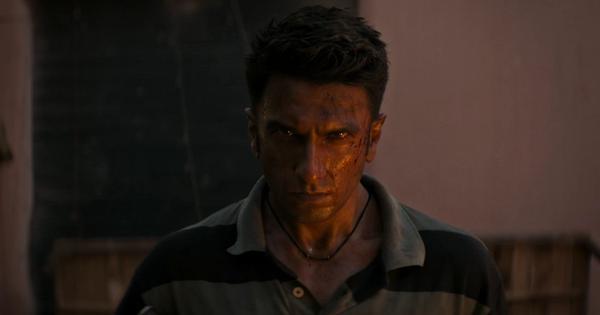
Ranveer Singh returns as the long-haired Hamza, an Indian undercover agent who has infiltrated Pakistan’s criminal underworld. Having killed gangster Rehman Dakait (played by Akshaye Khanna) in the first film, Hamza has now married Rehman’s daughter Yaleena (Sara Arjun) and established himself as the crime lord of Lyari in Karachi.
The film reveals Hamza’s true identity as Jaskirat, a Sikh from Pathankot who embarks on a personal vendetta against those who wronged his family. His mission, guided by Indian intelligence chief Ajay Sanyal (R Madhavan), evolves into dismantling the alleged nexus between Karachi gangs, Pakistan’s ISI intelligence agency, and terrorist networks.
Industry observers note this film joins a growing trend of Bollywood productions featuring Indian spies infiltrating Pakistan, including recent entries like “Salakaar” and “Saare Jahan Se Accha” (both 2025). However, none matches “Dhurandhar: The Revenge” in its explicit political messaging or graphic violence.
The film’s portrayal of Pakistan as a rogue state controlled by inept officials and terrorists has raised eyebrows among critics. Pakistani characters, including police officer Chaudhary Aslam (Sanjay Dutt) and ISI agent Iqbal (Arjun Rampal), are depicted as consistently oblivious to Hamza’s true intentions until it’s too late. Such characterizations align with the film’s underlying theme that “India will decide Pakistan’s destiny,” as stated explicitly in the dialogue.
What distinguishes “Dhurandhar: The Revenge” from similar films in the genre is its technical prowess. Dhar, who previously directed “Uri: The Surgical Strike” (2019), demonstrates considerable skill in managing a large cast and staging elaborate action sequences. The violence, while extreme, is presented with cinematic flair, accompanied by Shashwat Sachdev’s catchy soundtrack that includes cleverly repurposed classic tunes like Boney M’s “Rasputin” and “Tirchi Topewala” from “Tridev.”
The film overtly incorporates contemporary Indian political narratives, positioning itself within what critics have termed “sarkari cinema” – films that align with government perspectives. References to demonetization, the construction of the Ram temple in Ayodhya, and praise for the “tea seller who taught Pakistan a lesson” leave little doubt about its political leanings. The film even expands its targets to include the Khalistani movement, portrayed as recipients of Pakistani arms and funding.
Despite its excessive length and occasional narrative confusion, the production values remain high. Rakesh Bedi provides comic relief as the buffoonish politician Jameel, while Ranveer Singh evolves his character from the “robotic Rambo” of the first film into what one critic described as a “human chainsaw” who tears through enemies with disturbing enthusiasm.
The film’s release comes at a time of heightened interest in nationalistic cinema, with recent box office successes like “The Kashmir Files” and “The Kerala Story” demonstrating audience appetite for politically charged content. However, “Dhurandhar: The Revenge” stands apart through its combination of high production values and unapologetic messaging.
With its extended runtime and episodic structure, the film has been compared to a web series rather than a traditional feature. This approach reflects changing audience consumption patterns in India’s entertainment landscape, where streaming platforms have normalized longer-form storytelling.
As “Dhurandhar: The Revenge” prepares for its March 19, 2026 theatrical release, industry analysts will be watching closely to see if its blend of action, nationalism, and political messaging resonates with audiences as strongly as its predecessor did.
Fact Checker
Verify the accuracy of this article using The Disinformation Commission analysis and real-time sources.

4 Comments
It’s concerning to see an increase in graphic content and sensationalism in media, as this can desensitize audiences and reinforce biases. However, I’m curious to understand the director’s intent – are they making a thoughtful statement about nationalism and violence, or simply catering to an audience appetite for over-the-top action?
The film’s long runtime suggests an ambitious, sprawling story. I’m interested to see how the director handles the transition from a ‘gangster drama’ to a ‘nationalistic revenge fantasy.’ Hopefully the social commentary and character development don’t get lost amidst the action and violence.
This seems to be part of a growing trend in Bollywood of blending action, nationalism, and geopolitical themes. While the violence and political messaging may be controversial, I appreciate that filmmakers are grappling with complex real-world issues through their art, even if the approach is heavy-handed at times.
Wow, this sounds like a very intense and graphic film. I’m curious to see how the director balances the nationalistic themes with the violent revenge narrative. Do the gritty action sequences serve to highlight the broader social/political commentary, or are they simply sensationalized for entertainment value?