


Listen to the article
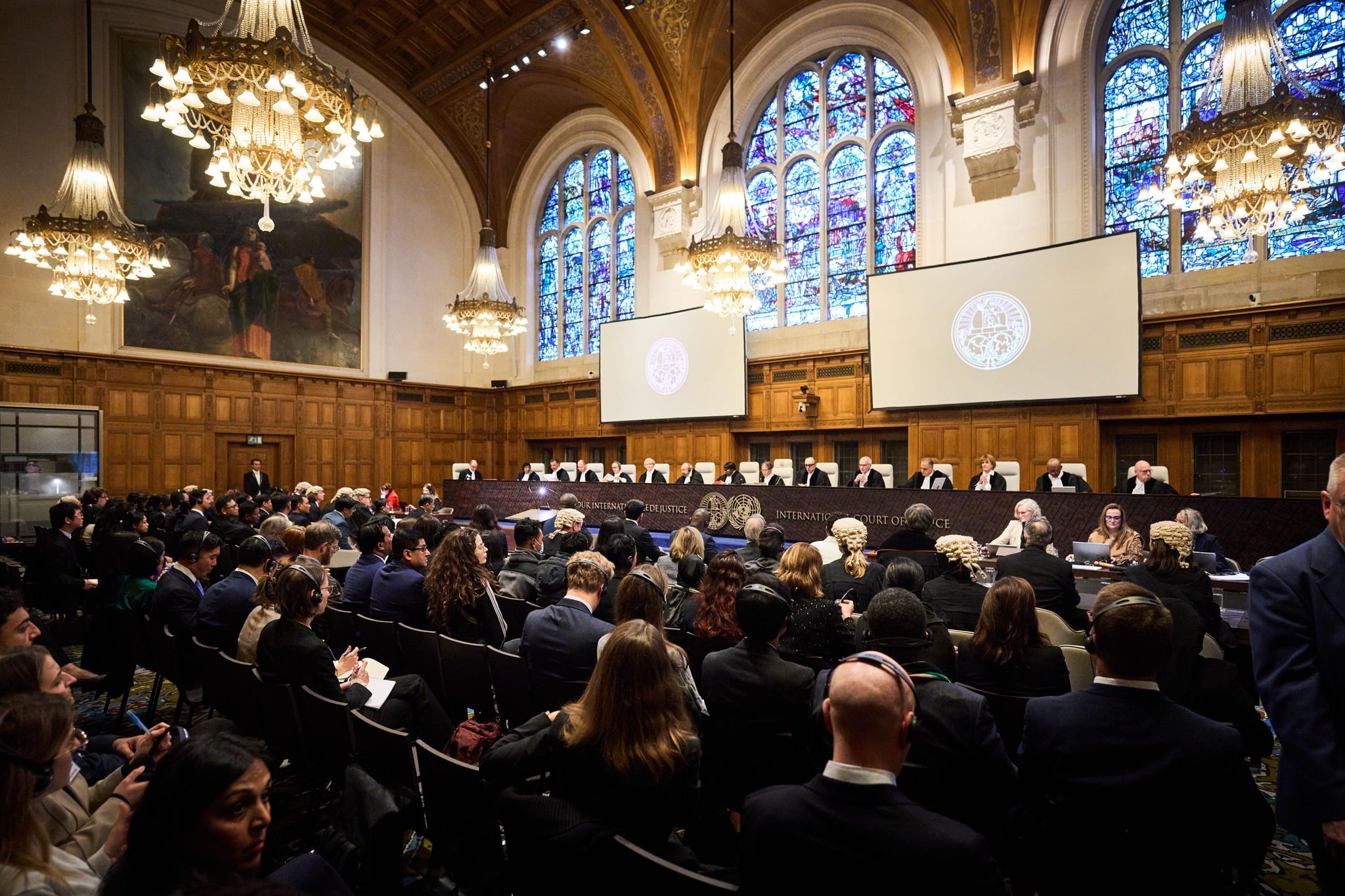
In a landmark international legal proceeding, Gambian representatives at the International Court of Justice (ICJ) have directly implicated two prominent Buddhist monks in supporting the alleged genocide against Rohingya Muslims in Myanmar, according to witnesses present at the hearing.
During the opening arguments on January 12, Gambian lawyer Arsalan Suleman specifically named U Wirathu and Sitagu Sayadaw U Nyanissara as key figures who helped incite violence through religious propaganda. Both monks have well-documented connections to Senior General Min Aung Hlaing, Myanmar’s military leader who seized power in the 2021 coup.
“The Gambian legal team meticulously outlined how these religious figures provided theological justification for violence,” said U Nay San Lwin, co-chairman of the Arakan Rohingya National Council, who attended the proceedings. “They detailed how Sitagu Sayadaw recounted a historical story in which a king killed 500,000 non-Buddhists, justifying it by claiming they weren’t human because they weren’t Buddhists.”
According to evidence presented at the hearing, Sitagu Sayadaw made particularly inflammatory remarks during an October 2015 speech at Yangon’s Thuwunna Stadium, where he allegedly claimed that killing non-Buddhists does not constitute a sin. Meanwhile, U Wirathu reportedly visited conflict zones in 2016, held meetings with military officials, and routinely used derogatory language to dehumanize Rohingya people.
The Gambia initiated this case against Myanmar in 2019, accusing the state of violating the 1948 Genocide Convention through its systematic persecution of the Rohingya minority. The current hearings, scheduled from January 12-29, 2026, represent a crucial phase in the proceedings, where evidence and witness testimony will be formally presented before the UN’s highest judicial body in The Hague.
The Gambian legal team emphasized that the Rohingya are indigenous to Myanmar’s Rakhine State, countering Myanmar’s official position that they are illegal immigrants from Bangladesh. They detailed extensive human rights violations allegedly committed by Myanmar’s military, including mass killings, sexual violence, and the destruction of villages that led to the exodus of over 700,000 Rohingya to neighboring Bangladesh in 2017.
“This hearing has become particularly significant,” explained U Nay San Lwin. “We will be presenting submissions from witnesses, experts, and military personnel until Thursday, and if the proceedings conclude by the 29th, we could receive a court ruling this year. That makes this session especially noteworthy.”
The ICJ proceedings follow a carefully structured schedule. The Gambia will present its case from January 12-15, followed by Myanmar’s response on January 16, 19, and 20. Witness testimony will take place in closed sessions from January 21-23, with public hearings resuming for the final phase from January 24-29.
Myanmar’s military junta has sent a delegation headed by U Ko Ko Hlaing, Minister for the President’s Office, and Dr. Thida Oo, Minister of Legal Affairs and Union Attorney-General, to represent the state. Their participation has drawn criticism from human rights advocates who question the legitimacy of the junta’s representation at an international tribunal.
The case highlights the complex intersection of religion, ethnicity, and political power in Myanmar’s ongoing civil conflicts. The role of Buddhist nationalism, propagated through organizations like the Patriotic Association of Myanmar (Ma Ba Tha), has been increasingly scrutinized for its contribution to anti-Rohingya sentiment throughout the country.
Legal experts note that an ICJ ruling against Myanmar could have far-reaching implications, potentially leading to sanctions and further international isolation for the military regime. It could also strengthen parallel legal proceedings at the International Criminal Court and in Argentina, where cases related to crimes against the Rohingya are also being pursued.
Fact Checker
Verify the accuracy of this article using The Disinformation Commission analysis and real-time sources.

8 Comments
Fascinating to see how religious extremism can be weaponized to incite violence and justify atrocities. Examining the role of Buddhist monks in the Rohingya genocide is an important step towards accountability.
The Gambian legal team’s evidence against the Buddhist monks involved in the Rohingya genocide is a sobering reminder of how religious extremism can be weaponized to justify atrocities. Holding all responsible parties accountable is crucial.
Examining the role of Buddhist monks in the Rohingya genocide is critical to understanding the complex dynamics at play. Accountability for religious leaders who incite violence is essential for justice and reconciliation.
Absolutely. The testimony implicating these influential monks highlights the urgent need to address the misuse of religion for political ends, which can have devastating humanitarian consequences.
This case highlights the need for religious leaders to uphold principles of compassion and tolerance, rather than using their platforms to spread hateful propaganda. Accountability is crucial to prevent such tragedies in the future.
Agreed. Religious figures who abuse their influence to stoke violence must be held responsible. Promoting interfaith understanding is key to preventing such horrific acts.
This case demonstrates the importance of scrutinizing the role of religious leaders in political conflicts and human rights abuses. Ensuring that religious institutions uphold principles of tolerance and non-violence is essential for preventing such tragedies.
Disturbing to see how religious rhetoric was used to dehumanize the Rohingya people and facilitate their persecution. This case underscores the importance of separating religion from politics and extremism.