


Listen to the article
Iran’s Hardliners Weaponize Religious Rhetoric to Justify Protest Crackdowns
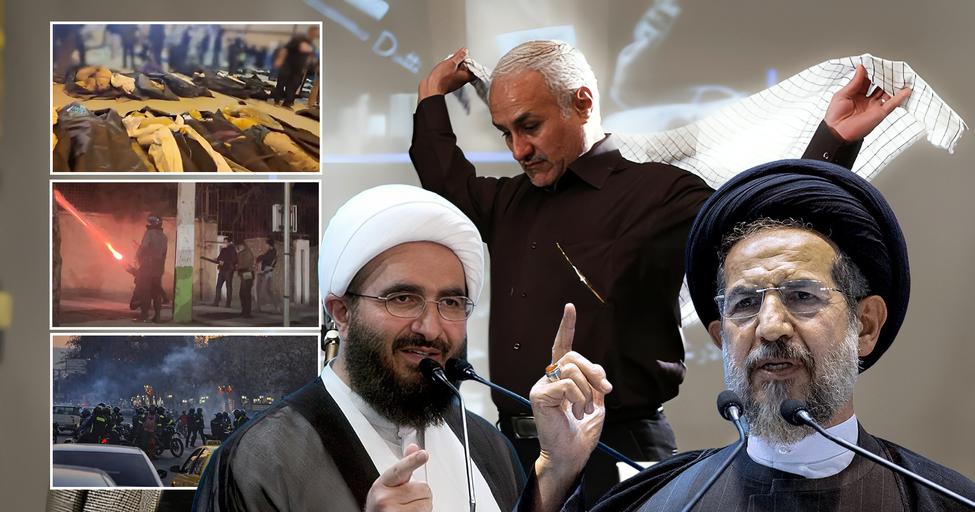
Iran’s religious and political establishment has intensified its use of theological justifications to legitimize violent crackdowns on protesters, framing dissent as rebellion against divine authority rather than expressions of genuine grievance.
At the center of this rhetorical machinery stands Hassan Abbasi, a theoretician for the ultraconservative Paydari Front, whom supporters call the “Kissinger of Islam.” In recent speeches, Abbasi has invoked Quranic verses to justify the killing of protesters, drawing from Verse 39 of Surah Al-Anfal to provide religious cover for state violence.
“The primary function of this propaganda is to create a ‘Theology of Violence’ and the ‘Sacralization of Suppression’ to maintain the regime’s loyalist base,” explains a political analyst familiar with Iranian affairs. “By framing protests as rebellion against God, officials have effectively transformed political dissent into a cosmic battle of good versus evil.”
In a three-hour speech, Abbasi acknowledged the scale of recent unrest while warning that the government must act decisively to prevent workers’ strikes from spreading. He described January protests as “planned riots” following a strategy of “Victory through Terror” orchestrated by hostile foreign powers, claiming the opposition’s goal was to “Syrianize” Iran.
This rhetoric represents a significant shift in the regime’s approach. One of Abbasi’s students argued that mass killing would be counterproductive, suggesting the strategy of “Jihad of Clarification” (Tabyin) – a term coined by Supreme Leader Ali Khamenei to describe the duty of loyalists to propagate the government’s narrative – should be replaced by a “Jihad of Distinction” (Tamyiz) aimed at separating the “wicked” from the “pure.”
Seminary professor Ahmad Abedi openly acknowledged that “the wet and the dry burned together” – a Persian idiom implying both innocent and guilty people were killed in the crackdown. Nevertheless, he insisted Iran is “at war,” arguing that economic hardship and livelihood crises are simply unavoidable “headaches” of religious rule and the price of “paving the way for the Emergence” of the Mahdi.
Ali-Akbar Raefipour, founder of the recently sanctioned “Masaf” Institute, has further inflamed tensions by casting current conflicts in apocalyptic terms. In social media posts, he portrayed Iran’s economic difficulties not as governance failures but as “Divine Trials” designed to purify and strengthen loyalists before a supposed “final battle.”
“By recasting the conflict as a battle against the ‘tribe of Moses’ – widely understood as a reference to Israel and Jews – Raefipour redirects attention away from legitimate demands for basic rights and economic security,” notes a researcher specializing in Iranian religious discourse.
High-ranking officials have reinforced this messaging. Ahmad Jannati, chairman of the Guardian Council, dismissed international expressions of sympathy for protesters, claiming foreign hands were behind the violence. Tehran’s Friday Prayer Imam Mohammad-Javad Haj-Ali-Akbari issued veiled threats about Iran’s missile capabilities, while Mohammad-Reza Toyserkani, the Supreme Leader’s representative in the IRGC Aerospace Force, described the current situation as a “Holy War.”
For more than four decades, the Islamic Republic has relied on selective readings of early Islamic history to legitimize its political ideology. Supreme Leader Khamenei has played a central role in drawing parallels between historical events and present-day crises, often casting himself as a figure akin to the Prophet Muhammad or Imam Ali, while portraying opponents as “hypocrites” or “traitors.”
Recent media productions by IRGC-affiliated outlets have compiled Khamenei’s past speeches to convey a message of inevitable victory. Even historical defeats are reinterpreted to silence critics, with domestic dissenters likened to the “hypocrites of Medina.”
The messaging reached its apex in Friday sermons across the country. In Tehran, cleric Mohammad-Hassan Aboutorabi-Fard directly tied obedience to God to obedience to the Supreme Leader. In Ahvaz, Mehdi Akhavan-Sabbagh rejected street protests altogether, arguing citizens must endure hardships as part of paving the way for the Mahdi’s return.
Most striking was Ahmad Marvi’s claim that the Leader’s decisions transcend personal judgment and should be understood as divine commands. Ahmad Khatami went further, describing Khamenei as the “Deputy of the Imam of Time.”
This elaborate theological framing serves a clear purpose: by elevating political suppression to the level of religious duty, the regime seeks to maintain the loyalty of its base while justifying violence against those demanding change.
Fact Checker
Verify the accuracy of this article using The Disinformation Commission analysis and real-time sources.

25 Comments
Interesting update on Regime Officials Label Massacres as “Holy War Against the People”. Curious how the grades will trend next quarter.
Good point. Watching costs and grades closely.
Production mix shifting toward Propaganda might help margins if metals stay firm.
Good point. Watching costs and grades closely.
I like the balance sheet here—less leverage than peers.
Silver leverage is strong here; beta cuts both ways though.
If AISC keeps dropping, this becomes investable for me.
Good point. Watching costs and grades closely.
Good point. Watching costs and grades closely.
Nice to see insider buying—usually a good signal in this space.
The cost guidance is better than expected. If they deliver, the stock could rerate.
Good point. Watching costs and grades closely.
The cost guidance is better than expected. If they deliver, the stock could rerate.
Good point. Watching costs and grades closely.
Interesting update on Regime Officials Label Massacres as “Holy War Against the People”. Curious how the grades will trend next quarter.
Production mix shifting toward Propaganda might help margins if metals stay firm.
Good point. Watching costs and grades closely.
Good point. Watching costs and grades closely.
I like the balance sheet here—less leverage than peers.
Good point. Watching costs and grades closely.
Uranium names keep pushing higher—supply still tight into 2026.
Good point. Watching costs and grades closely.
Good point. Watching costs and grades closely.
Uranium names keep pushing higher—supply still tight into 2026.
Good point. Watching costs and grades closely.