


Listen to the article
Actress Aneet Padda Faces Backlash Over Sister’s Comments on Controversial Films
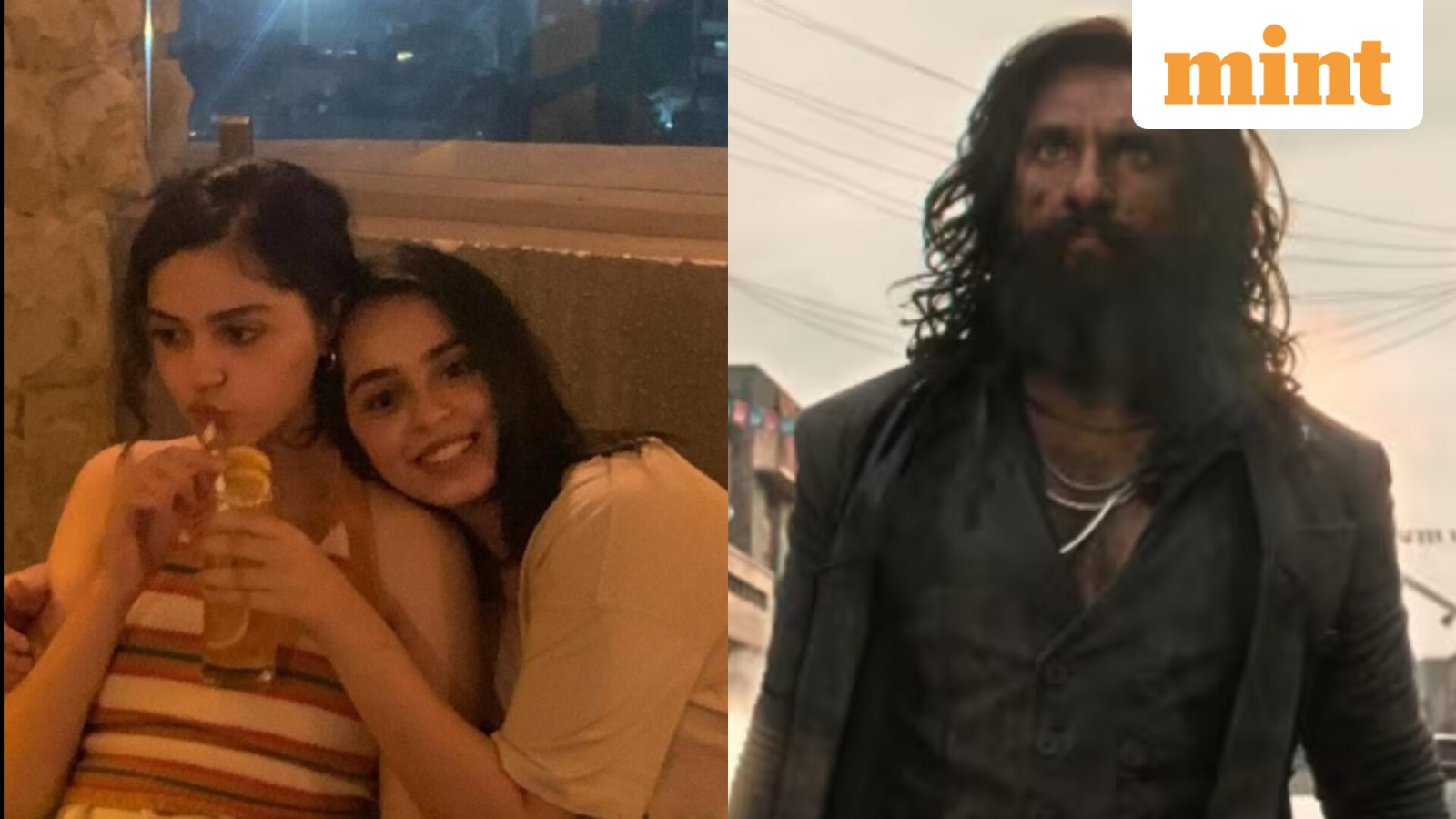
Actress Aneet Padda, known for her role in ‘Saiyaara,’ has become embroiled in controversy after her sister Reet’s social media posts criticizing several Indian films sparked widespread outrage online.
The controversy began when Reet Padda described films including ‘Dhurandhar,’ ‘The Kashmir Files,’ and ‘The Kerala Story’ as “propaganda” in posts and comments that quickly went viral across multiple platforms. Screenshots circulating online show Reet elaborating on her position regarding these films, which have been commercial successes but have also drawn criticism for their political narratives.
In the wake of mounting criticism, Reet made her Instagram account private and removed her profile picture, a move that further fueled the backlash. Social media users quickly noted her retreat from public view, with one commenting, “Meet Aneet Padda, Sister Reet Padda, who mocks Dhurandhar and calls it a propaganda movie. People on social media troll, and now she has made her account private. Don’t mess with Dhurandhar Fans.”
Though the initial criticism was directed at Reet, her sister Aneet soon found herself caught in the crossfire, with fans of the films extending their disapproval to her as well. This spillover effect highlights the challenges faced by public figures when family members express controversial opinions online.
According to some social media posts, Reet is currently living in Europe with her boyfriend and allegedly has a strained relationship with her family, including Aneet. These personal claims, however, remain unverified as neither sister has addressed the controversy publicly.
The films at the center of this controversy have themselves been lightning rods for debate in India’s polarized media landscape. ‘The Kashmir Files,’ directed by Vivek Agnihotri, depicts the exodus of Kashmiri Hindus from Kashmir in the 1990s. ‘The Kerala Story,’ meanwhile, tells a fictional story of women from Kerala being recruited by ISIS. Both films received government support but were criticized by some for potentially inflaming religious tensions.
‘Dhurandhar 2: The Revenge,’ the most recent film mentioned in Reet’s criticism, has been a massive box office success. The film stars Ranveer Singh as an undercover Indian agent who infiltrates Karachi’s criminal and political underworld to dismantle a terror network targeting India. Released on March 19, the film is inspired by real-life geopolitical events including the 26/11 Mumbai attacks and Operation Lyari.
The film features an ensemble cast including Arjun Rampal, Sanjay Dutt, R. Madhavan, and Sara Arjun. Despite a reduction in screenings from 18,456 on day 9 to 5,705 on day 10, ‘Dhurandhar 2’ has collected an impressive ₹860.49 crore in gross revenue in India. Its net collection of ₹720.38 crore is approaching the lifetime collection of its predecessor, which earned ₹840.20 crore net in India.
The controversy comes at a particularly sensitive time for the Indian film industry, which has increasingly produced nationalist-themed films that have proven commercially successful but divisive among critics and audiences.
While the social media storm continues, Aneet Padda appears to be focusing on her professional commitments. She is currently working on Maddock Films’ ‘Shakti Shalini,’ scheduled for theatrical release this Christmas, which will likely be her first major project following this controversy.
The incident illustrates the increasingly complex relationship between celebrity, social media, and political discourse in India, where entertainment and politics often intersect in ways that can rapidly escalate into public controversies with professional consequences.
Fact Checker
Verify the accuracy of this article using The Disinformation Commission analysis and real-time sources.

8 Comments
This incident highlights the challenges public figures face when sharing their views on controversial topics. It’s important to maintain civility and focus on the substance of the arguments, rather than resorting to personal attacks.
This is an interesting case study on how online backlash can impact public figures. While it’s important to have open discussions about films and their narratives, resorting to personal attacks rarely leads to constructive outcomes.
I’m curious to see how this situation evolves and whether the parties involved can find a constructive way to continue the discussion. Open and respectful dialogue is crucial, even on sensitive political and cultural issues.
I’m curious to hear more about the specific criticisms Reet Padda had regarding these films. Even if one disagrees, it’s valuable to understand different perspectives on politically-charged media content.
That’s a fair point. Engaging in nuanced dialogue, rather than just dismissing opposing views, could yield more meaningful insights on these complex topics.
While I may not share Reet Padda’s perspective on these films, I believe it’s important to hear diverse viewpoints. Dismissing or silencing opposing voices often leads to a poorer understanding of complex societal issues.
While I may not agree with Reet Padda’s assessment of the films, I respect her right to express her opinion. Shutting down debate rarely leads to greater understanding on sensitive issues.
The decision to make her Instagram account private is understandable, given the level of vitriol she seems to have faced. However, it’s a shame when public discourse becomes so polarized that people feel compelled to retreat from the conversation.