


Listen to the article
Nigerian citizens must lead the charge in reputation rebuilding, says management board chairman
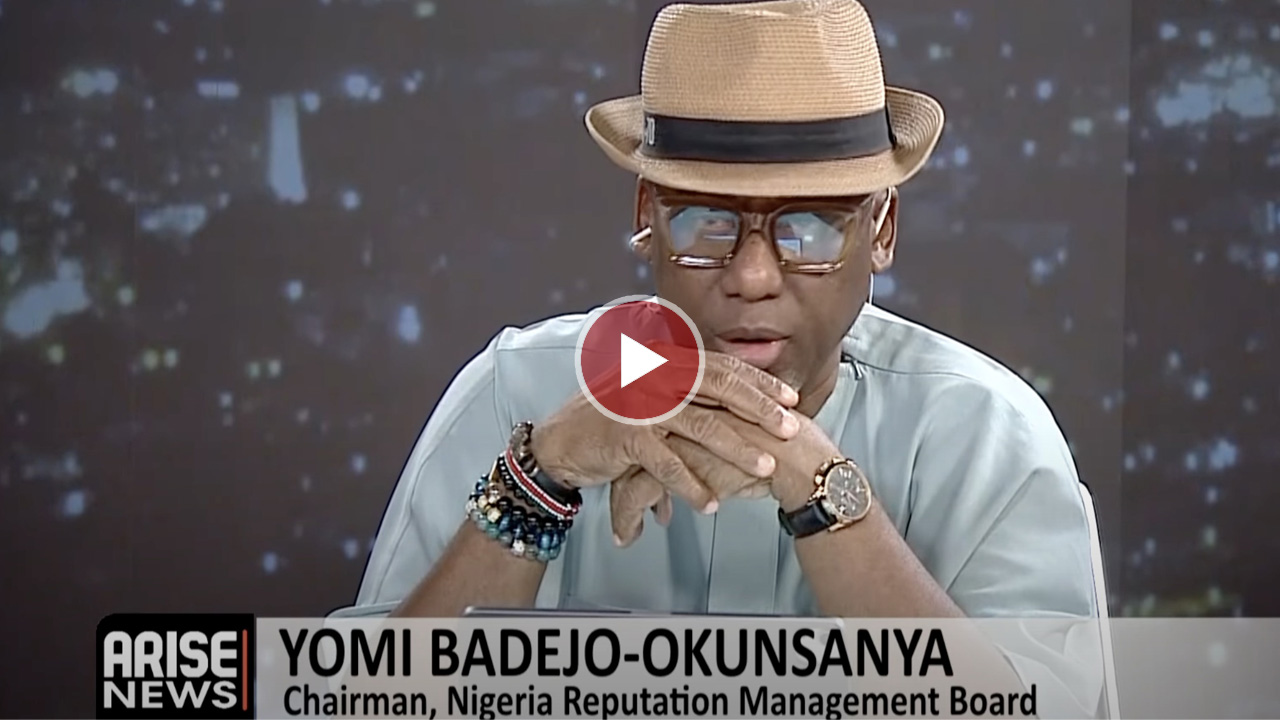
Nigeria’s reputation on the global stage cannot be restored through government propaganda or marketing slogans but must begin with citizens embracing core values of integrity, transparency and personal responsibility, according to Yomi Badejo-Okusanya, Chairman of the Nigeria Reputation Management Board.
Speaking during an interview with ARISE News on Thursday as Nigeria commemorated its inaugural Reputation Day, Badejo-Okusanya emphasized that authentic change must come from within the population rather than through top-down messaging campaigns.
“Social change comes from the heart, not through jingles or commercials,” Badejo-Okusanya stated. “The biggest challenge we have is that Nigerians actually love their country. When positive things happen — when the Super Eagles qualify or the D’Tigress win — you see how proud and happy Nigerians are. The problem is not with the country, but with leaders at various levels.”
He noted a concerning tendency among Nigerians to direct frustration with leadership toward the nation itself. “Unfortunately, when people criticize their leaders, they often hit at the country instead, which makes us appear negative about ourselves,” he explained.
The chairman outlined five pillars guiding the board’s reputation-building strategy: consistency, transparency, responsibility, respect, and excellence. These values, he argued, form the foundation for rebuilding national character after years of image challenges on the international stage.
“When you talk about reputation, it is a consistent set of values. From values, you build character, and from character, you build reputation,” Badejo-Okusanya said. “It’s not about putting nice slogans on the radio or TV. It’s about consistency — who people say you are, not what you say you are.”
Quoting renowned investor Warren Buffett, he added, “It takes years to build a reputation but only a minute to destroy it. That’s why we must nurture it carefully.”
The board is strategically focusing on Nigeria’s “soft power” advantages across five key sectors — music, movies, media, minds (intellectual capital), and fashion — which Badejo-Okusanya believes can significantly reshape global perception of the country.
“Our music is celebrated across the world; our films project our culture and humor; our media shapes opinion; our thinkers and innovators are making a mark globally; and our fashion defines our identity,” he said. “These are our strengths — the soft powers we can use to rewrite Nigeria’s story.”
Nigeria’s cultural exports have gained significant international traction in recent years, with its music industry in particular achieving unprecedented global reach. Artists like Burna Boy, Wizkid, and Tems have broken onto international charts and festival lineups, while Nollywood remains one of the world’s largest film industries by volume of production.
Addressing potential criticism that the board’s work might be perceived as propaganda, Badejo-Okusanya emphasized that their approach differs fundamentally from government-led image campaigns of the past.
“The difference with the Nigeria Reputation Management Group is that our initiative is bottom-up. We’re not flooding the airwaves with adverts. We’re appealing to the heart,” he explained. “Nigerians must take charge of writing their own story, both for internal and external audiences. If we leave our story to be written by others, we’ll keep seeing the same negative narrative.”
The chairman called for collective responsibility in this reputation-building effort, saying, “CNN, BBC, or Voice of America won’t do it for us. We have to do it ourselves. It’s a national assignment.”
Badejo-Okusanya concluded that Nigeria’s global standing ultimately depends on demonstrated values rather than crafted messaging. “Reputation is not managed — it is earned through integrity and consistency,” he said.
Fact Checker
Verify the accuracy of this article using The Disinformation Commission analysis and real-time sources.

8 Comments
Rebuilding Nigeria’s reputation will require more than just government propaganda. Genuine change has to come from the people themselves, embracing values like integrity and responsibility. It’s a challenge, but focusing on the country’s positives could be a good starting point.
I agree. True social change has to come from the heart, not just top-down messaging. Nigerians clearly love their country, so channeling that pride into concrete reforms could make a real difference.
This is a complex issue, but the key seems to be fostering genuine, grassroots change rather than superficial image-making. Nigerians’ love for their country could be a powerful starting point if channeled constructively. It will be interesting to see if they can make real progress on this front.
I agree, the solution has to come from within the Nigerian population, not just the government. Rebuilding the national image will require a sustained, citizen-driven effort focused on integrity, transparency and responsibility.
Interesting perspective. It makes sense that Nigerians shouldn’t just direct frustration with leadership towards the country as a whole. Rebuilding the national image will take a holistic, citizen-driven effort, not just government propaganda campaigns.
Exactly. Nigerians need to take ownership of the country’s reputation rather than relying on the government to do it for them. It will be a challenge, but focusing on national achievements and values could be a good starting point.
This is a really important issue. I’m glad to see the focus on citizens leading the charge in reputation rebuilding, rather than just relying on government propaganda. Authentic change has to come from the people themselves.
Excellent points. Nigeria’s reputation can’t be fixed through empty slogans or marketing campaigns. The key is fostering genuine, grassroots change driven by citizens who truly love their country. It will be a challenge, but an important one to tackle head-on.