


Listen to the article
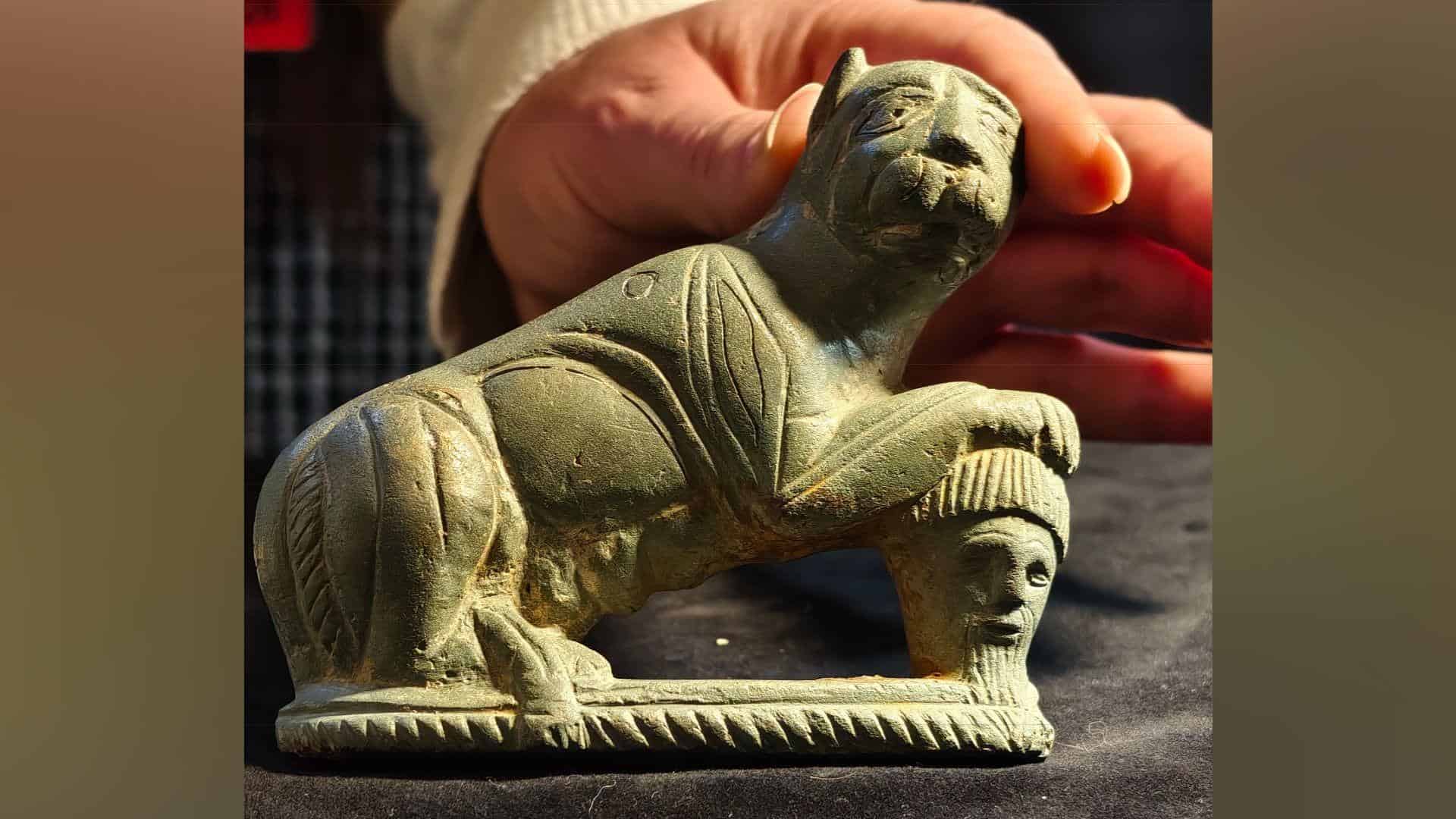
The discovery of an ancient Roman copper panther figurine near London has provided archaeologists with a striking example of how Rome used cultural intimidation alongside military might to subjugate conquered peoples. The four-inch ornament, unearthed by a metal detectorist in 2024 near Harlow, depicts a panther pinning down a severed human head in what experts describe as a powerful symbol of Roman dominance over Britain’s indigenous population.
“The fitting will quickly become one of Essex’s most iconic archaeological objects,” said Lori Rogerson, the county’s finds liaison officer, in comments to the BBC. The artifact was one of nearly 80,000 finds reported that year.
Archaeologists believe the ornament would have been mounted on a wealthy individual’s carriage, serving as a status symbol similar to today’s luxury automobiles. “You could see it gleaming and you’d know whose carriage it was coming towards you,” explained Dr. John Pearce, an archaeologist at King’s College London.
What makes the piece particularly fascinating to researchers is its deliberate fusion of Roman and British artistic elements. While the subject matter—a wild beast trampling a conquered enemy—is classically Roman, the execution incorporates the distinctive swirling, geometric aesthetic preferred by Iron Age Britons. This stylistic choice wasn’t accidental.
“There’s nothing quite like it in Romano-Britain,” noted Dr. Pearce, highlighting the artifact’s unique nature. The panther, a symbol associated with Bacchus (Dionysus), the Roman god of wine and revelry, represented the pleasures and refinements of Roman civilization. By showing this powerful Roman symbol dominating a severed “barbarian” head, the artwork sent an unmistakable message about the hierarchical relationship between conqueror and conquered.
The figurine would have been even more impressive during its time of use. Currently oxidized to a greenish hue, it would have originally gleamed with a bright copper-orange luster, catching sunlight as it traveled along Britain’s famous Roman roads. This visibility was intentional—a constant, mobile reminder of Roman authority throughout the countryside.
The artifact exemplifies Rome’s sophisticated approach to empire-building. Rather than simply occupying territory, Roman authorities implemented a multifaceted strategy of cultural and psychological domination, incorporating local artistic traditions while simultaneously asserting their supremacy. This “Romanization” process encouraged local elites to adopt Roman customs, creating a class of indigenous collaborators who helped maintain imperial control.
The panther ornament would not have been preserved for public study without recent changes to Britain’s cultural heritage laws. Under previous regulations, the Treasure Act only protected objects made of precious metals or those found in hoards. However, a 2023 amendment expanded the definition to include “significant” finds regardless of material, ensuring important artifacts like this copper panther could be properly documented and preserved.
This legal framework also provides financial incentives for responsible reporting. Once officially valued by an independent board, the finder and landowner typically split the appraised value equally. This system helps prevent valuable historical objects from disappearing into private collections or the black market.
The exact circumstances that led to the figurine being buried remain unknown. It may have simply fallen from a carriage during travel on rough roads, or it might have been deliberately discarded or hidden. As the artifact enters a museum collection, archaeologists will have the opportunity to conduct more detailed analysis, potentially revealing additional insights about Roman Britain and the complex power dynamics at play in this frontier province of the empire.
The panther figurine stands as a tangible reminder of how Rome’s conquest extended beyond military occupation into cultural and psychological realms—where even decorative objects served as powerful tools of imperial control.
Fact Checker
Verify the accuracy of this article using The Disinformation Commission analysis and real-time sources.

9 Comments
What an intriguing find! The Roman panther figurine is a prime example of how the empire leveraged cultural symbolism alongside military force. I’m curious to learn more about the specific messaging and intended impact of this type of propaganda art on the local British population at the time.
This panther figurine is a fascinating glimpse into the Roman imperial toolkit. The fusion of Roman and British artistic elements is particularly intriguing – it speaks to the complexity of cultural exchange and imposition under Roman rule. I wonder what other examples of this type of propaganda art might be out there waiting to be discovered.
The Roman panther figurine is a powerful symbol of imperial conquest and control. It’s fascinating to see how they blended local artistic elements into their propagandistic designs. This artifact provides a window into the sophisticated strategies the Romans used to subjugate indigenous populations.
What an incredible piece of history! The panther figurine is a vivid representation of how the Romans used a combination of military might and cultural intimidation to subjugate conquered peoples. I’m curious to learn more about the specific symbolism and messaging conveyed by this particular design.
This artifact provides valuable insight into the Roman strategy of cultural dominance. The gleaming panther carriage ornament would have been a potent status symbol, asserting Roman power over the local population. It’s an intriguing window into ancient propaganda techniques.
Fascinating find! The Roman panther figurine is a striking example of how they used cultural intimidation alongside military might to subdue conquered peoples. It’s interesting to see the fusion of Roman and British artistic elements in the design.
The discovery of this rare Roman panther figurine is a significant archaeological find. It highlights how the Romans leveraged both military force and cultural symbols to cement their control over Britain. Studying these types of artifacts helps us better understand the complex dynamics of ancient imperial expansion.
The discovery of this rare Roman panther figurine is a significant archaeological find that sheds light on the empire’s tactics of cultural dominance. It’s fascinating to see how they blended local artistic elements into their propagandistic designs to assert power over conquered peoples. This artifact provides a vivid window into the complex dynamics of ancient imperial expansion.
What an incredible find! The Roman panther figurine is a striking example of how the empire used cultural intimidation alongside military might to subjugate conquered peoples. The fusion of Roman and British artistic elements is particularly intriguing, and speaks to the complexity of the empire’s strategies for asserting dominance. This artifact offers invaluable insights into the psychological and cultural dimensions of ancient imperial expansion.