


Listen to the article
Ram Gopal Varma Defends ‘Dhurandhar: The Revenge’ Against Propaganda Claims
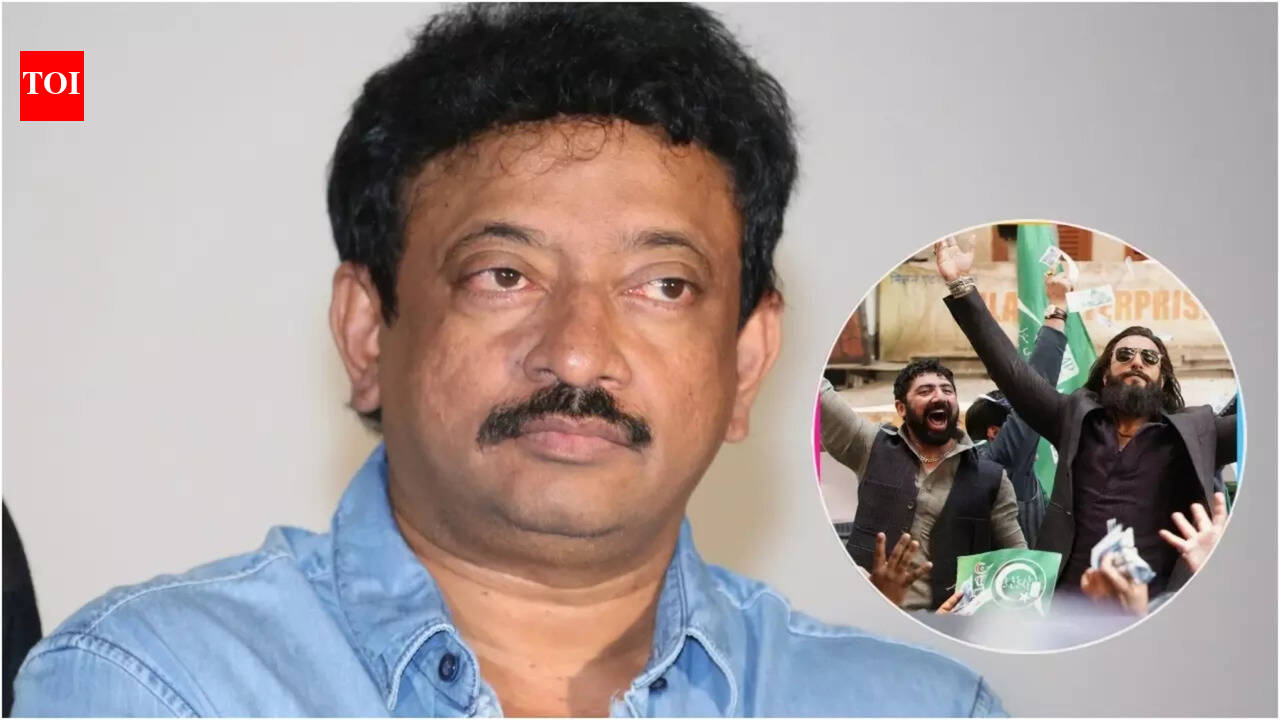
Filmmaker Ram Gopal Varma has launched a spirited defense of the blockbuster film ‘Dhurandhar: The Revenge’ amid growing criticism that the movie serves as propaganda. The controversial director challenged detractors to create their own counter-narrative if they disagree with the film’s portrayal of events.
In a pointed message directed at critics in Pakistan, Varma took to X (formerly Twitter) to express his views: “I have a WONDERFUL IDEA for all those in PAKISTAN who claim #Dhurandhar2 is a PROPAGANDA film full of lies, they can get their own Pakistani Aditya Dhar, and make #DhurandharTheTruth.”
The espionage thriller, directed by Aditya Dhar and starring Ranveer Singh, has become a commercial juggernaut despite the controversy surrounding it. The film has already amassed over Rs 550 crore in its domestic market within just six days of release and has crossed the Rs 800 crore mark globally, putting it on track to join the coveted Rs 1000 crore club.
Varma’s defense comes at a time when Indian cinema is increasingly producing nationalist-themed content that critics argue blurs the line between entertainment and political messaging. ‘Dhurandhar: The Revenge’ has particularly drawn scrutiny for its portrayal of sensitive geopolitical issues between India and Pakistan.
This is not the first time Varma has enthusiastically supported the film. In previous social media posts, the maverick filmmaker described ‘Dhurandhar: The Revenge’ as a “reset button” for Indian cinema that would usher in a new “cinematic order.” In a bold statement that raised eyebrows in film circles, he even claimed that classic masterpieces like ‘Mughal-e-Azam’ and ‘Sholay’ would look like “TV serials” compared to this latest offering.
The film’s commercial success demonstrates that audiences are responding positively to its narrative, despite the ongoing debate about its political undertones. Industry analysts suggest that the controversy might actually be contributing to the film’s box office performance, as public discourse around the movie grows.
‘Dhurandhar: The Revenge’ features an ensemble cast including Ranveer Singh in the lead role, supported by Bollywood veterans Sanjay Dutt and Arjun Rampal. R Madhavan, Sara Arjun, Mustafa Ahmed, and Rakesh Bedi round out the cast of the film, which hit theaters on March 19, 2026.
The film’s phenomenal performance continues a trend of nationalist-themed movies finding commercial success in India’s post-pandemic box office landscape. Similar films in recent years have proven that patriotic narratives with high production values can drive massive audience turnout.
For director Aditya Dhar, this success builds on his previous nationalist-themed hit, further cementing his position as a filmmaker who can blend political narratives with commercial appeal. For lead actor Ranveer Singh, the film represents a significant commercial triumph following several challenging years at the box office.
Film critics remain divided on the artistic merits of ‘Dhurandhar: The Revenge,’ with some praising its technical achievements and performances while others question its historical accuracy and one-sided portrayal of complex geopolitical issues.
As the film continues its record-breaking run at the box office, the debate around its content and messaging is likely to persist, highlighting the increasingly blurred lines between entertainment, politics, and national identity in contemporary Indian cinema.
Fact Checker
Verify the accuracy of this article using The Disinformation Commission analysis and real-time sources.

8 Comments
Interesting to see the ongoing debate around the ‘Dhurandhar’ film. While artistic expression should be free, concerns about propaganda are understandable. Perhaps an open dialogue between India and Pakistan could lead to a more balanced portrayal that serves the truth.
Director Ram Gopal Varma’s challenge to Pakistan to create their own counter-narrative film is thought-provoking. Open artistic competition could shed light on different perspectives, though care must be taken to avoid further inflaming tensions.
Agreed. An open dialogue and exchange of ideas, rather than one-sided propaganda, could lead to a more constructive outcome.
The success of ‘Dhurandhar’ highlights the commercial appeal of nationalist-themed content in India. However, the line between entertainment and propaganda can be blurry. Filmmakers should aim for balance and nuance to avoid fueling further division.
While the financial success of ‘Dhurandhar’ is impressive, the concerns around its potential for propaganda are valid. Encouraging open and honest artistic dialogue between India and Pakistan could lead to a more balanced portrayal of their complex relationship.
The massive box office success of ‘Dhurandhar’ suggests strong domestic appetite for nationalist-themed content. However, filmmakers should be mindful of the impact their work can have and strive for nuance and objectivity, rather than one-sided propaganda.
Varma’s challenge to Pakistan to create their own counter-film is an interesting proposition. Open artistic competition could lead to a more nuanced understanding of the complex India-Pakistan dynamic, but care must be taken to avoid escalating tensions further.
The debate around ‘Dhurandhar’ raises important questions about the role of cinema in shaping public opinion. Filmmakers have a responsibility to present their narratives responsibly, without resorting to one-sided propaganda that could further inflame tensions.