


Listen to the article
Bollywood veteran Rakesh Bedi has firmly rejected accusations that his latest film “Dhurandhar: The Revenge” serves as political propaganda, emphasizing that cinema should be judged on its artistic merits rather than through ideological lenses.
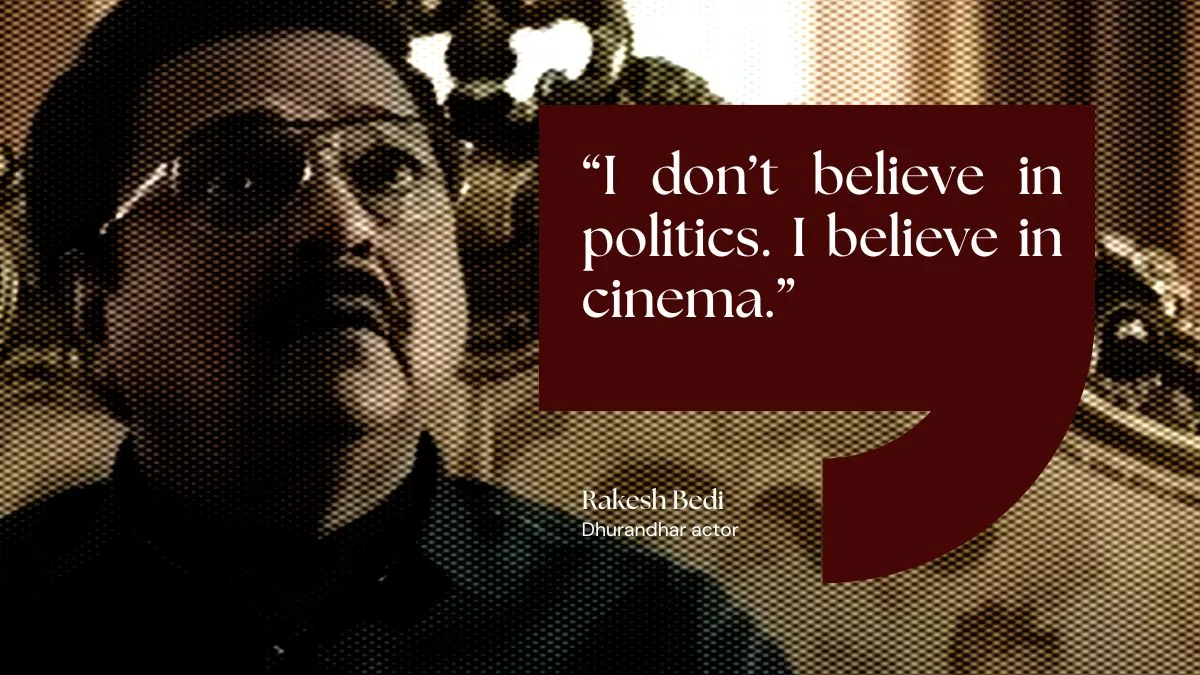
“I don’t believe in politics. I believe in cinema,” Bedi stated in a recent interview with NDTV. “Everybody has the right to like or dislike a film, but I don’t think it’s right to put a film into some kind of category, whether it’s pro-establishment or anti-establishment.”
The film has become a flashpoint in India’s increasingly polarized cultural discourse, with strong box office performance contrasting sharply with criticism from certain segments of the audience who have labeled it propaganda. The controversy highlights the growing tendency in Indian cinema for films to become embroiled in political debates beyond their artistic content.
Despite the online backlash, “Dhurandhar: The Revenge” continues to perform exceptionally well commercially, suggesting a disconnect between social media criticism and general audience reception. Bedi points to this commercial success as evidence that viewers are connecting with the film’s storytelling rather than any perceived political messaging.
The actor attributed the film’s popularity to its innovative storytelling approach and unprecedented scale. “People haven’t seen this scale before,” Bedi remarked, suggesting that technical execution and narrative quality are driving ticket sales rather than ideological alignment.
In comments that appeared to reference Kangana Ranaut’s recent biographical drama “Emergency,” Bedi drew comparisons between “Dhurandhar” and recent political biopics. Without naming specific films, he suggested that overtly political productions about figures like Indira Gandhi and Narendra Modi failed to maintain audience interest beyond initial curiosity.
This comparison raised eyebrows in industry circles as “Emergency,” which featured Ranaut portraying former Prime Minister Indira Gandhi during the controversial 1975-77 period of emergency rule, reportedly generated only ₹18.40 crore worldwide despite significant pre-release publicity.
The controversy surrounding “Dhurandhar” reflects broader tensions within Indian cinema as filmmakers navigate an increasingly politicized cultural landscape. In recent years, Bollywood productions have frequently faced scrutiny over their perceived political leanings, with social media amplifying accusations from various ideological camps.
Film industry analysts note that the “propaganda” label has become increasingly common in Indian film discourse, often wielded by critics across the political spectrum against productions they perceive as advancing opposing viewpoints. This environment has created challenges for filmmakers attempting to tackle historical or contemporary political themes.
Despite these controversies, audience behavior suggests that entertainment value remains paramount for most moviegoers. “Dhurandhar: The Revenge” appears to be benefiting from this phenomenon, with strong word-of-mouth recommendations overriding online criticism.
The film’s commercial success amid controversy may encourage other filmmakers to pursue ambitious projects despite potential political backlash, potentially shifting the industry’s approach to contentious subject matter.
As the debate continues, Bedi’s stance highlights the traditional view that cinema’s primary purpose remains entertainment rather than political persuasion—a perspective that appears to be resonating with audiences even as critical discourse becomes increasingly politicized.
Whether “Dhurandhar: The Revenge” will ultimately be remembered for its artistic merits or its role in India’s cultural debates remains to be seen, but its commercial performance suggests that audiences are still capable of separating their entertainment choices from political considerations.
Fact Checker
Verify the accuracy of this article using The Disinformation Commission analysis and real-time sources.

13 Comments
While I understand the concerns about ‘Dhurandhar’ being labeled as propaganda, I think it’s important to approach the film with an open mind and focus on its cinematic merits. Audiences should form their own opinions.
Well said. Jumping to conclusions about a film’s political agenda can detract from a fair, objective evaluation of its artistic qualities and storytelling.
The success of ‘Dhurandhar’ despite online criticism is an intriguing data point. It suggests there may be a disconnect between social media discourse and the broader audience’s response to the film.
I’m curious to learn more about the political and cultural context surrounding this film. It’s an interesting case study on the role of cinema in a polarized society.
Interesting to see the debate around ‘Dhurandhar: The Revenge’ and whether it’s political propaganda or just good filmmaking. I respect Rakesh Bedi’s view that cinema should be judged on artistic merit, not ideology.
Rakesh Bedi makes a fair argument that films shouldn’t automatically be categorized as ‘pro’ or ‘anti’ establishment based on ideological leanings. Artistic merit should be the primary consideration.
I agree. Reducing films to political propaganda oversimplifies the creative process and discounts the nuanced perspectives that good storytelling can bring to complex issues.
This debate highlights the challenges of navigating the intersection of art, politics, and public discourse in a polarized climate. It’s a complex issue without easy answers.
Rakesh Bedi’s stance that ‘Dhurandhar’ should be judged on its artistic merits rather than ideological leanings is a reasonable perspective. Audiences should engage with the film on its own terms.
Agreed. Dismissing a film as mere propaganda risks oversimplifying the creative process and denying the nuanced perspectives that good storytelling can bring to complex issues.
The box office success of ‘Dhurandhar’ despite online criticism suggests a disconnect between social media reactions and general audience reception. It’s a complex issue without easy answers.
That’s a good point. The film’s commercial performance seems to indicate that many viewers are connecting with the storytelling, regardless of political labels.
The growing tendency for films to get embroiled in political debates beyond their artistic content is an intriguing trend. It speaks to the powerful role cinema can play in shaping cultural narratives.