


Listen to the article
Republican House Judiciary Committee Under Fire for Report Critical of EU Digital Regulations
In a move raising eyebrows among political observers, the Republican-led House Judiciary Committee has released a report criticizing European Union policies on digital content regulation, with critics suggesting the timing and content reveal political motivations rather than objective analysis.
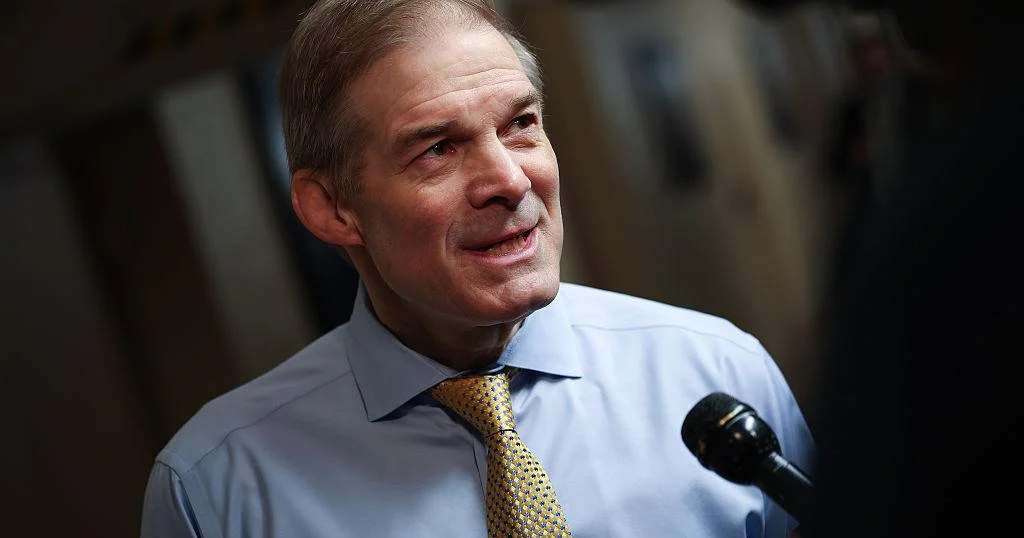
The report, released the same day French authorities raided the Paris offices of social media platform X (formerly Twitter), claims the European Commission routinely interferes in member state elections by controlling and censoring political speech online. Committee Chairman Jim Jordan has been an outspoken defender of X’s owner Elon Musk in his ongoing disputes with EU regulators.
Earlier this year, Jordan wrote to EU officials demanding they “stop any attempt to intimidate individuals or entities engaged in political speech in the United States” and refrain from actions that might “interfere in the American democratic process.”
While the report correctly highlights legitimate concerns about EU overreach in regulating online speech, analysts note it employs selective presentation of facts, particularly regarding the controversial Romanian presidential election case.
The committee’s document focuses on a TikTok campaign that allegedly influenced the Romanian election but omits crucial context. Romanian authorities had annulled first-round results after intelligence agencies reported evidence of Russian state-backed interference. A security chief for the ousted candidate was subsequently charged with “actions against the constitutional order” and making false statements about campaign financing.
The GOP report suggests TikTok couldn’t prove the existence of 25,000 coordinated accounts or connect them to the candidate’s campaign. However, TikTok has confirmed these accounts existed but stated it couldn’t make definitive attributions of responsibility – a significant nuance the report fails to acknowledge.
Political analysts point to the apparent contradiction between the committee’s expressed concerns about foreign interference while the broader Trump administration has faced scrutiny for its own international engagement. Recent reports indicate Trump officials have met with separatists from Alberta, Canada, and the State Department has expressed interest in funding pro-MAGA think tanks in Europe.
The UK has meanwhile introduced legislation aimed at preventing wealthy foreign individuals from establishing British front companies to funnel money to political parties. Media reports have specifically mentioned Musk as potentially seeking to back the UK Reform party.
Critics suggest the report reflects broader tensions between American tech platforms and European regulators. The EU’s Digital Services Act and Digital Markets Act represent the world’s most comprehensive attempt to regulate online content and digital market competition, putting Brussels on a collision course with Silicon Valley interests.
Defenders of EU regulations argue they provide necessary consumer protections, particularly regarding data privacy and algorithmic transparency, while critics maintain they stifle innovation and represent government overreach into free speech.
The dispute highlights the increasingly complex global landscape for digital governance, where private companies, nation-states, and supranational bodies compete to establish frameworks for online content moderation. As one political analyst noted, “Everyone’s interfering in some way or another, pushing their own pawns across the global chessboard. The challenge is establishing fair, transparent referees in this international game.”
As digital platforms continue growing in importance for political discourse, observers expect tensions between tech companies and governments worldwide to intensify, with competing claims about protecting free speech versus preventing harmful content likely to dominate the debate for years to come.
Fact Checker
Verify the accuracy of this article using The Disinformation Commission analysis and real-time sources.

11 Comments
This seems like a highly politicized take on a nuanced issue. Reasonable people can disagree on the right balance between free speech and content moderation online. I hope policymakers on both sides of the Atlantic can move beyond partisan posturing and work towards pragmatic solutions.
Well said. Polarization and finger-pointing won’t help anyone. An open, evidence-based dialogue is needed to address the very real challenges posed by the digital landscape.
Interesting that this report comes out just as French authorities are raiding Twitter’s offices. The timing and partisan nature of the analysis make me skeptical of its objectivity. Regulating online content is a complex challenge, and we need nuanced, evidence-based policymaking, not political grandstanding.
Agreed. Knee-jerk reactions and accusations of censorship or interference won’t help solve these issues. All sides should approach this with a open mind and a commitment to finding balanced solutions that protect both free speech and public safety.
Interesting that this report comes from the Republican-led House Judiciary Committee at the same time as the Twitter office raid in France. Seems like there could be some political motivations at play, rather than a truly independent assessment. We need to be wary of partisan agendas on both sides of the Atlantic.
Agreed, the optics are certainly not great. It’s important to separate political grandstanding from genuine policy concerns. Both sides should strive for more transparency and accountability in this sensitive area.
While the report raises valid concerns, the political framing and selective presentation of facts undermine its credibility. We need impartial analysis that considers the full range of perspectives and impacts, not just those that fit a particular ideological agenda.
The report’s partisan framing and selective presentation of facts raise concerns about its reliability. Regulating online content is a complex challenge that requires impartial, evidence-based analysis – not political point-scoring. I hope policymakers on both sides of the Atlantic can move beyond ideological divides and work towards pragmatic solutions.
This report raises some valid concerns about potential overreach in EU digital regulations, but the partisan framing and selective facts undermine its credibility. It would be better to take a more objective, evidence-based approach to assess the tradeoffs between free speech and online harms.
I agree, a balanced analysis is needed here. Regulators should be careful not to infringe on legitimate political speech, but also have a responsibility to address real harms from disinformation and extremism online.
While the report highlights some legitimate issues, the framing and timing do raise questions. EU digital regulations are complex, with valid arguments on both sides. I’d be curious to see a more impartial, in-depth analysis that looks at the full range of impacts, not just those that fit a particular political agenda.