


Listen to the article
Moscow’s propaganda machine is shifting into higher gear as Russian citizens increasingly show signs of war fatigue after more than two years of conflict in Ukraine, according to political analysts and independent media reports.
President Vladimir Putin, who secured another six-year term in March’s election, has intensified efforts to maintain public support for what the Kremlin still refers to as a “special military operation.” Recent polling from the independent Levada Center suggests that while a majority of Russians still back the military campaign, enthusiasm has noticeably waned among ordinary citizens grappling with its economic and social consequences.
“There’s a growing disconnect between official rhetoric and everyday reality,” explains Dmitri Kuznetsov, a political analyst formerly with Moscow State University who now operates from Latvia. “People are increasingly concerned about rising prices, conscription risks, and economic uncertainty. The Kremlin recognizes this shift and is responding with a more aggressive information strategy.”
State television has ramped up coverage glorifying Russian military achievements while downplaying casualties and setbacks. News programs dedicate up to 80 percent of airtime to Ukraine-related content, frequently framing the conflict as an existential struggle against Western powers rather than a war with Ukraine itself.
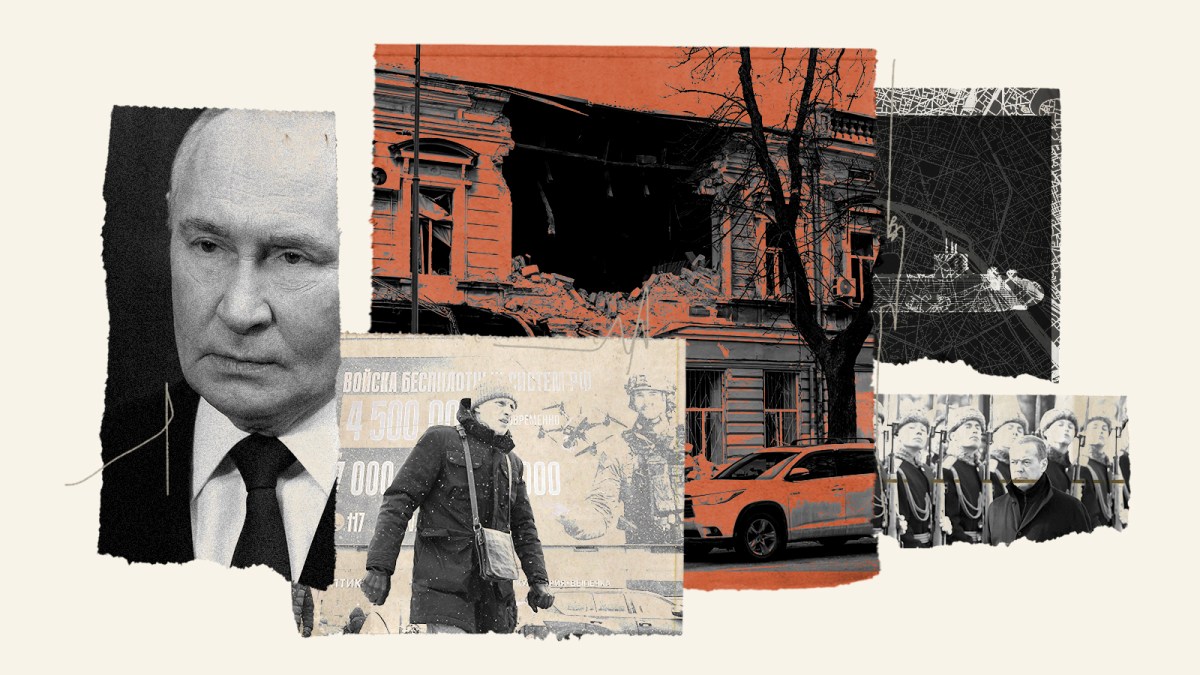
The propaganda efforts extend beyond traditional media. Last month, the government launched a nationwide billboard campaign featuring soldiers’ portraits with slogans like “Heroes of our time” and “Russia always fulfills its missions.” Schools have introduced additional patriotic education components, and cultural events increasingly incorporate war themes.
In Moscow’s central districts, the war might seem distant. Restaurants remain busy, and luxury boutiques continue operating despite Western sanctions. However, in regional cities and rural areas, the impact is more pronounced. Military recruitment offices have intensified efforts to attract volunteers with salaries far exceeding average local wages.
“In Pskov or Buryatia, the war is not an abstraction,” notes Maria Petrova, a sociologist who tracks regional disparities in war support. “These communities have suffered disproportionate casualties, and everyone knows someone serving. The propaganda must work harder there to maintain support.”
The Kremlin has simultaneously tightened control over information space. Last week, authorities blocked access to six more independent news websites. Since February 2022, more than 100 media outlets have been restricted, and dozens of journalists have fled Russia facing potential prosecution under laws criminalizing “false information” about the armed forces.
Social media platforms like VK (Russia’s Facebook equivalent) now employ enhanced filtering algorithms to suppress anti-war content, according to digital rights monitors. Last month, a 24-year-old woman in Kazan received a six-year prison sentence for posting critical comments about military actions, underscoring the risks of public dissent.
Economic messaging forms another critical component of state propaganda. Official media regularly attributes inflation and supply chain issues to Western sanctions rather than war-related expenditures. The government has increased social payments to vulnerable groups, particularly in regions with high mobilization rates, connecting economic support directly to the war effort.
“Putin’s strategy is multifaceted,” says Anders Jensen, a European analyst specializing in Russian information operations. “The narrative combines traditional Russian values, anti-Western sentiment, and promises of future prosperity once victory is secured. It’s sophisticated psychological warfare aimed at the domestic audience.”
Despite these efforts, cracks in public consensus are appearing. Small-scale protests by soldiers’ families demanding information about casualties have occurred in several cities, though these receive no coverage in state media. Urban professionals increasingly express private concerns about Russia’s international isolation and economic prospects.
Military analysts suggest the propaganda push corresponds with preparations for a prolonged conflict. Recent adjustments to Russia’s budget allocate nearly 40 percent of federal spending to defense and security, signaling the Kremlin’s commitment to sustaining war efforts despite domestic challenges.
“What we’re seeing is not panic from authorities, but recognition that maintaining public support requires more sophisticated approaches as the conflict extends,” notes Kuznetsov. “The initial wave of patriotic enthusiasm has naturally subsided, and now the state must work harder to manufacture consent.”
For ordinary Russians navigating this intensified propaganda environment, the choices remain limited: support the official narrative, remain silent, or risk severe consequences for dissent.
Fact Checker
Verify the accuracy of this article using The Disinformation Commission analysis and real-time sources.

11 Comments
It’s concerning to see the level of control the Kremlin is exerting over the media and public discourse. Maintaining a monopoly on information is a hallmark of authoritarian regimes, and it’s troubling to witness this dynamic unfolding in Russia.
The disconnect between official rhetoric and the everyday reality faced by Russian citizens is quite telling. This war has taken a heavy toll, and the Kremlin’s response of doubling down on propaganda is unlikely to quell growing discontent.
It’s understandable that ordinary Russians are growing weary of the economic and social consequences of the conflict. The government’s aggressive information strategy seems more like an attempt to distract than to inform.
I agree. Covering up casualties and setbacks while glorifying military achievements is a classic propaganda tactic. The public deserves honest, transparent information, not state-sponsored rhetoric.
As the economic and social consequences of the war become more acute, it’s not surprising that the Russian public is showing signs of war fatigue. The Kremlin’s response of doubling down on propaganda is a concerning development.
The growing disconnect between official rhetoric and the everyday reality faced by Russian citizens is a clear indication that the Kremlin is struggling to maintain public support for the war. The intensified propaganda efforts are a concerning development.
The Kremlin’s intensified propaganda efforts are a clear sign that the public’s support for the war is waning. It’s concerning to see the government resorting to heavy-handed tactics to maintain control over the narrative.
The Kremlin’s efforts to maintain public support for the war through aggressive propaganda tactics are troubling. It’s important to closely monitor the situation and hold the government accountable for its actions.
Absolutely. The public deserves access to accurate, unbiased information, not state-controlled propaganda. The government’s response suggests a growing desperation to control the narrative.
The Levada Center’s polling data suggests that the Russian public’s support for the war is waning, despite the government’s efforts to portray a different narrative. This is an important development that bears close watching.
Agreed. The government’s increasingly aggressive information strategy is a clear sign that they are worried about losing control of the narrative. Transparency and accountability should be the priority, not propaganda.