


Listen to the article
Russian authorities have dramatically intensified propaganda efforts as public support for the war in Ukraine shows signs of fatigue after more than two years of conflict, according to security analysts and independent media sources.
The Kremlin has launched a multi-pronged information campaign targeting both domestic and international audiences, with state television now devoting more than 60 percent of airtime to war-related content. This represents a significant increase from approximately 40 percent in the early months of what Russia still officially terms its “special military operation.”
“Putin recognizes that maintaining public support is critical as the conflict extends far beyond the Kremlin’s initial expectations,” said Mikhail Khodorkovsky, a prominent Kremlin critic and former oil executive who now lives in exile. “What we’re witnessing is a desperate attempt to control the narrative as the economic and human costs continue to mount.”
Recent polling from the Moscow-based Levada Center, one of the few remaining independent research organizations operating in Russia, suggests that while approximately 75 percent of Russians still claim to support the war, the intensity of that support has waned considerably. The number of respondents who reported actively following war developments has dropped from 64 percent in March 2022 to just 36 percent today.
Against this backdrop of declining engagement, authorities have introduced increasingly strict measures to silence dissent. The Russian parliament recently passed legislation increasing penalties for “discrediting” the armed forces, with punishments now reaching up to 15 years imprisonment for repeat offenders.
Simultaneously, state media has shifted its messaging strategy. Early narratives focused on “denazification” and protecting Russian speakers in eastern Ukraine have evolved into broader existential claims that Russia is defending itself against NATO aggression and Western attempts to destroy Russian civilization.
“The propaganda machine has become more sophisticated,” explained Maria Snegovaya, a senior fellow at the Center for Strategic and International Studies in Washington. “Initially, the messaging was reactive and sometimes contradictory. Now we see a more coordinated approach across platforms, with particular emphasis on reaching younger Russians through social media channels.”
This shift comes as economic pressures intensify for ordinary Russians. While official unemployment remains low, real wages have declined approximately 7 percent since February 2022, according to independent economists. Sanctions continue to restrict access to certain consumer goods, particularly electronics and automotive parts, contributing to growing public discontent.
The Kremlin has responded by emphasizing patriotic sacrifices and portraying economic hardships as temporary obstacles that will ultimately strengthen Russia’s sovereignty. State media regularly features segments highlighting new domestic manufacturing initiatives and trade relationships with China, India, and other nations not participating in Western sanctions.
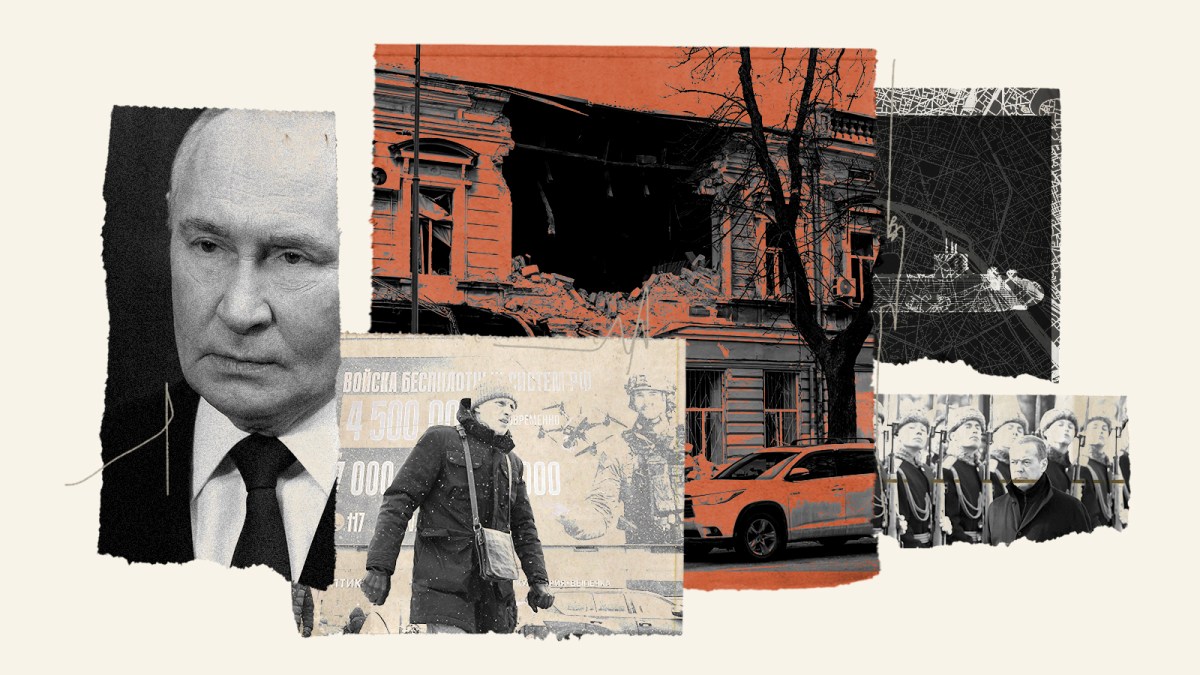
In major cities like Moscow and St. Petersburg, the visual landscape has transformed to support the propaganda effort. Billboards featuring soldiers and patriotic slogans now dominate public spaces, while schools have implemented expanded “patriotic education” programs that present the Ukraine conflict as a continuation of Russia’s historical struggle against fascism.
Perhaps most concerning to Western observers is Russia’s increasing focus on information operations targeting international audiences. The Internet Research Agency, a St. Petersburg-based organization linked to previous disinformation campaigns, has reportedly doubled its staff since 2022.
“We’re seeing a significant investment in foreign-language content across platforms like Telegram, X, and TikTok,” noted Thomas Kent, former president of Radio Free Europe/Radio Liberty. “The messaging is tailored to exploit existing political divisions in Western societies, particularly around immigration, energy costs, and military aid to Ukraine.”
Despite these extensive efforts, cracks in the propaganda facade are becoming visible. Independent Russian media operating from exile report growing networks of subscribers inside Russia who access their content through VPNs. Meanwhile, military bloggers with significant followings increasingly criticize the war’s execution, if not its underlying justification.
As the conflict enters its third year with no clear resolution in sight, Putin faces the challenge of maintaining public support for a war that continues to claim Russian lives and strain the economy. The intensified propaganda campaign reflects this urgency, as the Kremlin attempts to frame a prolonged conflict as both necessary and winnable.
“The fundamental question is whether propaganda alone can sustain public support indefinitely,” said Alexander Baunov, a Russian political analyst. “History suggests that information control works until it doesn’t—and when it fails, it tends to collapse quickly and dramatically.”
Fact Checker
Verify the accuracy of this article using The Disinformation Commission analysis and real-time sources.

8 Comments
Maintaining public support is critical for Putin as this conflict drags on. The Kremlin’s propaganda blitz is an attempt to control the narrative, but it may not be enough to offset the realities of the war.
While 75% still claim to support the war, the intensity of that support seems to be dropping. The Kremlin has a tough challenge ahead to sustain domestic backing for the conflict.
The shift to 60% war-related content on state TV is quite significant. It shows just how much the Kremlin is doubling down on information control as the economic and human costs mount. A worrying trend.
I agree, the Kremlin appears desperate to shape the narrative as public opinion turns. This could backfire and further erode trust if people see through the propaganda.
The dramatic increase in war-related content on state TV is a clear sign that the Kremlin is doubling down on its information control efforts. It will be interesting to see if this manages to maintain public support as the conflict drags on.
Interesting to see how the Kremlin is trying to control the narrative as public support for the war seems to be waning. Curious to see if their propaganda efforts will be enough to maintain domestic backing.
It’s concerning to see the Kremlin resorting to such heavy-handed propaganda tactics. This suggests they are feeling the pressure to keep the Russian public onboard as the costs of the war continue to rise.
Agreed. The Kremlin’s desperation to control the narrative is palpable. This could backfire and further erode trust if the propaganda is seen as too transparent.