


Listen to the article
The American news media landscape faces an unprecedented credibility crisis as concerns about propaganda and misinformation continue to mount, industry experts warn. This challenge threatens to undermine the very foundation of journalism that Joseph Pulitzer helped establish more than a century ago.
Trust in mainstream media has declined sharply over the past decade, with recent polling showing less than 40 percent of Americans express confidence in news organizations’ reporting. This erosion of public trust comes at a critical juncture when information ecosystems are increasingly fragmented and vulnerable to manipulation.
“What we’re witnessing is exactly what Pulitzer feared most – the corruption of fact-based reporting by external influences seeking to shape public opinion rather than inform it,” said Dr. Eleanor Simmons, professor of journalism ethics at Columbia University. “The line between news and propaganda has never been more blurred.”
The digital transformation of media has accelerated this problem. Social media platforms and partisan news outlets have created echo chambers where information is filtered through ideological lenses, often prioritizing engagement over accuracy. This environment allows misinformation to spread rapidly, sometimes outpacing factual reporting on critical issues.
Legal scholars note that the constitutional protections that shield journalists are predicated on the assumption that press freedoms serve the public good. “The First Amendment wasn’t designed to protect propaganda,” explained Jonathan Mercer, a media law attorney. “It was meant to safeguard the free exchange of information necessary for democratic governance.”
Media organizations face mounting pressure from both commercial interests and political entities. Newsroom budget cuts have reduced fact-checking resources and investigative reporting capacity at many outlets, creating vulnerabilities that can be exploited by those seeking to inject misleading narratives into public discourse.
The problem transcends political divides. Studies from the Reuters Institute for the Study of Journalism show declining trust across the political spectrum, though the specific outlets distrusted vary according to partisan affiliation. This suggests the issue isn’t simply about political bias but about fundamental concerns regarding journalistic integrity and independence.
International dimensions complicate matters further. Foreign influence operations have targeted American media ecosystems, attempting to amplify divisions and undermine confidence in democratic institutions. These sophisticated campaigns often leverage legitimate domestic concerns to maximize their effectiveness.
“The techniques have evolved dramatically,” noted former intelligence analyst Rebecca Chen, who now consults on media security. “Today’s propaganda doesn’t announce itself as such. It mimics legitimate journalism while subtly distorting facts or omitting crucial context.”
Some media organizations have responded by doubling down on transparency initiatives. The Washington Post, The New York Times, and other major outlets have expanded their methodology explanations and source documentation. Industry coalitions have developed fact-checking partnerships and media literacy programs aimed at helping audiences distinguish credible reporting from misleading content.
Legal remedies remain limited. Courts have generally been reluctant to intervene in matters of journalistic practice, citing First Amendment concerns. This regulatory light touch, once seen as essential to press freedom, now creates challenges when addressing deliberate misinformation campaigns.
Journalism schools across the country have revamped curricula to address these emerging threats. “We’re training a generation of reporters who understand that verification and transparency aren’t just ethical practices but existential necessities,” said Professor Simmons.
The stakes extend beyond the media industry. Democratic societies depend on shared facts to function effectively. When propaganda masquerades as journalism, public discourse becomes impossible, and decision-making suffers at both individual and collective levels.
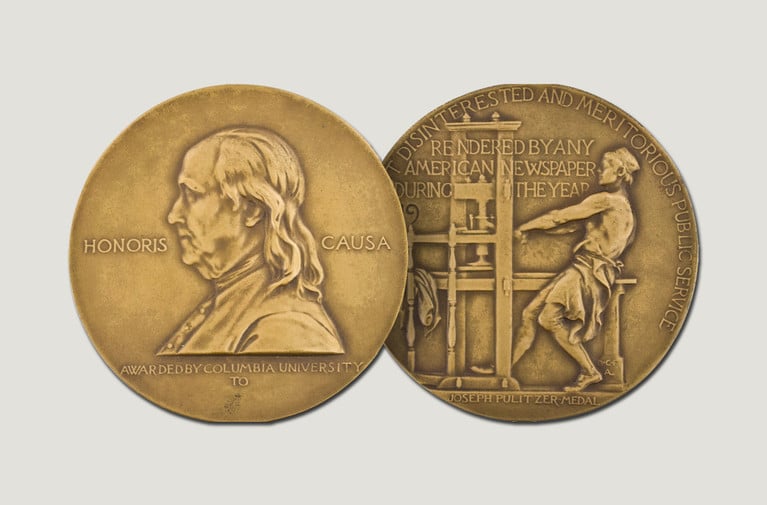
Pulitzer, who helped establish modern journalistic standards and America’s most prestigious journalism prize, advocated for rigorous reporting that served the public interest. His vision of journalism as a check on power and a voice for the voiceless remains the profession’s guiding principle, even as new threats emerge.
Industry veterans emphasize that credibility, once lost, is extraordinarily difficult to restore. “We’re not just fighting for our audiences or our business models,” said Martin Reynolds, executive editor at a mid-sized metropolitan newspaper. “We’re fighting for the very concept of shared truth that makes democracy possible.”
As this crisis unfolds, the future of American journalism hangs in the balance, with implications that extend far beyond the media industry to the health of civil society itself.
Fact Checker
Verify the accuracy of this article using The Disinformation Commission analysis and real-time sources.

8 Comments
It’s troubling to see the Pulitzer ideals being undermined by propaganda and misinformation. Restoring faith in the media will require a multi-pronged approach, including media literacy education and greater transparency around funding sources.
You raise a good point. Improving media literacy and accountability could go a long way in combating the spread of propaganda and restoring public trust.
This is a concerning trend that deserves serious attention. The erosion of public trust in the media is a threat to the democratic process. We need to find ways to reinforce journalistic integrity and fact-based reporting.
I agree, the blurring of the line between news and propaganda is very worrying. Maintaining the credibility of journalism is essential for a healthy, informed society.
This article highlights the complex challenges facing the news industry in the digital age. Balancing engagement with accuracy and credibility is no easy task, but it’s crucial for the future of journalism.
The rise of echo chambers and partisan news outlets is certainly a concerning development. It’s important that we find ways to encourage critical thinking and expose people to a diversity of perspectives, rather than allowing misinformation to proliferate.
I agree, the fragmentation of information ecosystems is a major threat to informed public discourse. Promoting media literacy and fact-checking initiatives could help address this issue.
This is a timely and important topic. While the digital transformation has brought many benefits, it has also created new vulnerabilities that bad actors can exploit. Strengthening the integrity of journalism should be a top priority.