


Listen to the article
In an age of endless notifications and customized feeds, the concept of reality has become increasingly curated by unseen forces, raising profound questions about how information shapes our worldview.
Modern propaganda has evolved far beyond the overt messaging of World War II posters or dystopian fiction. Today’s information manipulation operates more subtly within everyday media, making it significantly more dangerous and persuasive than historical examples, according to research from Boston University.
“Propaganda today is more dangerous, persuasive and detrimental than it has ever been,” notes the Boston University assessment, highlighting how contemporary messaging tactics have become deeply embedded in digital platforms.
Unlike propaganda of previous generations, which often appeared as direct messaging through limited channels like radio broadcasts or billboards, today’s version works through a sophisticated ecosystem of algorithms, news outlets and social media platforms. This evolution represents a fundamental shift in how information influences public opinion.
Historical propaganda efforts weren’t always transparent either. During the Cold War, the CIA conducted Operation Mockingbird, a campaign that recruited media professionals to produce pro-American content. The operation, revealed years later, demonstrated how government agencies strategically cultivated relationships with news outlets to shape public perception.
The digital era has transformed propaganda into an intricate network of misinformation and disinformation. While misinformation refers to false content shared without deceptive intent, disinformation is deliberately created to manipulate public opinion. In today’s online environment, these distinctions frequently blur, contributing to what scholars describe as a “post-truth” society.
Oxford Languages defines this post-truth environment as one “relating to or denoting circumstances in which objective facts are less influential in shaping public opinion than appeals to emotion and personal belief.” This shift fundamentally challenges traditional assumptions about how information should function in democratic societies.
The traditional “marketplace of ideas” concept—which suggests the best ideas naturally rise to prominence through free discourse—faces significant challenges in the digital landscape. Information overload, coupled with sophisticated targeting, makes critical evaluation increasingly difficult for the average person.
“While this idea is crucial to the amendment of free speech, this concept can be deemed as obsolete in the digital world due to information overload, misinformation and the prevalence of echo chambers,” according to analysis from Middle Tennessee State University.
Social media algorithms compound these challenges by prioritizing content that aligns with users’ existing beliefs and interaction patterns. This personalization creates what experts call “echo chambers”—environments where individuals primarily encounter information that reinforces their established viewpoints while excluding contradictory perspectives.
The University of Texas College of Communication defines these echo chambers as “invisible bubbles that are formed when a person experiences a biased media experience that eliminates opposing viewpoints and differing voices.” These information silos have profound implications for democratic discourse.
Harvard Law Professor Cass Sunstein argues in his book “Divided Democracy in the Age of Social Media” that this algorithmic curation severely limits exposure to diverse viewpoints, making consensus-building increasingly difficult in democratic societies.
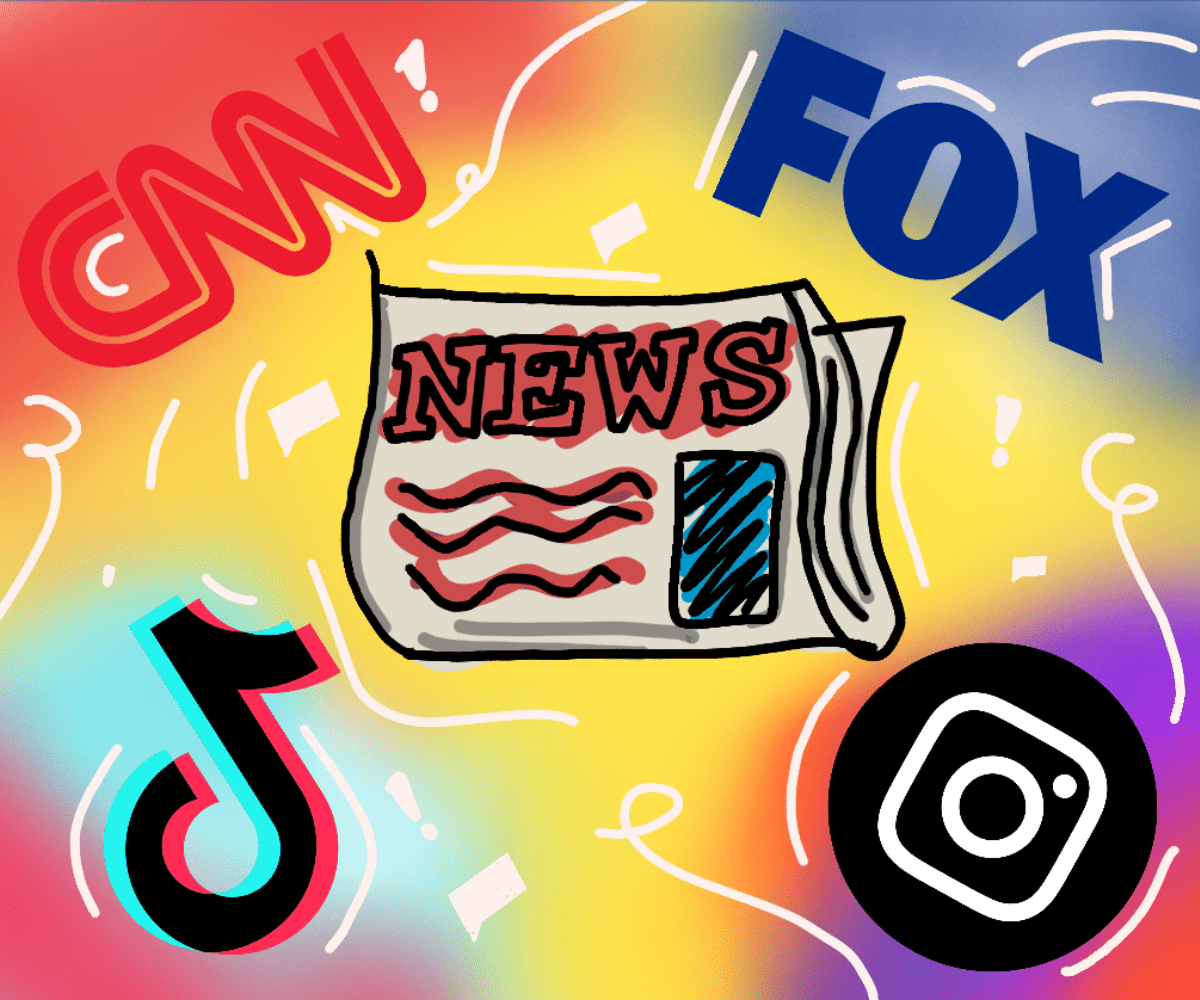
Media fragmentation along political lines further exacerbates these divisions. Left-leaning outlets like The New York Times and The Washington Post frequently present liberal perspectives, while conservative platforms like Fox News tailor content to right-leaning viewpoints, according to research from Stony Brook University Libraries.
French philosopher Jacques Ellul identified this process as the true function of modern propaganda in his seminal work “Propaganda: The Formation of Men’s Attitudes.” Rather than simply spreading falsehoods, Ellul argued that effective propaganda blends selective truths, emotional appeals and repetition to condition how people think and feel.
“Modern propaganda, Ellul said, blends selective truths, emotional appeal and constant repetition until people no longer feel persuaded but conditioned to feel, believe and act in the way they do,” reflecting how contemporary information systems shape perception at a fundamental level.
Countering these influences requires deliberate action. Diversifying information sources represents a crucial first step, with platforms like AllSides offering comparisons of how different outlets cover the same events. Improving media literacy skills also proves essential, with organizations like Media Literacy Now providing resources to help individuals recognize misinformation.
Perhaps most importantly, creating space for reflection away from digital platforms allows for deeper consideration of the information we consume. Research published in Psychology Today indicates that constant exposure to provocative headlines through social media negatively impacts mental health, suggesting that disconnection offers both cognitive and psychological benefits.
While contemporary propaganda operates through increasingly sophisticated mechanisms, its influence ultimately depends on individual engagement. The critical examination of information sources and content represents the most effective response to these powerful but often invisible forces shaping public discourse.
Fact Checker
Verify the accuracy of this article using The Disinformation Commission analysis and real-time sources.
